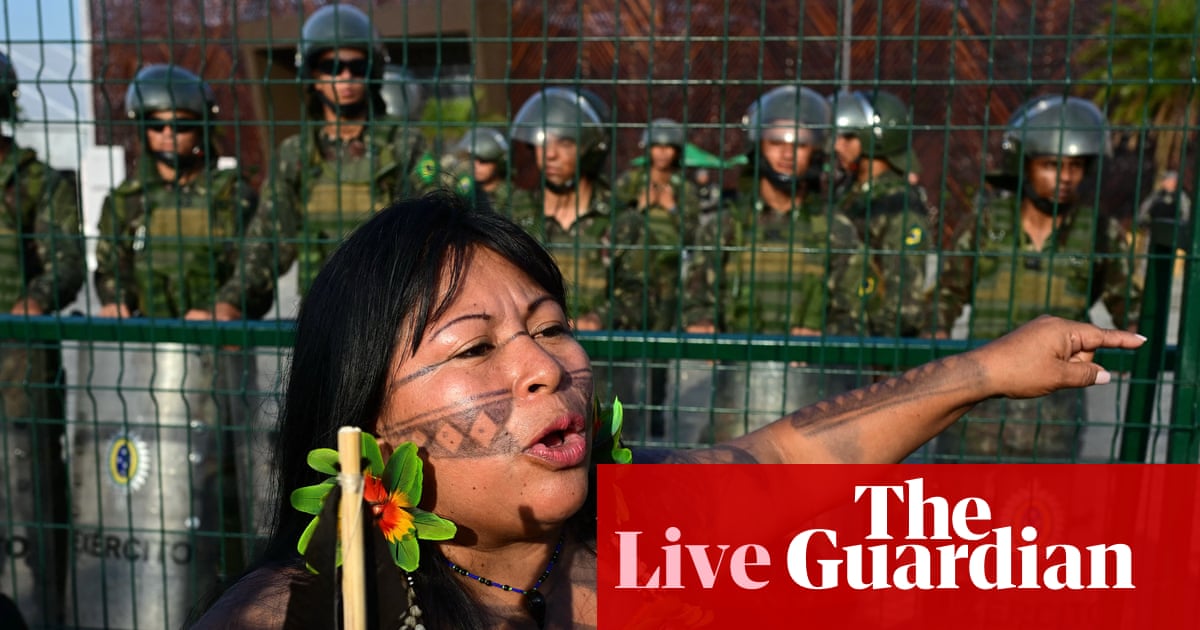
COP30 is marked by significant tensions, with Indigenous groups protesting their exclusion and the militarization of the venue, while fossil fuel lobbyists maintain a substantial presence. Amid severe Amazonian drought and fires, Brazil launched a $5.5 billion "Tropical Forests Forever Fund" for conservation and Indigenous land rights, yet simultaneously approved new oil exploration, signaling conflicting policy directions. This dynamic, coupled with the US's (under the Trump administration) disengagement and efforts to obstruct climate initiatives, underscores persistent geopolitical and regulatory complexities for climate-related investments and the energy sector.
COP30 is marked by significant internal conflict, with Indigenous groups protesting exclusion and venue militarization amidst a substantial fossil fuel lobby presence, comprising one in every 25 delegates. This highlights a fundamental tension between climate action and entrenched economic interests. Brazil's dual approach, launching a $5.5 billion "Tropical Forests Forever Fund" while simultaneously approving new oil exploration, signals policy incoherence and regulatory uncertainty.
The Amazon region faces an unprecedented environmental crisis, with extreme drought increasing 2,300% in three months, impacting over 160 Indigenous Territories. This deterioration, driven by climate factors and deforestation, underscores escalating physical climate risks. Geopolitically, the US's (under the Trump administration) absence and active obstruction of climate initiatives introduce significant uncertainty into global climate policy and the energy transition.
Continued investment in large-scale fossil fuel projects, like the EACOP (projected 379 million tonnes of CO2), despite strong activist opposition and human rights concerns, indicates persistent high-carbon asset development. This, combined with the "strongly negative" sentiment, suggests increasing ESG-related risks for investors in extractive industries or regions with weak governance. The conflict between Indigenous rights and resource development presents material reputational and operational risks.
AI-powered research, real-time alerts, and portfolio analytics for institutional investors.
Request DemoOverall Sentiment
strongly negative
Sentiment Score
-0.75
Ticker Sentiment
