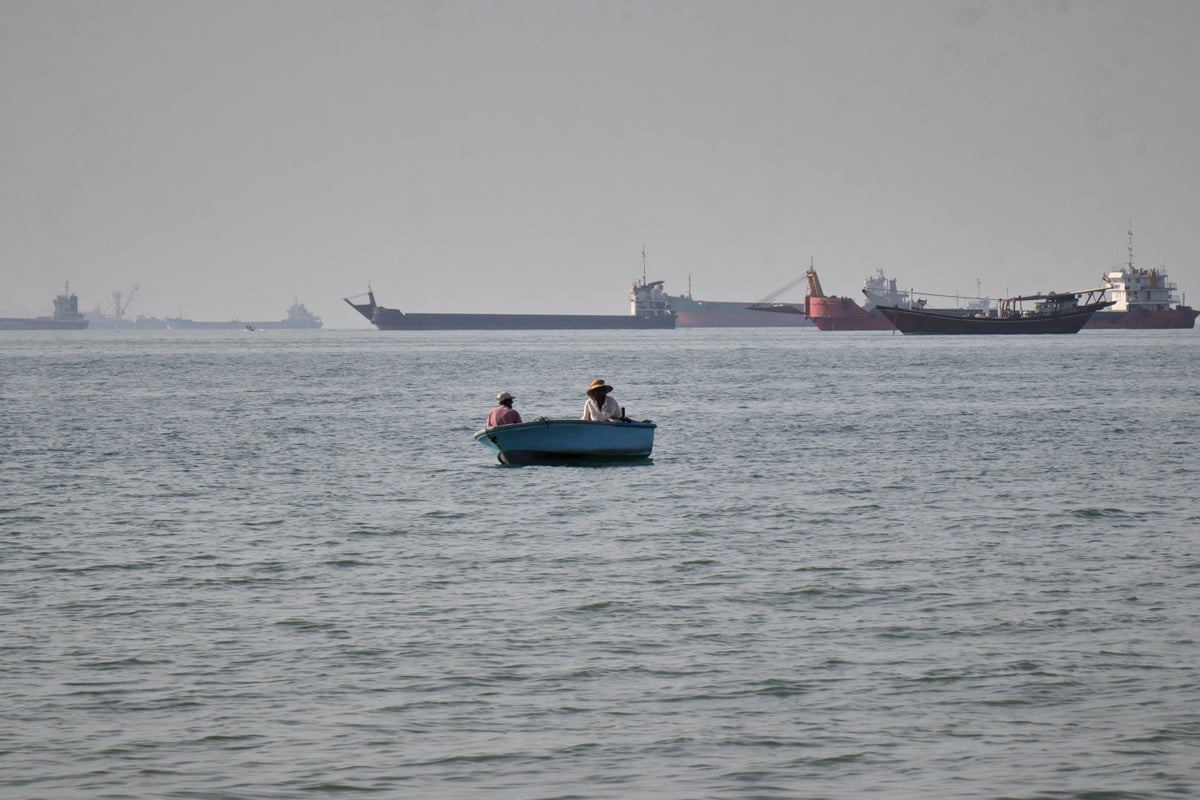
The article centers on escalating Iran-related geopolitical risk, including proposed fees on undersea cables in the Strait of Hormuz, threats over control of the waterway, and renewed U.S. military pressure. The Strait of Hormuz is critical to global energy and data flows, and any disruption could affect oil exports, shipping, and internet connectivity across the Gulf. Trump also said he and Xi agreed Iran must not obtain nuclear weapons, while the UAE is accelerating a pipeline project to bypass the strait.
The market is still underpricing how quickly a Hormuz-centered dispute can migrate from headline risk to cash-flow risk for the hyperscalers. Any move to impose fees or exert control over subsea cables would not just be a tax on data traffic; it creates a recurring chokepoint on latency-sensitive workloads, cloud interconnects, and regional AI buildouts, which are exactly the highest-margin growth vectors for the four named platform names. The second-order loser set is broader than megacap tech: Gulf sovereign AI/data-center plans, payments rails, and cross-border enterprise traffic all become more expensive and less reliable, which can pull forward duplicate-capex spending in redundant routing, satellite backup, and edge infrastructure. This is also an asymmetric escalation tool because Iran does not need to sever cables to extract value; it only needs to make the risk of disruption credible enough to raise insurance, rerouting, and redundancy costs. That dynamic can persist for months even without kinetic damage, and it is more damaging to valuation than a one-off outage because it embeds a higher geopolitical discount rate into regional digital expansion projects. The market usually treats these threats as energy-only, but the larger transmission mechanism is growth capex deferral and margin compression across cloud-adjacent ecosystems. The contrarian point is that the initial selloff in GOOGL/META/MSFT/AMZN may be too blunt if investors assume direct revenue loss instead of a mostly indirect cost-of-capital shock. These firms can reroute traffic, absorb modest transit fees, and pass through some infrastructure cost, so the more interesting short is not outright mega-cap tech but the suppliers and customers most levered to Gulf digital buildout. The highest-probability near-term catalyst is not cable sabotage; it is a policy response from UAE/Saudi to accelerate redundant routes and domestic capacity, which benefits non-Gulf connectivity and defense-infrastructure names while leaving the cable chokepoint issue unresolved. If the rhetoric escalates into actual inspection/fee enforcement or a narrow maritime incident, the tape can reprice in days; if talks stabilize, the risk premium can unwind quickly, but the strategic redundancy trade remains intact over a 6-12 month horizon.
AI-powered research, real-time alerts, and portfolio analytics for institutional investors.
Request DemoOverall Sentiment
strongly negative
Sentiment Score
-0.55
Ticker Sentiment
