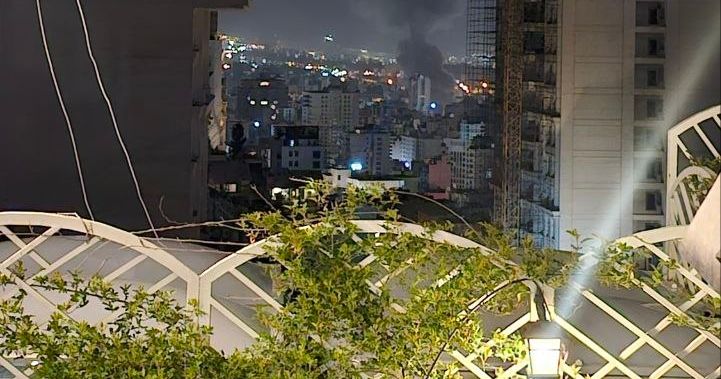
Multiple attacks and explosions struck several Iranian cities midday Tuesday, including locations in Isfahan province (Shahin Shahr, Najafabad/Jowzdan industrial zone, areas near Iran Electronics Industries, Chamran Bridge and Kaveh), Bandar Kangan/Bandar-e Dayyer on the Persian Gulf, Khorramshahr, and Tehran's Resalat Square. The strikes heighten regional security risk and could push up Persian Gulf shipping risk premia and energy prices; monitor Brent, regional oil shipments and insurance spreads for immediate market reaction and any signs of escalation that would broaden the impact.
Recent strikes in the Persian Gulf region are amplifying risk premia across energy logistics and regional defense procurement rather than creating immediate supply shortages; the dominant mechanisms are higher voyage costs, insurance surcharges, and rerouting delays that flow directly into spot freight and refining feedstock timing. Expect tanker and VLCC voyage times to effectively rise 3–10 days on reroutes or transits that skirt high-risk corridors, which translates into a 15–30% increase in voyage unit cost and a commensurate lift in freight rate indices within days.
Second-order demand is showing up in two places: (1) European/Asian refiners and commodity traders face inventory timing mismatches that widen crack spreads for 2–6 weeks as cargo arrivals slip; (2) regional defense and dual‑use electronics providers see orderbook and margin tailwinds over 3–12 months as import substitution and accelerated procurement replace damaged domestic capacity. The net macro effect is a short, sharp risk‑off move in EM assets and FX, and a tilted bullish shock to liquid hydrocarbon prices of roughly $3–7/bbl in the first 1–3 weeks absent rapid de‑escalation.
Tail risks skew lopsided: a strike that hits a chokepoint or international shipping asset increases the probability of coalition responses and could add another $10+/bbl within months; conversely, discreet deniable actions that avoid escalation will compress the premium quickly. Key near‑term catalysts to watch are credible damage assessments to energy infrastructure, insurance market rate cards (P&I/K&R), and diplomatic signaling from major buyers (China/India) — any clear sign of coordinated de‑escalation will unwind >50% of the price/freight shock in 3–10 trading days.
For portfolio construction, treat this as a tactical, event-driven window: short-duration, convex exposures to shipping and energy upside and cheaper, longer-dated selective defense exposure to capture policy durability. Size bets to reflect a high probability of a fast mean reversion scenario (30–50% chance) versus a lower-probability prolonged escalation (10–25% chance) and calibrate stop levels accordingly.
AI-powered research, real-time alerts, and portfolio analytics for institutional investors.
Request DemoOverall Sentiment
strongly negative
Sentiment Score
-0.70
