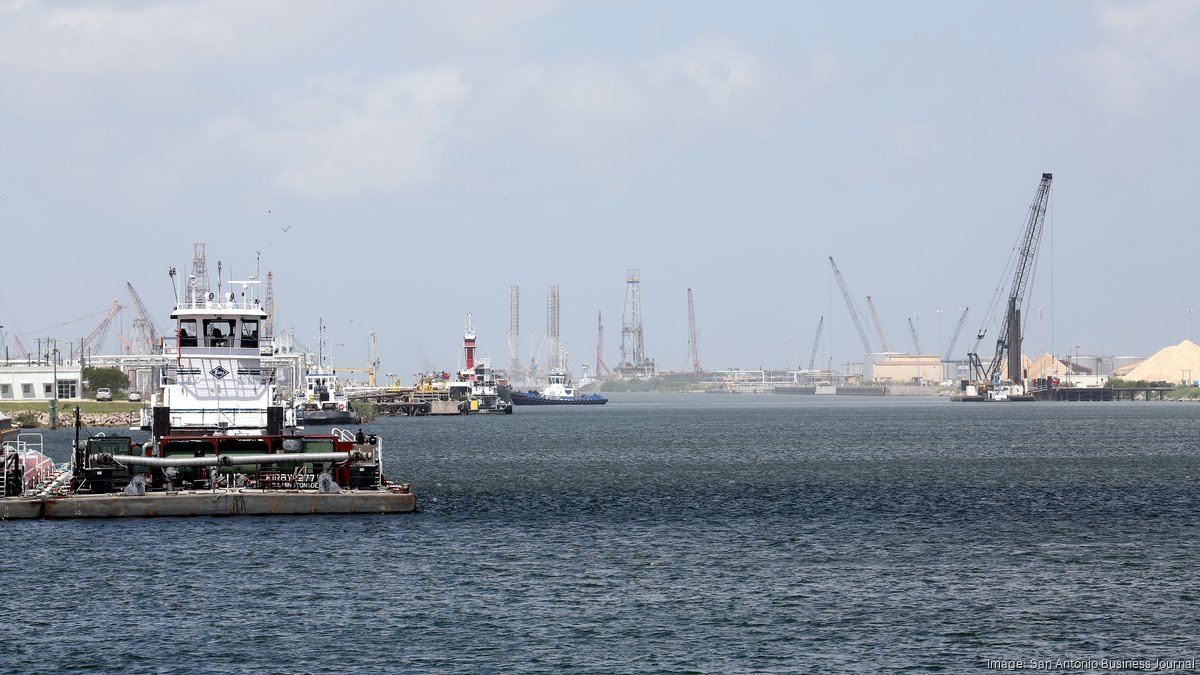
A refinery is one of several projects being eyed for the Port of Brownsville. The article is behind a paywall and provides no additional details on capacity, cost, timeline, or approvals; absent further specifics this is informational and unlikely to move markets.
A greenfield Gulf Coast refinery/port development materially reshapes regional logistics by converting voyage-time and storage friction into commercially monetizable capacity. Expect construction-driven demand for EPC services, heavy fabrication, and marine tonnage to persist for 12–36 months, then transition into steady fee-based cashflows for storage/terminal operators if the project reaches FID. Incremental refinery throughput of 100–200 kbpd (typical for new single-train projects) would be enough to move gasoline/diesel/FO balances regionally, compressing seasonal crack spreads by several dollars/bl if exports fail to absorb the output.
Second-order supply-chain impacts: catalysts, sulfur recovery, railcar/tanker demand and crane/tug availability will tighten ahead of commissioning, implying 6–18 month lead-time inflation on specialist inputs (catalyst, heat exchangers, high-spec steel). Conversely, inland pipeline and barge haulers that currently carry product northward are at risk of volume loss and margin pressure as coastal routing and export pier capacity reroute flows. Local labor market tightness can push construction costs +20–40% vs early estimates, and port congestion relief elsewhere (if simultaneous investments occur) would blunt the export arbitrage the project hopes to capture.
Key risks and catalysts: permitting and community litigation remain the dominant tail risks with the power to delay FID by 1–3 years; financing risk is non-trivial — lenders are increasingly stress-testing upstream/downstream carbon-transition scenarios which can increase sponsor equity requirements by 10–30%. Near-term catalysts to watch are (1) signed offtake/export agreements with Latin American buyers within 6–12 months, (2) major EPC contract award (clarifies timing and margin capture) within 3–9 months, and (3) any federal/state incentives or permitting decisions that materially shorten timeline to construction.
AI-powered research, real-time alerts, and portfolio analytics for institutional investors.
Overall Sentiment
neutral
Sentiment Score
0.00
