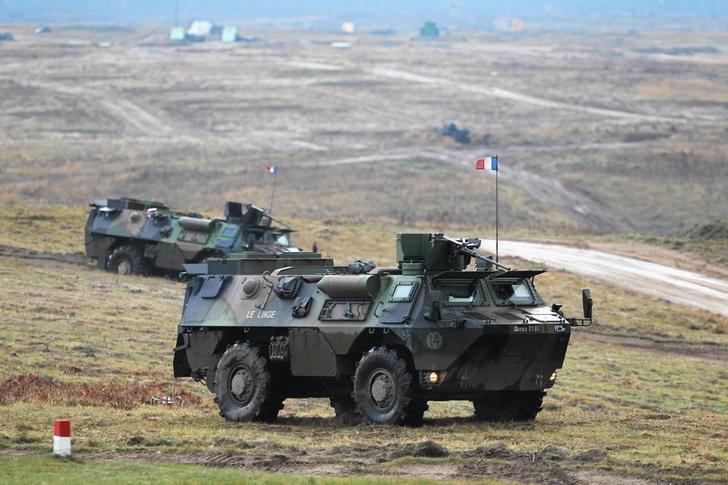
Key event: a deep U.S.-European rift over the U.S.-led war in Iran has led Spain, Italy and France to deny U.S. use of key bases (Sigonella, Rota), signaling operational obstruction within NATO. The article warns a de facto hollowing-out of NATO (formal withdrawal blocked by a 2023 law requiring a two-thirds Senate majority) could trigger multi-year, multi-trillion-euro European rearmament and a persistent "war-risk premium" on Eurozone assets and the euro, materially elevating market tail risk.
Operational frictions over basing and access are not just diplomatic — they change the unit economics of transatlantic force projection. Constrained use of forward bases raises flight-hours and tanker demand, which benefits airlift/MRO ecosystems and primes that own integrated sustainment lines; expect incremental margin capture concentrated in a handful of suppliers rather than broad industry gains.
The bigger macro channel is a durable rise in a Europe-specific risk premium. If deterrent credibility erodes, sovereign spreads and term premia on peripheral and core Euro debt both reprice higher over quarters-to-years as governments pivot to defense capex and away from social/infrastructure investment, crowding out growth assets and depressing Euro-driven consumption.
Market reaction will be staged: immediate days see USD safe-haven flows and Euro weakness; months bring sector reallocation into defense and logistics; years deliver structural vendor reshoring, procurement protectionism, and consolidated supplier bases. Key reversals are political (public recommitment to collective defense), rapid de-escalation, or binding NATO operational guarantees — any of which would materially compress the newly created war-risk premium.
Second-order policy shifts matter: reciprocal tariffs and procurement quid-pro-quo amplify barriers for European OEMs in US programs and tilt future orders toward domestic primes and trusted supply chains. That policy drift makes small-cap US contractors and specialized sustainment firms asymmetric beneficiaries versus broad European industrial exposure over a 12–36 month horizon.
AI-powered research, real-time alerts, and portfolio analytics for institutional investors.
Overall Sentiment
moderately negative
Sentiment Score
-0.65
