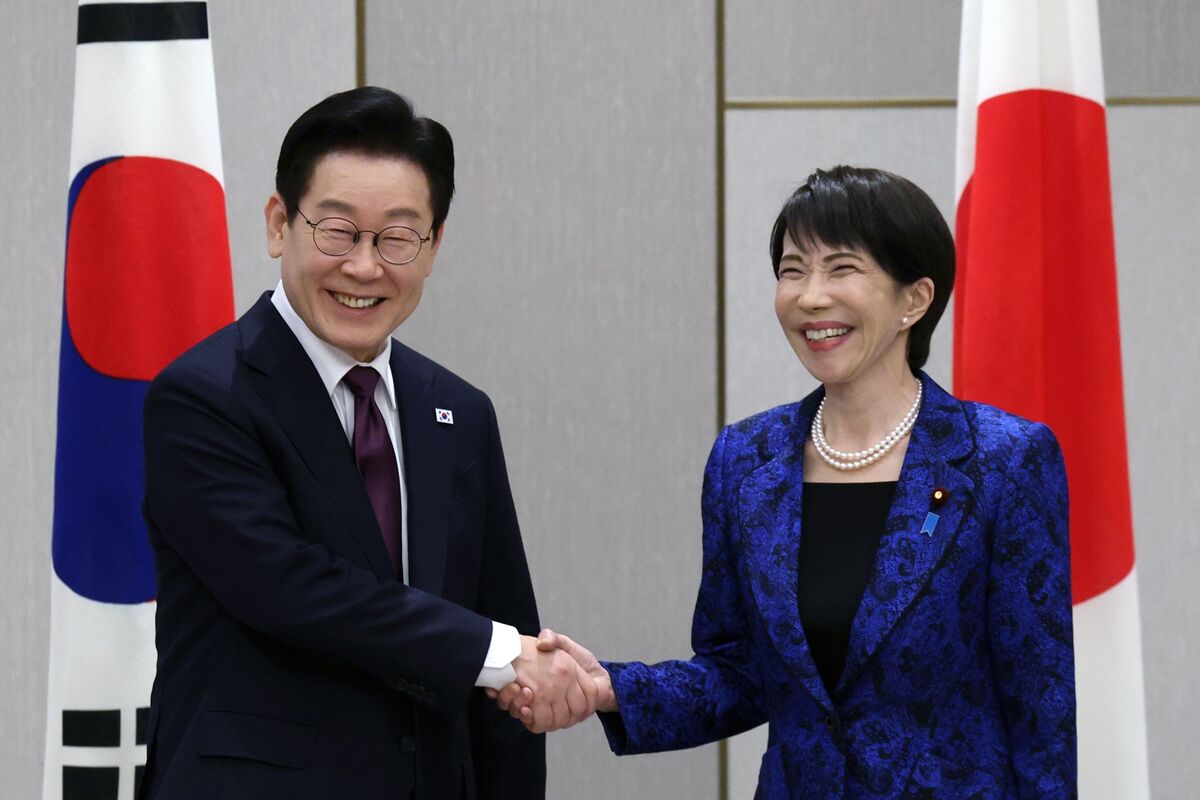
Japan and South Korea are set to meet Tuesday to strengthen economic ties amid rising uncertainty from the war in Iran and shifting US-China dynamics. The article highlights shared exposure to Middle East oil supply, US security dependence, and common concerns over China and North Korea. The tone is cautious and geopolitically driven, with potential implications for regional risk sentiment and energy markets.
This meeting is less about bilateral optics and more about risk-sharing under a higher-volatility macro regime. If Middle East disruption keeps crude elevated, Korea is structurally more exposed on the trade balance than Japan because its industrial mix is more energy-intensive and its FX is more levered to imported-input shocks; that creates a cleaner setup for KRW underperformance versus JPY on any renewed oil spike. A modest improvement in Japan-Korea coordination can help at the margin, but it does not offset the first-order drag from energy costs, so the market response should skew toward relative FX and rates rather than broad Asia beta.
The second-order beneficiary is defense and dual-use infrastructure tied to supply-chain resilience. Even without explicit policy announcements, this kind of summit increases the probability of coordinated procurement, cyber, maritime surveillance, and critical-minerals stockpiling over the next 3-12 months, which tends to support domestic defense contractors and port/logistics capex themes while pressuring firms with concentrated Middle East or China-facing revenue exposure. The broader implication is that companies with Japan-Korea manufacturing optionality gain bargaining power as both governments seek to de-risk away from single-country chokepoints.
The key risk is that the diplomatic premium is being confused with a policy premium: history shows that headline cooperation often fades unless paired with financing or procurement commitments. If US-China tensions cool or Iran-related disruption proves transient, the macro hedge here reverses quickly, and JPY/KRW cross-volatility should compress within days to weeks. Conversely, any escalation around shipping lanes would likely reprice energy, shipping insurance, and semiconductor supply chains faster than this summit can translate into actionable policy.
The contrarian view is that the market may be underpricing how much this is a relative-value signal for Korea rather than a generic Asia-positive event. Japan has more room to absorb imported inflation, while Korea’s terms-of-trade sensitivity makes it the more fragile currency and equity market if oil stays bid; that asymmetry argues against owning the region as a monolith. If policymakers signal a more durable defense-industrial or energy-security framework, the upside is in specific domestic beneficiaries, not in the broad benchmark indices.
AI-powered research, real-time alerts, and portfolio analytics for institutional investors.
Request DemoOverall Sentiment
neutral
Sentiment Score
-0.05
