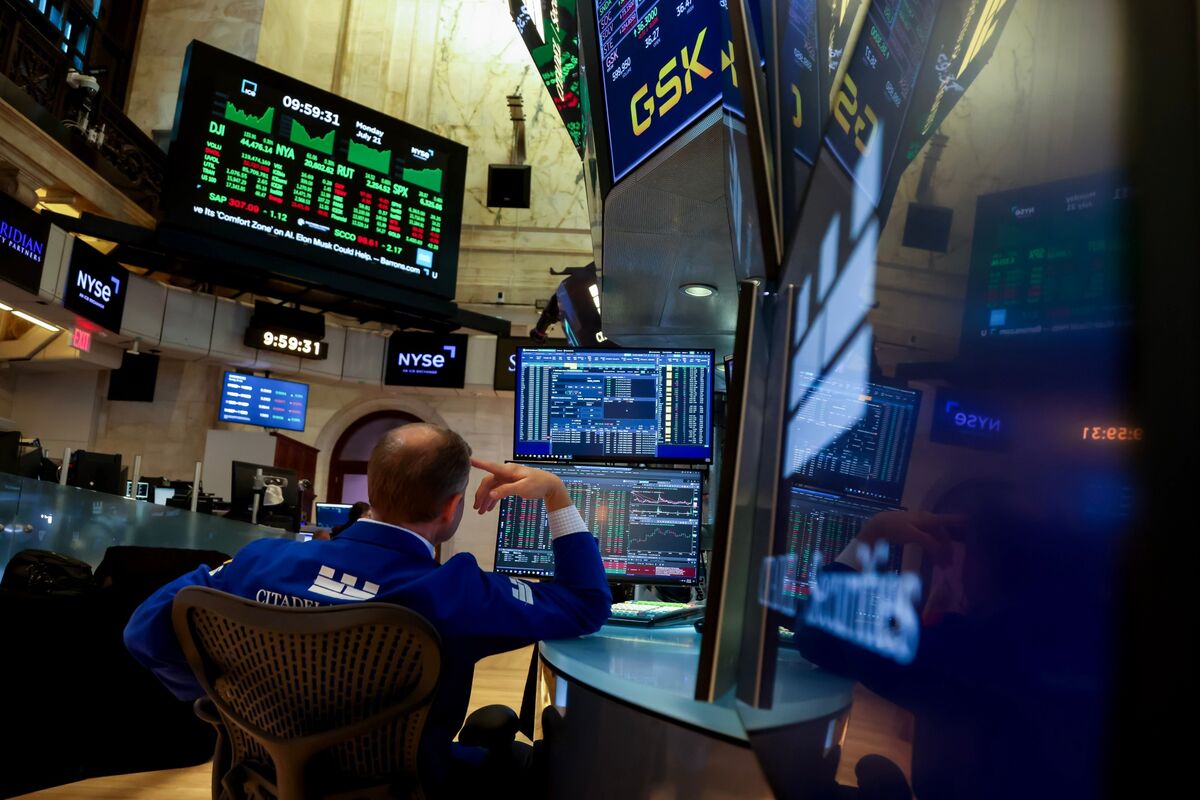
Despite the S&P 500's rally to near-record highs, a Markets Pulse survey conducted August 6-12 indicates lingering concern among traders that trade protectionism will negatively impact US assets. Seventy percent of 162 respondents believe US stocks will underperform global peers by the end of President Trump's term due to his trade policies, suggesting a significant underlying bearish sentiment for domestic equities despite current market optimism.
A significant divergence is evident between the S&P 500's trajectory toward new record highs and the underlying concerns of market professionals regarding US trade policy. A Markets Pulse survey conducted between August 6-12 highlights this disconnect, with a substantial 70% of 162 respondents expecting US stocks to underperform global peers by the end of the current presidential term due to protectionist measures. This indicates that despite current market optimism, a strong contingent of traders believes President Trump's trade policies will inflict lasting damage on the relative value of US assets, suggesting that geopolitical risk remains a primary, albeit latent, concern for investors.
AI-powered research, real-time alerts, and portfolio analytics for institutional investors.
Request DemoOverall Sentiment
moderately negative
Sentiment Score
-0.50
