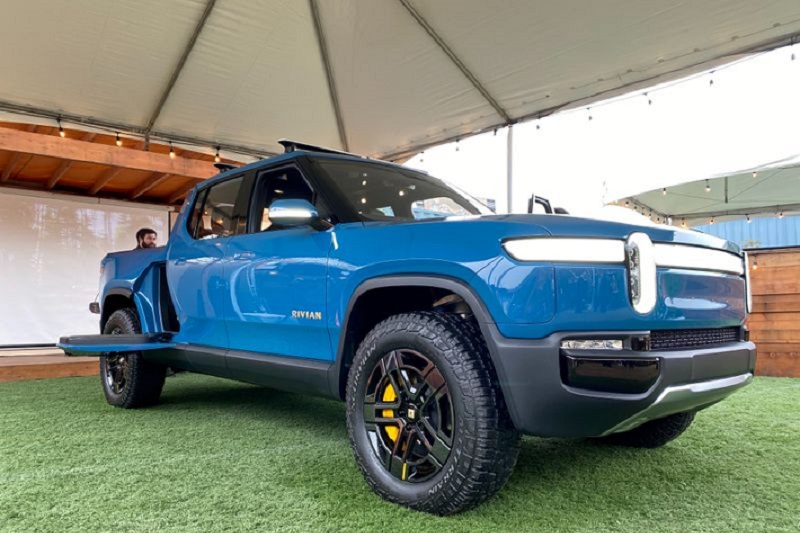
Rivian produced 10,236 vehicles and delivered 10,365 in Q1 2026, and reaffirmed 2026 delivery guidance of 62,000–67,000 vehicles. Shares declined ~1% amid broader technology sector weakness, with the move attributed to market conditions rather than company-specific misses. Production and delivery figures were in line with company expectations, suggesting a neutral near-term impact on fundamentals absent new guidance or surprises.
Rivian’s throughput stability removes one major execution overhang, shifting the market discussion toward macro/valuation rather than operational surprise. That pivot benefits firms exposed to durable, predictable EV production (battery cell partners, chassis suppliers and aftermarket/charging infra) because predictable build cadence reduces the need for aggressive incentiveing that compresses residual values and OEM margins. Conversely, high-valuation growth peers that rely on narrative upside (excess optionality in multiples) are exposed to sharper drawdowns if the sector derisks into execution-normalized multiples.
Short-term (days–weeks) price action will be dominated by macro risk premia — rate headlines, tech rotation and index flows — which can overwhelm idiosyncratic fundamentals; medium-term (3–12 months) the key drivers are margin progression, mix improvement (higher-margin trims or commercial programs) and access to capital. Tail risks that would reverse any positive re-rating include a sudden cell-supply shock, a large recall/service campaign, or a liquidity squeeze raising cost of capital; positive catalysts are visible margin improvement, OEM commercial contracts, or a macro liquidity cycle easing that re-prices growth multiples.
The consensus reaction that treats this as a pure ‘tech beta’ move is incomplete: meeting guided throughput should lower probability of execution surprise but also raises the bar for upside — the market now needs margin expansion or new revenue streams to justify further multiple expansion. That makes time-bound, convex option structures and relative-value pair trades preferable to naked directional exposure until one of the structural catalysts above materializes.
AI-powered research, real-time alerts, and portfolio analytics for institutional investors.
Overall Sentiment
neutral
Sentiment Score
0.00
Ticker Sentiment
