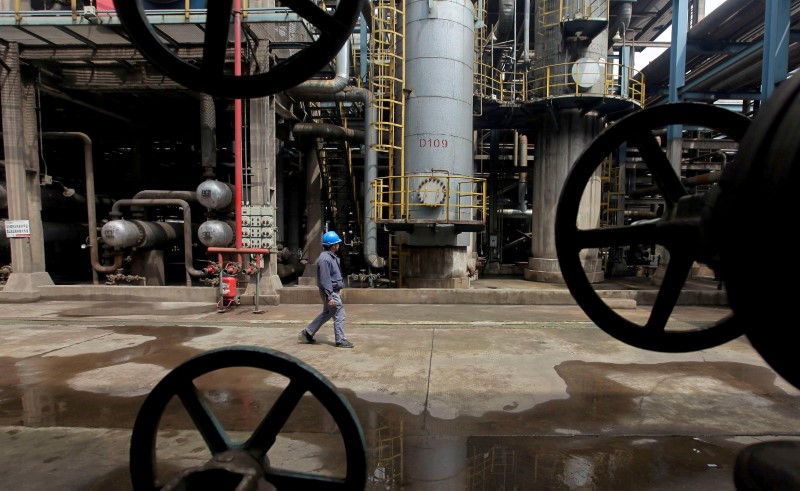
WTI crude topped $115 as the Strait of Hormuz remains largely closed to oil tankers, sharply curbing global oil availability and raising near-term inflation and U.S. growth concerns. U.S. stocks fell into a risk-off mode ahead of Q1 2026 earnings (starts with Delta on Wednesday) as markets price out Fed rate cuts; Goldman Sachs sees upside for bank net income and recommends buying BAC, C and WFC. Hedge-fund de-risking could damp capital markets activity for some banks later in the year.
A prolonged seaborne chokepoint will shift the P&L map across the physical chain: producers with flexible export routes and access to storage capture near-term backwardation while refiners and integrated players with fixed crude slates face margin squeeze. Expect product cracks (jet, diesel) to rerate independently of crude — airlines with thin hedges and variable routing costs see earnings elasticity to fuel of ~ -2% EPS per $5/bbl move over the next two quarters. Freight and insurance rate moves are the hidden lever — a 10-30% rise in voyage costs can wipe out refinery tick gains and depress arbitrage economics for seaborne barrels within 30-90 days.
Banks sit on a bifurcated payout stream: higher-for-longer rates give durable net-interest benefits over 6-12 months, but de-risking by macro funds and weaker ECM/DCM activity hits trading and fee lines immediately. The net effect is heterogenous: large retail-heavy balance sheets should see more predictable NII upside; broker-dealer-heavy franchises are exposed to an outsized near-term revenue hit if volatility depresses client flow. Measure banks on three numbers this quarter — NIM trajectory, mark-to-market trading P&L sensitivity, and trading floor utilisation — not just loan growth.
Near-term catalysts that will flip the tape are diplomatic thawing, targeted strategic releases, or rapid re-routing that normalises freight spreads; any of these would compress crude/product spreads within weeks and re-rate cyclical equities. Conversely, escalation or insurance-market dislocations would propagate into broader credit spreads, quickly shifting the trade from NII beneficiaries to beta squeezes across financials. Use the upcoming earnings cadence as discrete decision points: price in 1-3 months for revenue shock, 3-12 months for structural NII realization.
Contrarian read: the market is overpricing permanent supply loss and underpricing transient cost substitution. If insurers and charterers adapt (longer voyages, incremental tonnage), physical flows normalize faster than headline geopolitics suggest, meaning energy spot spikes are likely to mean-revert within 30-90 days while banks’ NII improvement remains sticky for 6-12 months. That asymmetry favors selectively long bank exposures funded by short-duration, options-based views on airlines and energy volatility.
AI-powered research, real-time alerts, and portfolio analytics for institutional investors.
Request DemoOverall Sentiment
mildly negative
Sentiment Score
-0.25
Ticker Sentiment
