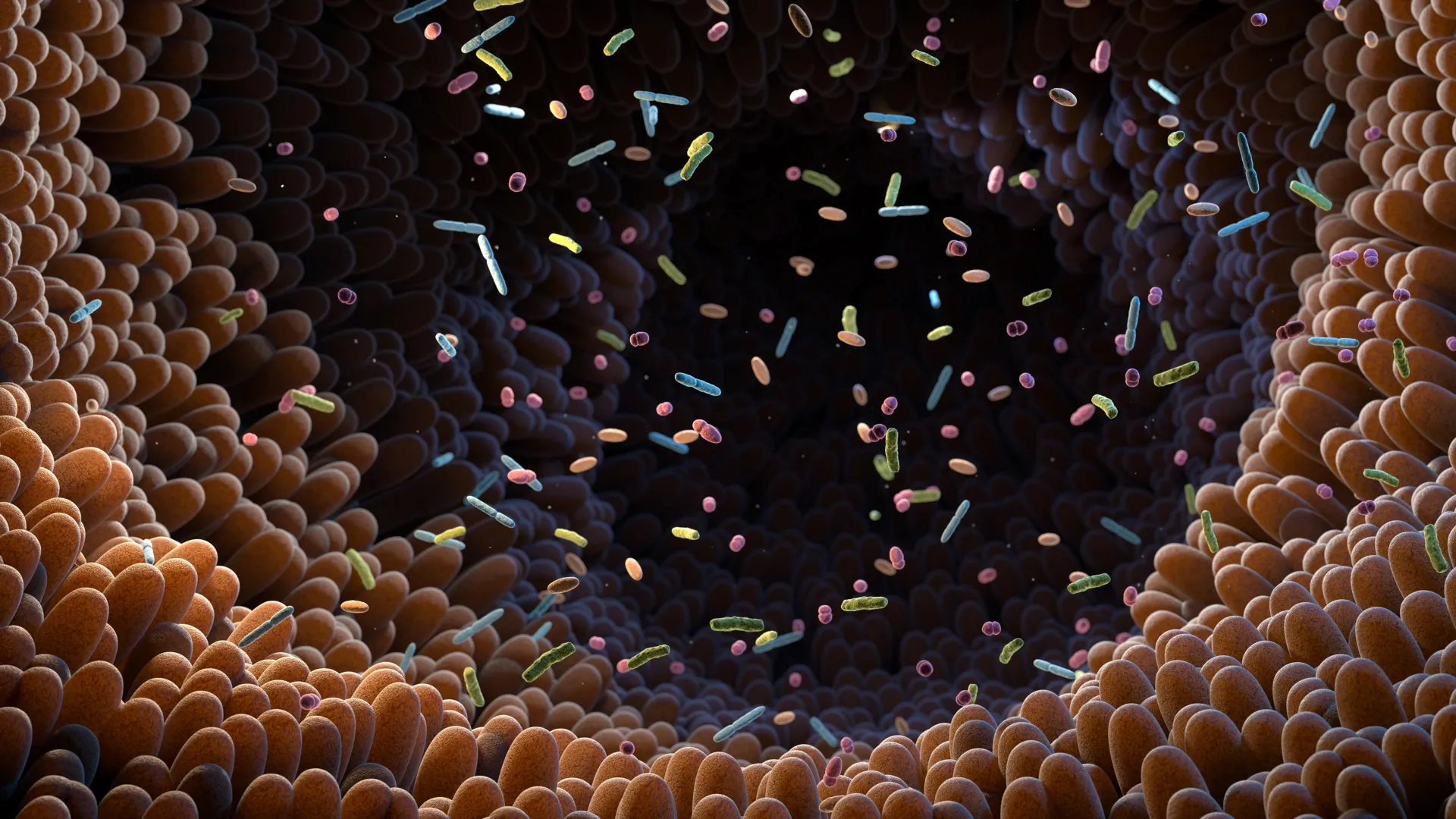
Researchers led by teams at Imperial College London and UCLouvain report in Nature Metabolism that the gut-microbial metabolite trimethylamine (TMA) binds to and inhibits IRAK4, lowering inflammation, improving insulin sensitivity in human cell and mouse models, and protecting mice from sepsis; the effect was replicated by genetic deletion or pharmacologic IRAK4 inhibition. Because IRAK4 is an established drug target, the discovery points to a readily actionable immune-metabolic axis that could be exploited via diet-modulation or drug development to address insulin resistance in type 2 diabetes—a condition affecting more than 500 million people globally—potentially accelerating translational paths for new therapies.
Researchers led by Imperial College London and UCLouvain report in Nature Metabolism that the gut-microbial metabolite trimethylamine (TMA) binds to and inhibits the immune kinase IRAK4, lowering inflammation and improving insulin sensitivity in human cell assays and mouse models; TMA also protected mice from sepsis-related death. The beneficial phenotype produced by TMA was recapitulated by genetic deletion of IRAK4 and by pharmacologic IRAK4 inhibition, establishing mechanistic equivalence between the microbial metabolite and direct target modulation.
Because IRAK4 is an established drug target, the study creates a translationally attractive immune–metabolic axis: either direct IRAK4 inhibitors or strategies that increase TMA production (via diet or microbiome modulation) could plausibly reduce insulin resistance in type 2 diabetes, a disease affecting over 500 million people worldwide. The work is backed by multiple major academic groups and funders, which should accelerate follow-on preclinical and early translational activity.
Key near-term limitations are that data remain preclinical (cells and mice) and safety/efficacy of chronic IRAK4 inhibition or TMA augmentation in humans is untested; regulatory and off-target immune effects are material risks. Market sentiment from the coverage is mildly positive, implying potential incremental interest in IRAK4-focused and microbiome therapeutics pending human trial readouts and partnership or licensing announcements.
AI-powered research, real-time alerts, and portfolio analytics for institutional investors.
Request DemoOverall Sentiment
mildly positive
Sentiment Score
0.32
