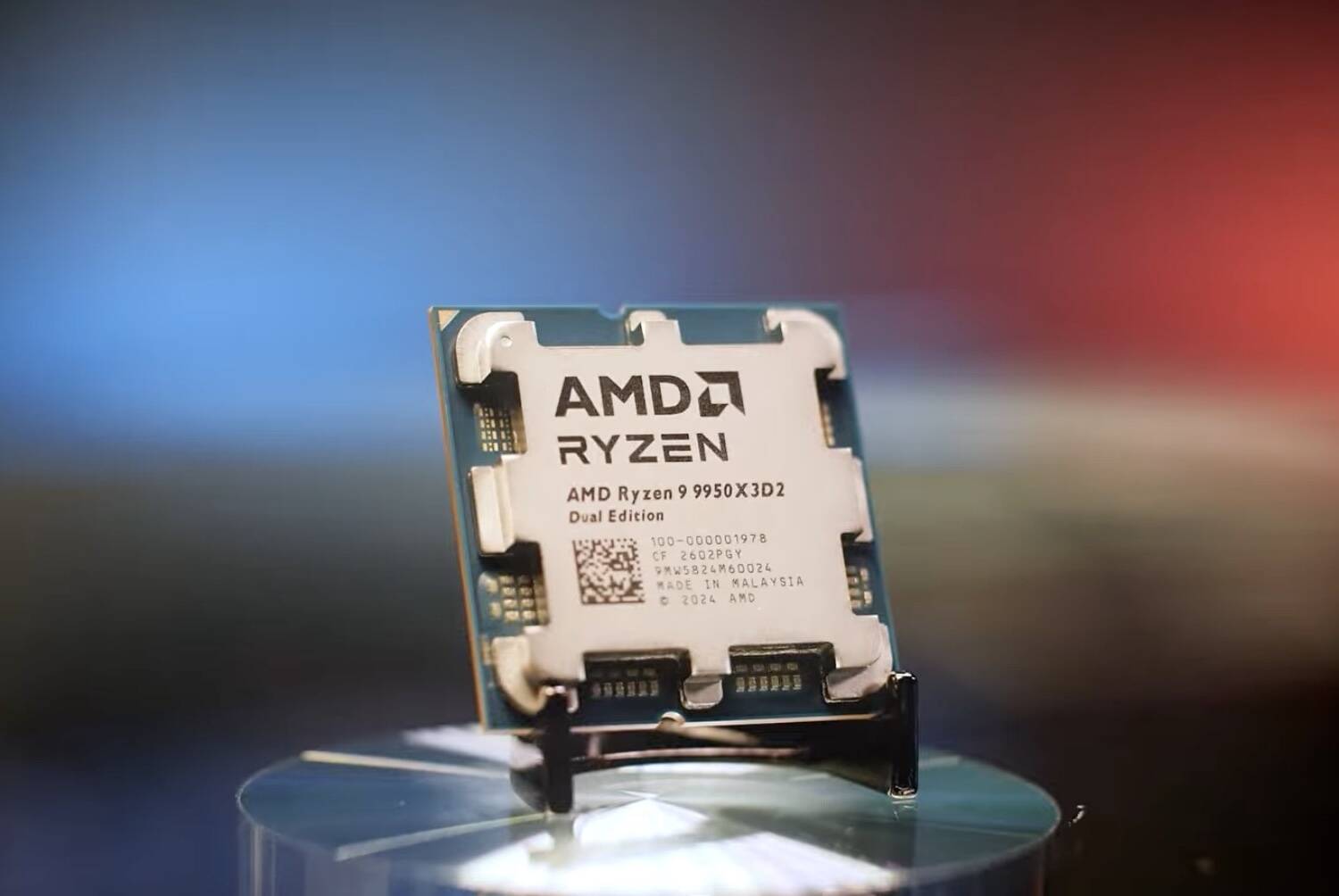
AMD is launching the Ryzen 9 9950X3D2 Dual Edition (16 cores) featuring a 192 MB L3 cache (208 MB total including L2), 4.3 GHz base / 5.6 GHz boost, 200W TDP, and a claimed 5–13% performance improvement vs. the single-V-Cache 9950X3D; it hits retail on April 22. Pricing is not yet announced but is expected to be premium (9950X3D currently >$649), leaving adoption risk versus much cheaper Intel alternatives (Core Ultra 200S Plus at $200–$300) despite AMD's gaming performance advantage.
AMD's dual-V‑Cache move is a targeted attempt to convert a niche gaming advantage into a defensible high‑end creator CPU franchise; by expanding on the cache-led performance axis it forces competitors to chase architecture and packaging rather than just pushing cores or clocks. That shifts the competitive battleground toward advanced packaging supply chains and SKU-level ASPs, where limited SRAM-tile capacity and higher BOM/TDP create natural pricing levers for AMD if demand remains concentrated in premium buyers.
There are important limitations that cap the upside: persistent core-parking and cross-die communication overhead mean this isn’t a linear throughput upgrade for multi-threaded server/workstation workloads, so enterprise buyers may still prefer homogeneous dies or chiplet designs without V‑Cache tradeoffs. Operationally, the product favors OEMs and channel SKUs with premium cooling and power delivery — expect near-term demand skew to higher-margin motherboards, cooler vendors and retail bundles rather than broad DIY volume expansion.
Competitively, Intel’s aggressive low-cost high-core push can blunt unit growth in the mainstream market even if AMD preserves high‑end pricing; the meaningful catalyst set is retail reviews, launch supply, and April–Q2 sell‑through rather than a single benchmark. Key downside catalysts are clear: if independent benches show <5% real-world uplift across creator toolchains, or if AMD prices the 9950X3D2 so high that sell‑through stalls, the perceived moat will compress rapidly and inventory overhang will pressure margins and stock reaction within quarters.
AI-powered research, real-time alerts, and portfolio analytics for institutional investors.
Overall Sentiment
mildly positive
Sentiment Score
0.25
Ticker Sentiment
