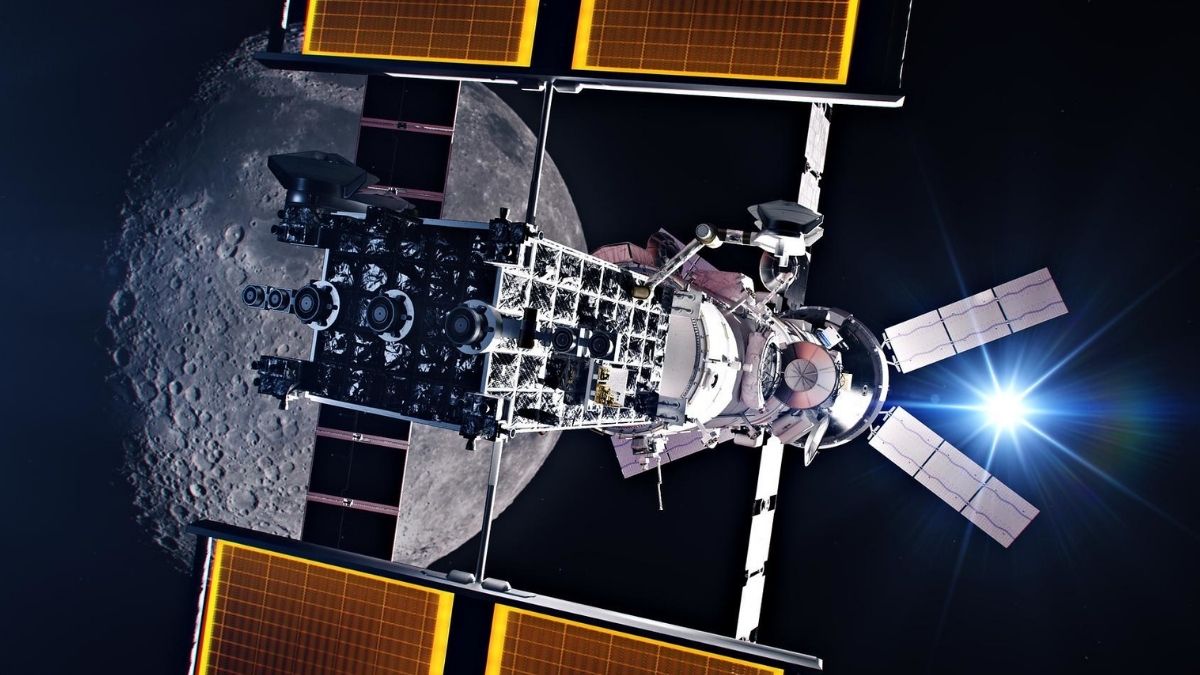
NASA will invest $20 billion over the next seven years to build a lunar surface base near the south pole and has paused the Gateway lunar orbital station program, reallocating hardware and partner commitments. The move reprioritizes funding and missions across dozens of flights, keeps the Artemis 2028 return-to-Moon goal intact while shifting flight sequencing (Artemis 2 now targeting early April). Expect material implications for aerospace contractors and international partners (ESA engaging consultations), with potential upside for lunar lander and surface-infrastructure suppliers but near-term schedule and contract uncertainty.
Reallocating a multi-year $20B spend from orbital infrastructure to surface systems materially shifts the procurement cake: modules and orbital avionics are replaced by sustained demand for habitats, power (nuclear + high-efficiency PV), ISRU (regolith processing), robotics, and a much higher launch cadence for heavy lift and cargo. At ~$2.9B/year on average, the program becomes a steady, program-of-record flow rather than lumpy big-ticket station buys; that favors flexible commercial suppliers and systems that can iterate across dozens of missions rather than a small number of bespoke modules.
Second-order supply-chain effects are underappreciated. Firms running production lines optimized for long-lead station hardware face an industrial retooling window where capacity must be converted for surface landers, rover chassis, power systems and in-situ manufacturing equipment — creating a 12–36 month execution risk but also a significant order-book opportunity for component suppliers (motors, thermal management, high-reliability power electronics). Separately, a sustained surface focus increases the marginal value of high-payload launch (commercial heavy-lift) and on-orbit logistics players that can provide cargo delivery repeatability.
Policy and geopolitics are the wildcards. International partners will trade industrial offsets and workshare for program continuity, potentially stretching schedules and increasing per-mission unit costs; conversely, a clear commercial-forward plan could unlock private capital and reduce congressional appetite to fully foot future bills. For markets, expect a two-stage move: near-term re-rating of firms tied to the canceled architecture, then a multi-quarter reallocation into small/medium-cap suppliers of power, robotics, and propulsion as awards crystallize.
AI-powered research, real-time alerts, and portfolio analytics for institutional investors.
Request DemoOverall Sentiment
neutral
Sentiment Score
0.05
