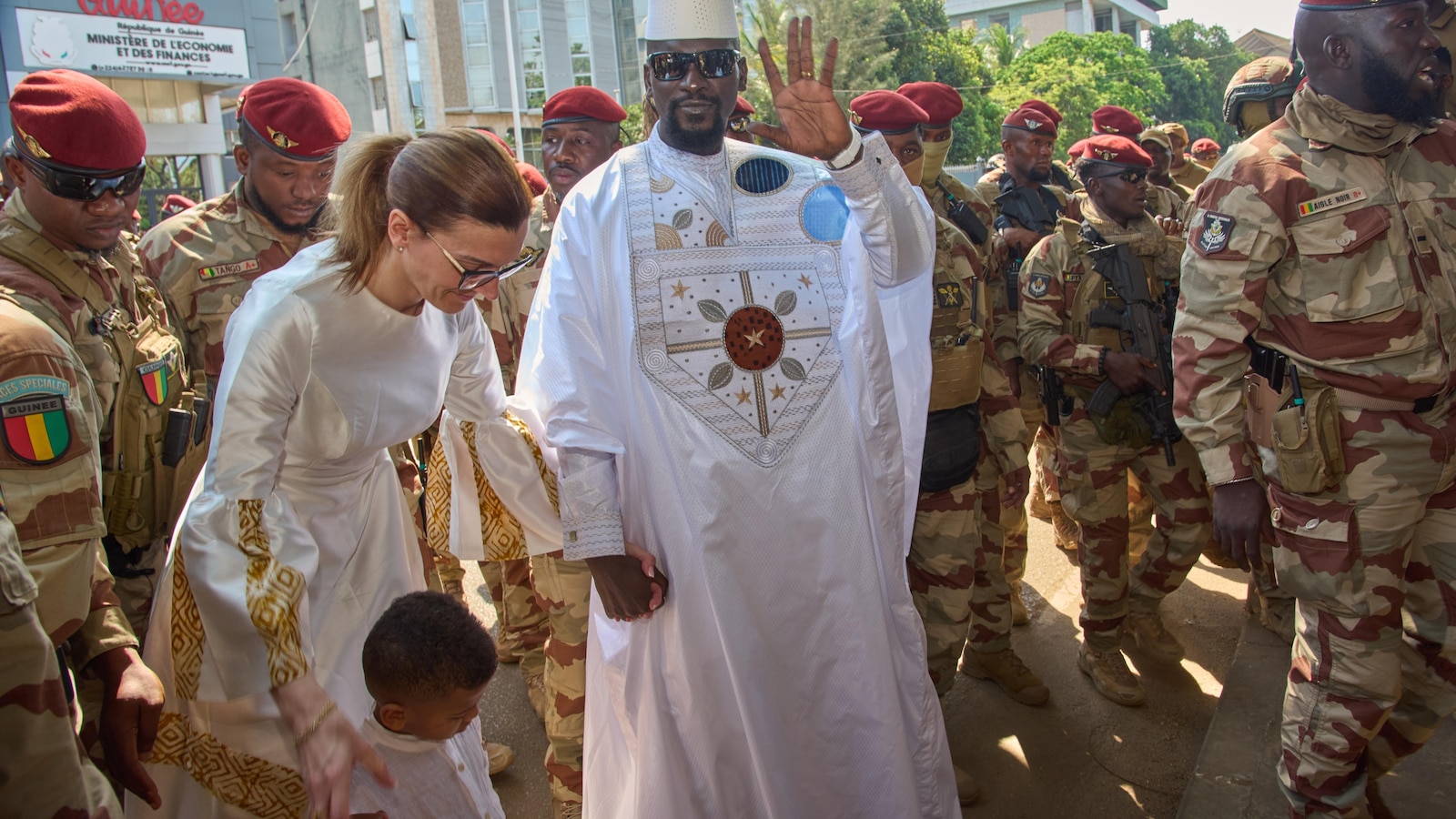
Guinea’s Supreme Court has confirmed junta leader Gen. Mamadi Doumbouya as president after he won 86.7% of the Dec. 28 vote — the country’s first election since the 2021 coup and the first under a new constitution that lifted a ban on military candidates and extended the presidential term to seven years. The result entrenches political continuity amid accusations of crackdowns on opposition and raises governance and sovereign-risk considerations for investors, even as commodity fundamentals remain relevant: Guinea is the world’s largest bauxite exporter and the Simandou iron-ore project (75% Chinese-owned) began production in December.
Market structure: The confirmed transition from junta to elected president removes a near-term coup tail and increases probability of uninterrupted development at Simandou (Chinese 75% owner) — a winner set includes Chinese state miners/steelmakers and port/rail contractors while pure-play iron-ore miners (equity leveraged to spot 62% Fe pricing) and Guinea sovereign creditors face downside if supply ramps. Chinese firms gain pricing and offtake power; global iron-ore pricing power shifts toward state-backed supply with potential downward pressure of 10–20% if Simandou reaches +20 Mtpa within 24 months.
Risk assessment: Tail risks remain: contract renegotiation, nationalization, localized unrest or infrastructure bottlenecks could shut output for months; probability medium but impact high for any firm with Guinea holdings. Near-term (days) market reaction will be muted; short-term (3–12 months) expect volatility around production announcements and FX; long-term (1–3 years) structural supply increase can compress iron-ore margins. Hidden dependency: Chinese domestic steel demand and shipping/rail capacity are the gating variables; watch 30–60 day shipping rates and Chinese PMI for demand signal.
Trade implications: Relative-value: short iron-ore exposed miners (RIO, BHP) vs long integrated steelmakers (MT, PKX) to capture margin convergence; use 6–12 month options to limit downside. Hedge EM/fringe sovereign exposure: reduce Guinea/West-Africa local‑currency risk and buy political‑risk insurance or CDS where possible. Size and triggers: small, tactical positions (1–3% portfolio each) with clear stop-loss tied to iron‑ore CFR price (>+15% sustained 30 days) or visible production ramp confirmations.
Contrarian angle: Consensus treats the vote as increased political risk, but legitimation may lower coup risk and accelerate project delivery — an underpriced outcome benefiting Chinese buyers and logistics providers. Historical parallels (resource projects in post‑coup stabilization phases) show initial investor fear then multi-year supply growth; unintended consequence: faster-than-expected supply can crush junior miner valuations while selectively boosting downstream steel names and shipping throughput.
AI-powered research, real-time alerts, and portfolio analytics for institutional investors.
Request DemoOverall Sentiment
mildly negative
Sentiment Score
-0.25
