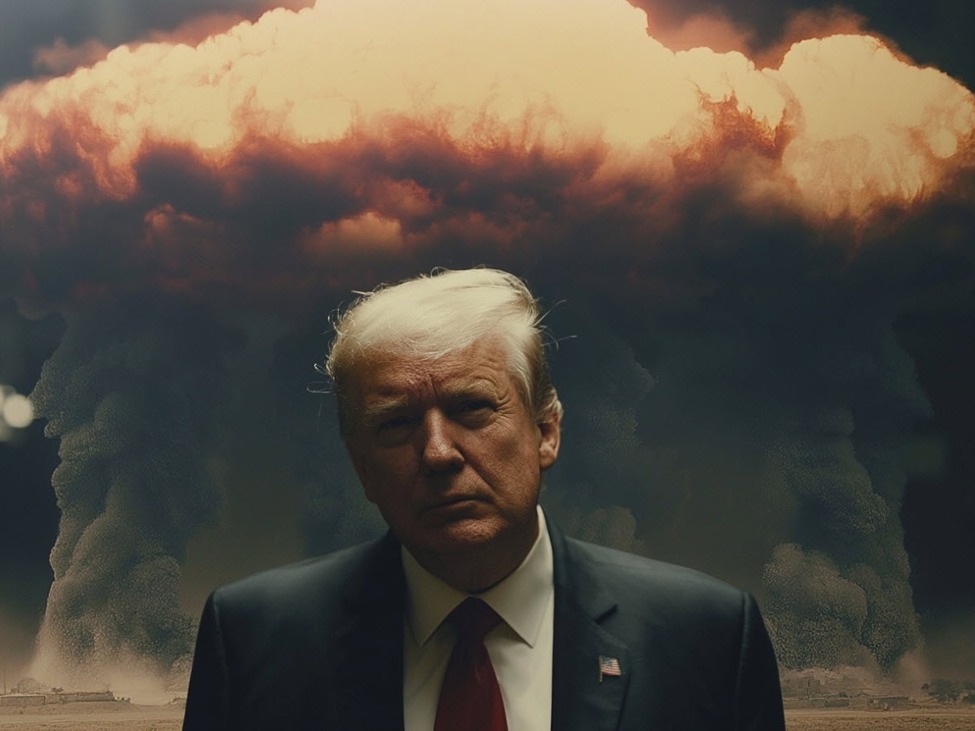
Trump reportedly threatened to halt weapons shipments to Ukraine unless European countries joined a Hormuz coalition, triggering a joint pledge from France, Germany and the UK (coordinated on March 19) and more than 35 signatories in follow-up discussions. He also told Reuters he would "absolutely" consider withdrawing from NATO, a move that has increased political and defense‑spending uncertainty and pushed stocks off recent highs. Watch upcoming talks led by Starmer with the 35 signatories and any credible plan to reopen the Strait of Hormuz — a viable reopening plan would likely drive oil prices down, while failure or escalation would keep energy risk premia elevated.
This episode creates a new pricing regime where geopolitical fallout in one theater becomes an explicit bargaining chip in another; that raises two durable second-order effects — (1) higher baseline political risk premia priced into energy, shipping and defense for weeks-to-months, and (2) accelerated European defense procurement optionality on a multi-quarter horizon as capitals plan for both US engagement and possible rapid unilateral security steps. Markets will oscillate between a near-term oil-risk premium (hours–weeks driven by headlines and tanker insurance rates) and a longer-term capex rerate in defense budgets (3–18 months) that feeds OEM order books and supplier lead times.
The transmission mechanisms matter: shipping insurance and time-charter rates reprice within days, raising operational costs for refiners and shippers and compressing coastal refinery margins; defense contract RFPs and procurement funding decisions reprice over quarters, benefiting firms with near-term manufacturing capacity and backlog visibility. A credible “reopen-Hormuz” plan is a binary catalyst that can remove the oil risk premium quickly (days–weeks) but it requires enforceable guarantees and verifiable IRGC cooperation — probability of that is <50% near term, so expect oil volatility to remain elevated until verifiable deployment or binding sanctions produce observable Iranian concessions.
Positioning and sentiment are uneven: risk-off flows are already visible in equities and will amplify if rhetoric escalates; conversely, a broad coalition statement and tangible de-escalation steps would produce sharp mean-reversion in energy and shipping names. The practical trade is to separate short-dated headline risk (tradeable with options and short-duration pairs) from long-duration structural shifts in defense procurement and insurance pricing (investment-grade equity exposure with 6–18 month time horizon).
AI-powered research, real-time alerts, and portfolio analytics for institutional investors.
Request DemoOverall Sentiment
mildly negative
Sentiment Score
-0.25
