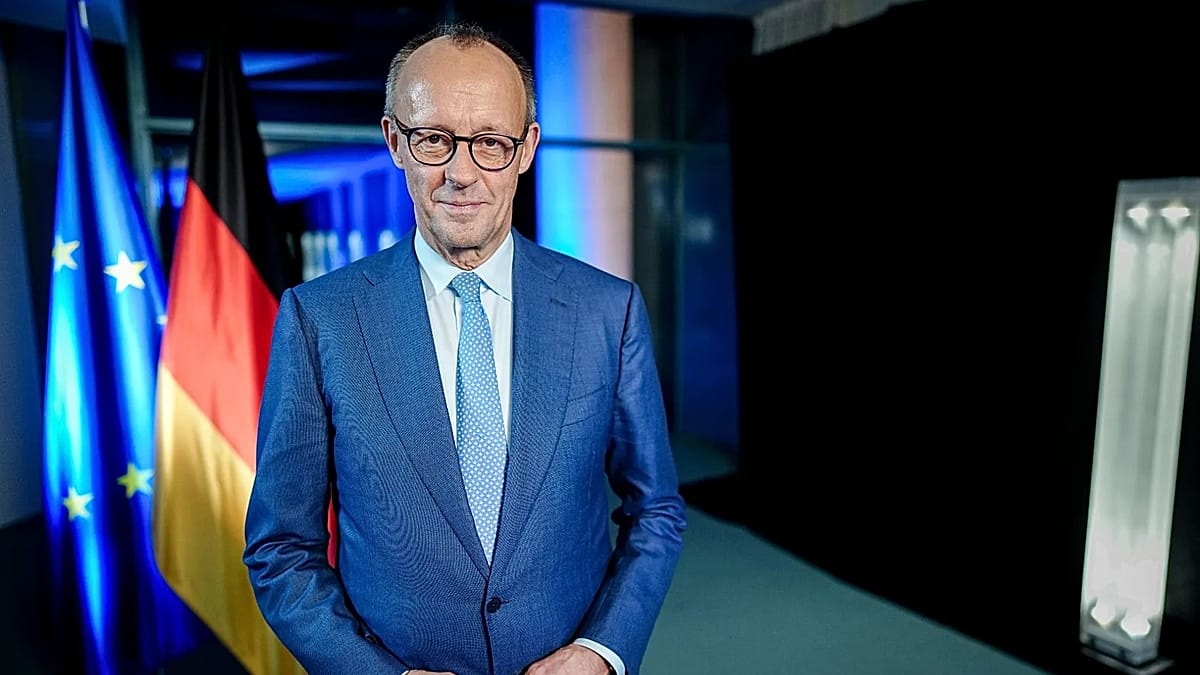
Chancellor Friedrich Merz used his New Year's address to frame Germany and Europe as facing persistent geopolitical and economic strain—highlighting Russia's war in Ukraine, daily cyberattacks and espionage, rising protectionism, strategic raw‑material dependencies and global trade frictions—while asserting Germany's capacity to act. He signalled a push for greater European security autonomy, stronger deterrence, and domestic structural reforms including pensions and welfare, implying potential longer‑term fiscal pressure and shifts in defense and industrial policy that investors should monitor ahead of a pivotal 2026 political moment.
Market structure: Merz's signal accelerates a multi-year reallocation toward European defense, cybersecurity, and critical‑materials supply chains. Expect incremental demand for defense primes (Airbus AIR.PA, Rheinmetall RHM.DE, Thales HO.PA), battery/rare‑earth supply (Albemarle ALB, MP Materials MP) and domestic semiconductor/cyber vendors, shifting pricing power toward suppliers with EU content and on‑shore capabilities over 12–36 months.
Risk assessment: Near‑term market impact is low (days), but medium (3–12 months) and long term (1–4 years) tail risks include protectionist backlash, protracted procurement lead times, and higher German deficits pushing EUR rates wider by 20–50bp if >€20bn incremental defense spending occurs. Hidden dependencies: industrial contractors reliant on Chinese supply chains and CapEx cycles create second‑order margin squeeze; cyber retaliation risks could spike idiosyncratic volatility.
Trade implications: Tactical plays favor 6–24 month exposures: bias long select defense/cyber equities and miners for critical inputs, reduce long German sovereign duration by ~25% and overweight EUR IG corporate linked to defense capex. Use calendar/LEAP call spreads to cap premium exposure while capturing policy realization between 3–18 months.
Contrarian angle: Markets may overprice immediate wins—procurement is lumpy and earnings will lag; avoid names without visible order books. A smarter play is to buy firms with confirmed 12‑18 month contract pipelines or integrated raw‑material control rather than broad ETFs, and watch for 10–20% pullbacks around policy noise for entry.
AI-powered research, real-time alerts, and portfolio analytics for institutional investors.
Request DemoOverall Sentiment
mildly negative
Sentiment Score
-0.25
