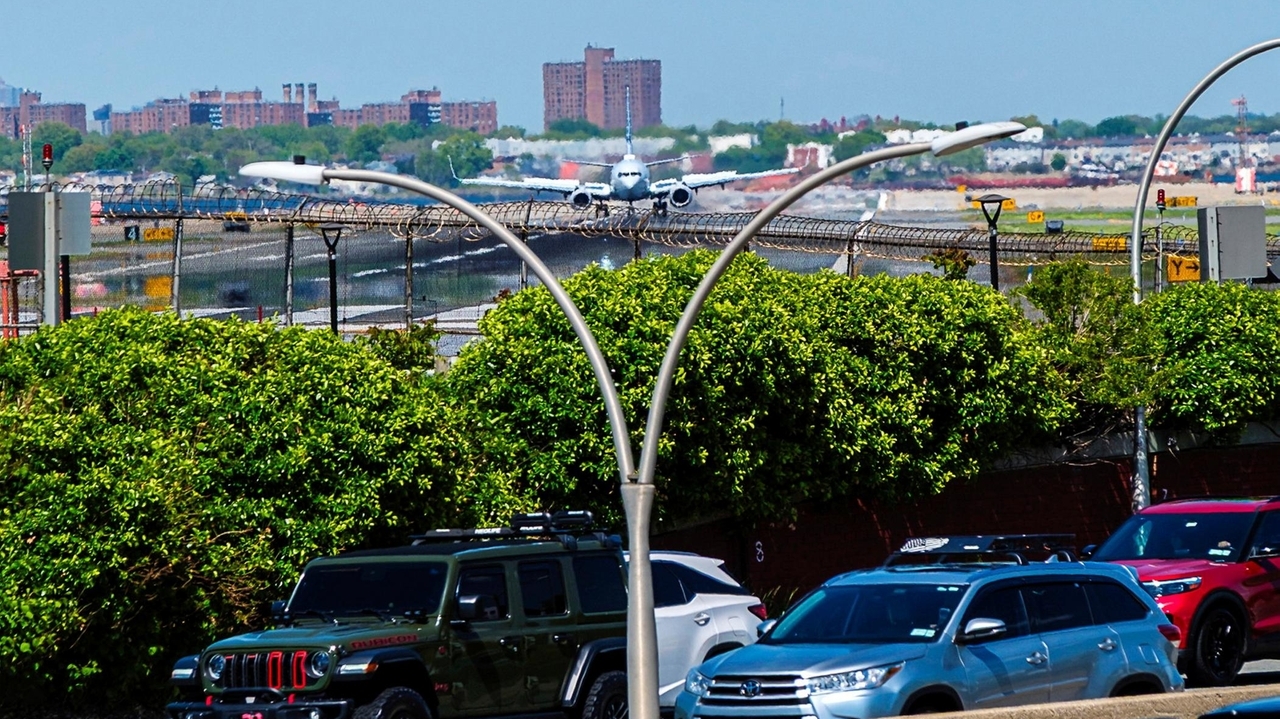
A United Airlines jet with about 230 people aboard struck a light pole and a tractor-trailer near Newark Liberty International Airport, prompting an NTSB accident investigation and a United safety inspection. The article highlights that airports in densely populated areas such as Newark, LaGuardia, Kennedy, Republic, and MacArthur face greater exposure to roadways and urban infrastructure, though the overall probability of a repeat incident remains low. Market impact should be limited, but the event reinforces safety scrutiny around airport operations and approach-zone encroachment.
The immediate market read is not about a one-off repair bill; it is about the repricing of operational risk at constrained urban airports. That matters most for carriers with heavy exposure to the Northeast corridor because even a low-probability event can trigger outsized scrutiny, slower throughput, and higher insurance and compliance costs. The second-order effect is that the headline risk is asymmetric: one more incident in the next few months would likely force capacity reviews, slot/approach restrictions, or procedural changes that hit schedule reliability before they hit direct costs. UAL is the cleanest public-market expression, but the real issue is not aircraft damage — it is potential delay in turnaround, crew planning, and airport operations while inspections and investigations linger. In a hub system, even a modest increase in operational friction can spill into missed connections and higher reaccommodation expense, which tends to show up first in margins rather than traffic. If the NTSB process keeps the story alive, expect a short-lived but tradable premium on “safety diligence” at the expense of airlines with dense East Coast exposure. Contrarianly, the consensus may be overestimating the probability of a structural demand hit. Travelers rarely reprice airline choice on airport-approach safety unless there is a repeat event or a clear regulatory action, so the stock reaction should fade once the investigation narrows to specifics. The bigger medium-term winner may be airports and adjacent infrastructure spend: any push for enhanced separation, lighting, radar, or obstacle mitigation creates a slow-burn capex theme with defense-like characteristics, while the airline bears the near-term cost. The key catalyst window is days to weeks for narrative risk, and months for any regulatory findings. If investigators point to controllable factors rather than systemic airport design, the equity impact should mean-revert quickly; if not, the issue can expand into a broader Northeast airport safety review that would pressure schedules and maintenance spending into next year.
AI-powered research, real-time alerts, and portfolio analytics for institutional investors.
Request DemoOverall Sentiment
mildly negative
Sentiment Score
-0.15
Ticker Sentiment
