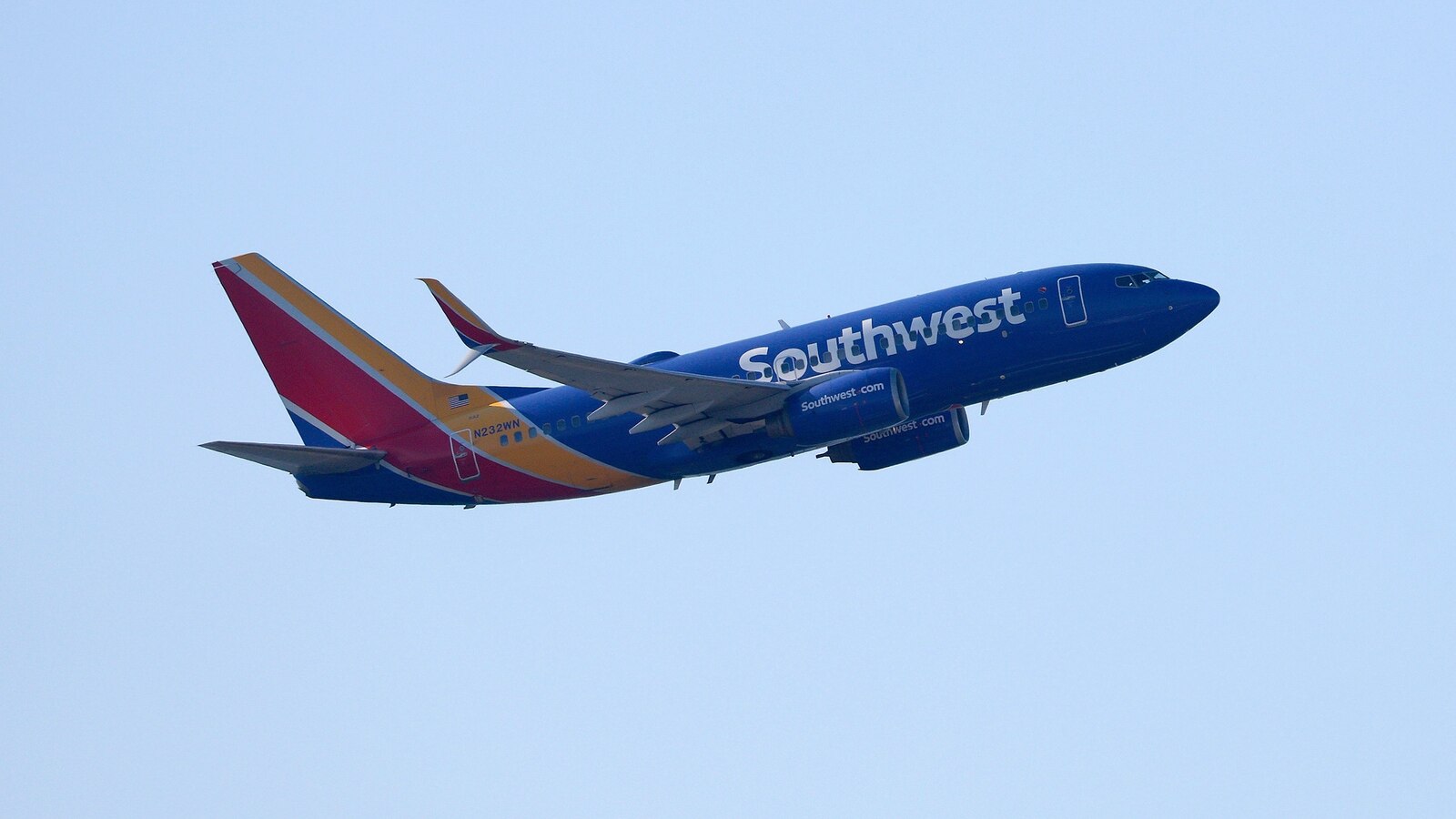
Southwest Airlines has ended its 53-year open-seating policy and implemented assigned seating effective this week, rolling out group-based boarding (groups 1–8), two alternating gate lanes, and digital gate displays; the change was announced in July 2024. Basic fares will receive random seat assignments at check-in, Priority Boarding and premium/extra-legroom seats are ticketed, and the carrier updated its customers-of-size policy to require advance purchase of an extra seat (refundable only if an empty seat exists). The move aligns Southwest with major competitors, creates new opportunities to monetize seat selection and ancillary services, and could modestly boost ancillary revenue and yield while carrying potential customer-satisfaction risk.
Market structure: Southwest (LUV) is the direct beneficiary — the shift monetizes seat assignments and can raise ancillary revenue roughly $5–$15 per pax, implying a conservative RASM uplift of ~1–3% over 12–24 months. Winners also include airport services and co-branded card partners; losers are price-sensitive leisure travelers and potentially rivals that lose share if Southwest converts ancillaries into yield without volume loss. The change narrows behavioral differences vs. legacy carriers (UAL, DAL), compressing a non-price differentiation advantage Southwest held.
Risk assessment: Key tail risks are (1) operational disruption/boarding confusion producing a PR/demand shock; (2) DOT/regulatory scrutiny or class-action suits over family seating, and (3) employee/union pushback. A single major operational failure could swing quarterly results by >5–10% and reverse sentiment quickly; effects are immediate-to-short-term (days–months) while margin benefits unfold over quarters to years. Hidden dependencies include consumer loyalty elasticity (if churn >1–2% the revenue trade-off may be neutral) and execution complexity increasing turn times.
Trade implications: Tactical long LUV exposure is warranted but sized and hedged: expect a 6–12 month upside from ancillaries and modest margin expansion; pair trades (long LUV, short UAL) isolate execution/monetization benefits. Options can define risk: buy 6–12 month LUV call spreads sized to 0.5–2% of portfolio rather than naked long; avoid large directional unhedged positions until 2–3 quarters of ancillaries data arrive. Cross-asset: tighter LUV credit spreads if successful; jet-fuel and FX impacts negligible.
Contrarian angles: The market underestimates that predictable seating can improve turn efficiency (1–3 min per turn → ~0.5–1% additional block hours) and reduce contested boarding lawsuits vs. chaotic open seating, which may boost utilization more than ancillaries alone. Conversely, adoption risk is underappreciated: if consumer churn hits >2% or DOT forces policy reversals within 90 days, upside evaporates. Monitor ancillary revenue/pax, complaints, and boarding-time metrics over next 1–3 quarters for true signal.
AI-powered research, real-time alerts, and portfolio analytics for institutional investors.
Request DemoOverall Sentiment
mildly positive
Sentiment Score
0.25
Ticker Sentiment
