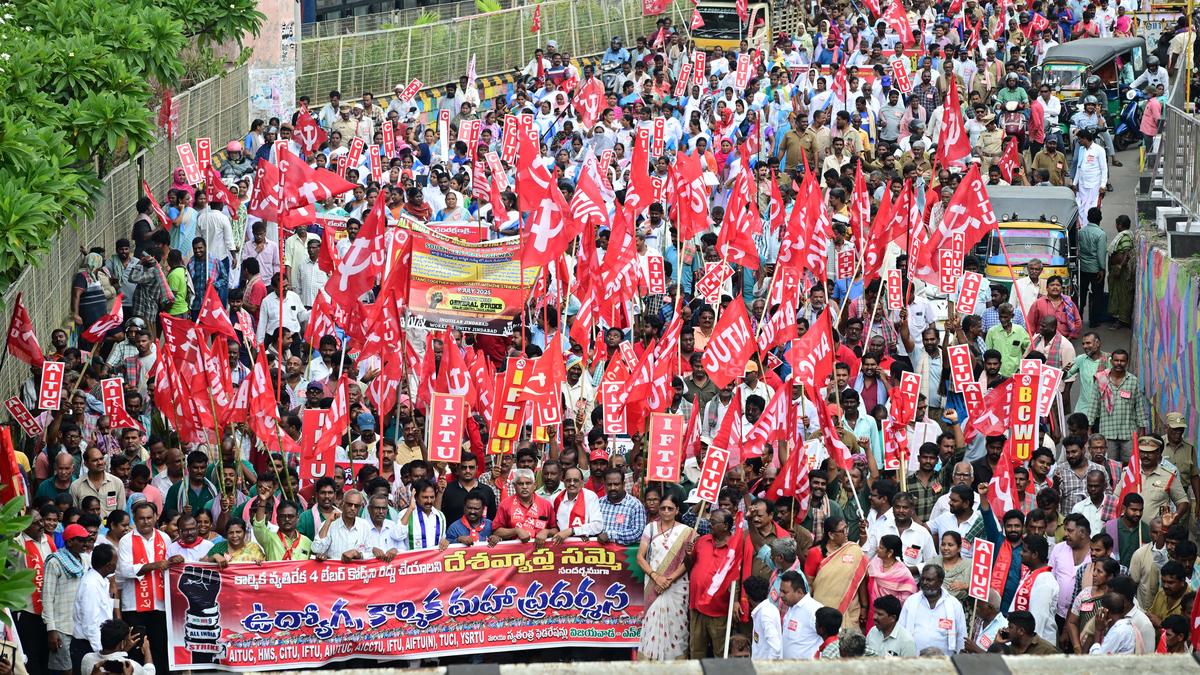
Over 250 million workers participated in a nationwide general strike across India on July 9, 2025, organized by 10 central trade unions and supported by farmers and other groups, primarily protesting the Union government's proposed four Labour Codes, alongside concerns over rising inequality and unemployment. The strike significantly impacted critical sectors including power, mining, finance, and public transport, with reports of market closures in several regions. Union leaders stated this action marks the beginning of sustained joint protests with farmers against the imposition of the Labour Codes, signaling potential ongoing industrial unrest and policy challenges that could influence India's economic stability and investment climate.
A nationwide general strike on July 9, 2025, involving over 250 million workers, signals a significant escalation of opposition to the Indian government's economic policies. The primary catalyst is the proposed four Labour Codes, which unions contend will erode worker protections to favor employers. The strike's effectiveness is underscored by its broad impact on critical sectors, including power, mining, finance, and transport, leading to market closures and a 'bandh-like' situation in numerous states. This event is not an isolated incident but the stated beginning of a 'prolonged battle,' critically reinforced by a strategic alliance with the influential Samyukt Kisan Morcha (SKM) farmers' union. The strongly negative sentiment (-0.6) and high market impact score (0.7) reflect the material risk of sustained industrial and social unrest, which could disrupt economic activity, delay key reforms, and create a volatile operating environment. The protest also draws on wider public discontent regarding inflation and unemployment, indicating a challenging political landscape for the government.
AI-powered research, real-time alerts, and portfolio analytics for institutional investors.
Request DemoOverall Sentiment
strongly negative
Sentiment Score
-0.60
