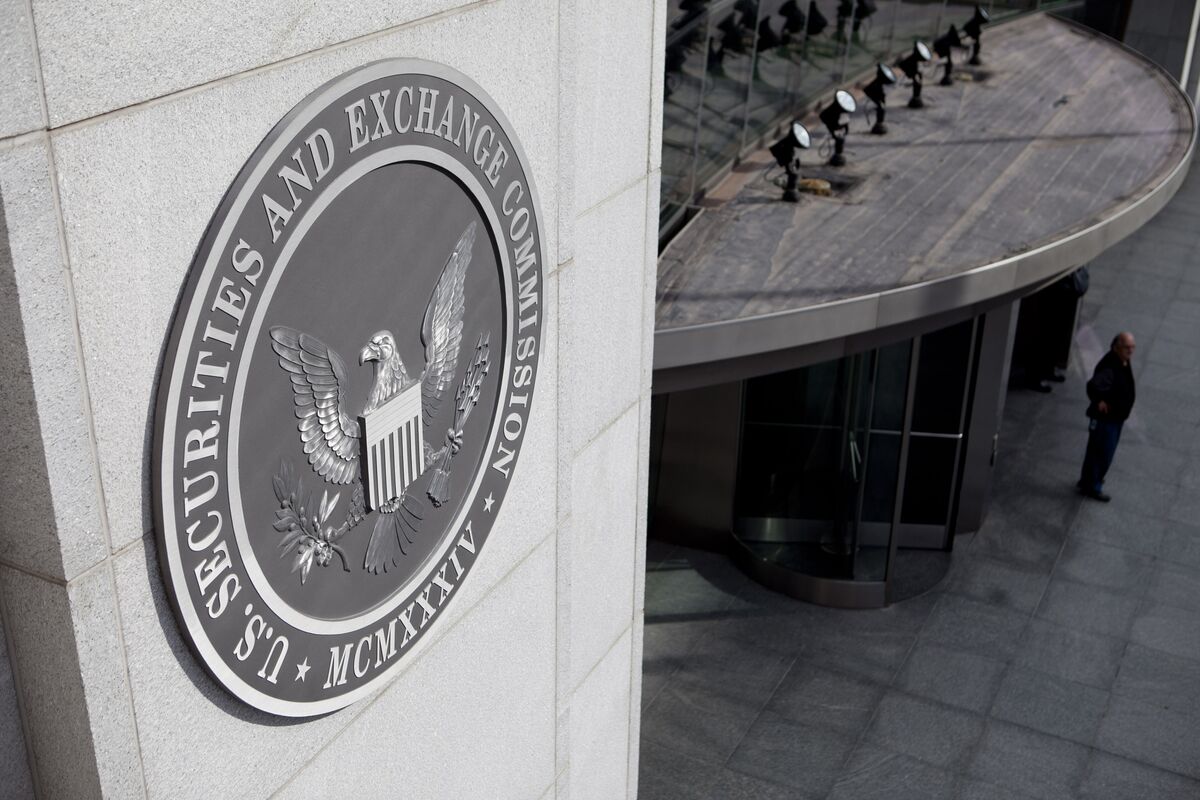
The SEC has halted plans for high‑leverage exchange‑traded funds, flagging heightened investor protection concerns and the potential for amplified market volatility. The regulatory pause is likely to delay issuers' product rollouts and could meaningfully affect trading flows, positioning and risk management around leveraged and derivatives-linked ETF strategies.
Market structure: The SEC pause favors large, diversified ETF sponsors that can absorb flows into plain-vanilla products and emphasize compliance — think BlackRock (BLK), State Street (STT) and Invesco (IVZ) — while niche leveraged-product specialists and small issuers face lost fee pools and capital‑raising headwinds. Supply of highly leveraged public wrappers falls, shifting demand toward futures/options and OTC swaps; that increases revenue for prime brokers and dealer desks but compresses margins for small issuers. Expect a reweighting of retail/IFA flows toward core ETFs and active funds over 3–12 months as product availability and marketing change.
Risk assessment: Immediate (0–10 days) risk is a volatility spike and flow whipsaw as issuance stalls and existing leveraged holders rebalance; short-term (weeks–months) risk is clients seeking OTC leverage, concentrating counterparty risk at big banks, and potential liquidity shocks if market makers withdraw hedges. Tail risks include a broader regulatory clampdown (full prohibition) or rapid migration to opaque offshore vehicles that create systemic opacity; either could produce multi-asset liquidity cascades. Key hidden dependency: hedging for leveraged exposures deploys futures/options — restrictions re-route delta/gamma exposure into those markets, amplifying VIX/VIX futures sensitivity.
Trade implications: Favor fee-stable ETF incumbents: consider establishing a 2–3% core long in BLK (target +8–12% in 3–6 months, stop-loss -8%) and a 1–2% long in STT (target +10% in 6 months) to capture reallocated flows and custody/operating income. Tactical hedge: buy VXX or VIX futures call spreads (30–60 day, 1% portfolio notional) to protect against short-term volatility spikes and dealer de-risking; size at 0.5–1% notional. Relative-value: run a 1–2% pair long BLK / short BEN (Franklin Resources) to exploit scale winners vs smaller active managers if AUM reflow data over 2 months shows >$3bn migration to passive.
Contrarian angles: The market underestimates banks/prime brokers as beneficiaries — expect OTC leveraged swaps and structured notes to pick up at scale, transferring fee pools from ETF sponsors to dealers over 6–18 months and increasing concentration risk at GS/MS. The headline reaction may be overdone if SEC guidance results only in stricter disclosures rather than bans; leveraged-product issuers could reprice and reintroduce products, producing a tradable mean reversion in those names within 3–9 months. Historical parallel: post-2010 structural changes increased derivatives usage rather than eliminated exposure; monitor weekly SEC filings and dealer inventory (futures open interest) for early reversal signals.
AI-powered research, real-time alerts, and portfolio analytics for institutional investors.
Request DemoOverall Sentiment
moderately negative
Sentiment Score
-0.35
