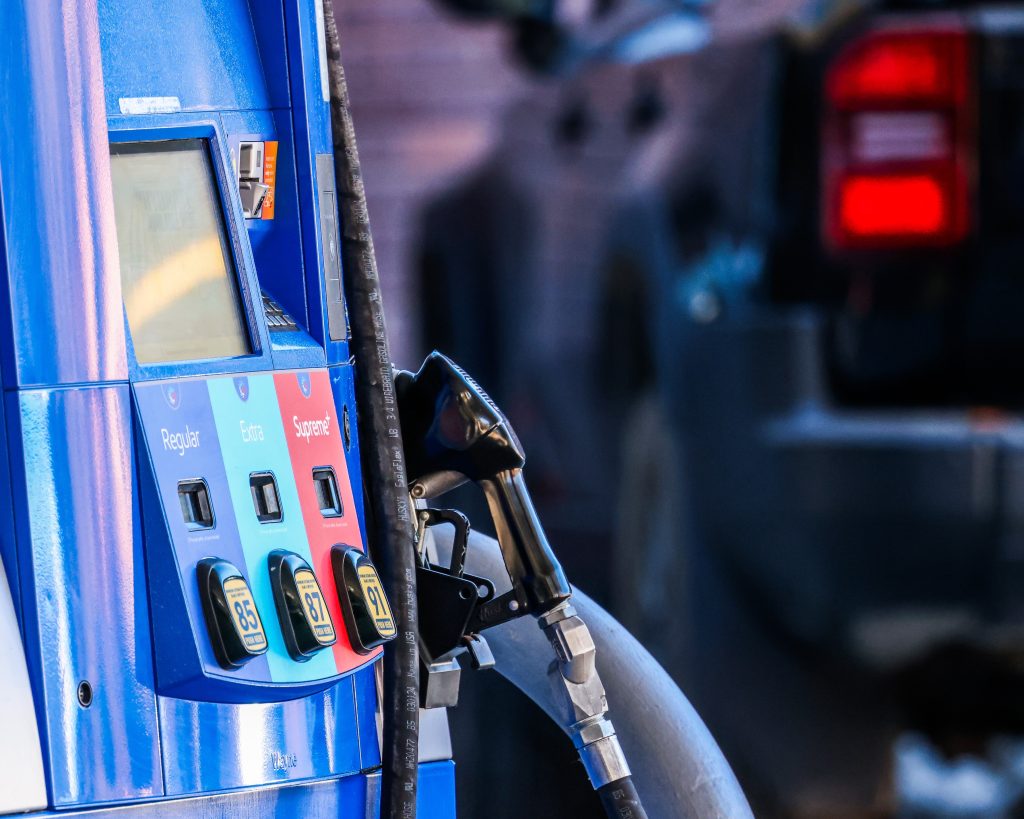
Gas prices in Colorado's High Country have surged above $4.50 per gallon, with Pitkin County averaging $5.79, Garfield County $4.60, and Vail at $4.64. The U.S. average is $4.48, while Colorado stands at $4.42, both sharply higher year over year, and diesel has climbed to $5.68. The article links the spike to elevated crude prices near $101-$103 per barrel, geopolitical tensions around Iran and the Strait of Hormuz, and seasonal summer fuel demand, which may curb driving and vacation activity.
This is less an energy shock than a tax on discretionary mobility, and the first-order losers are the lowest-frequency users of fuel: regional leisure, road-trip lodging, local retail tied to destination traffic, and any business whose demand is elastic to short-haul travel budgets. The more important second-order effect is margin pressure on small operators with limited pricing power — independent stations, local delivery fleets, and mountain hospitality operators that absorb higher inbound transport costs before they can reprice rooms or menu items. In contrast, national fuel distributors and upstream producers benefit from sticky end-user pricing and should see better realized margins if crude stays elevated through summer. The behavioral response likely shows up in May-July before the macro data fully capture it: fewer nonessential trips, more errand bundling, and a shift from long drives to closer-in vacation substitution. That tends to compress weekend traffic volumes and can hit resort-area retail harder than hotel ADR, because visitors still travel but spend less once on-site. Air travel is a hidden beneficiary only if consumers keep vacation budgets intact; otherwise, the main winner is staycation/drive-to destinations within a 2-4 hour radius, not broader leisure demand. Catalyst risk is asymmetric over the next 2-6 weeks. If crude stabilizes, consumers may adapt without visible demand collapse; if crude pushes another $5-$10 higher, the $4.50 threshold becomes a true demand-elasticity trigger and could force sharp cuts in miles driven. The counterpoint is that this is already late-cycle seasonal fuel inflation, so consensus may be overestimating immediate demand destruction and underestimating the ability of higher-income households to absorb it until prices approach the $5 handle.
AI-powered research, real-time alerts, and portfolio analytics for institutional investors.
Overall Sentiment
mildly negative
Sentiment Score
-0.35
