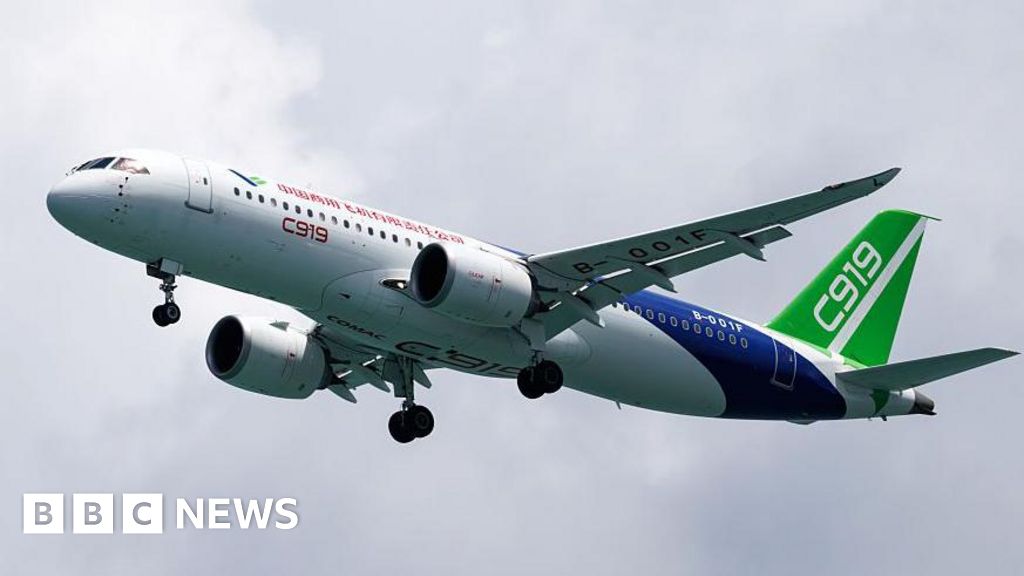
Comac is advancing its C919 into Asia‑Pacific markets as a potential rival to Airbus A320neo and Boeing 737 MAX, with more than 150 jets in active service domestically and the company claiming over 1,000 orders although only about a dozen have been delivered. The move comes amid lengthy delivery backlogs at incumbents (order‑to‑delivery roughly seven years) that create demand for alternatives, but material hurdles — European certification (possible 2028–2031), integration of Chinese and Western components, maintenance and pilot training infrastructure — mean Comac could slowly pressure pricing and market share in emerging markets rather than immediately displace Boeing or Airbus.
Market structure: Comac's C919 entering Asia-Pacific weakens Boeing/Airbus pricing power over the next 3–10 years by introducing a state-backed low-price supplier for the single-aisle market; expect OEM list-price pressure of 5–15% on narrowbodies sold into emerging APAC over a multi-year horizon if Comac scales. Short-term (0–24 months) the effect is limited because Comac has only ~150 in service and verification of >1,000 orders is dubious; primary winners are low-cost carriers in ASEAN who can negotiate price concessions, while OEM suppliers with high Boeing/Airbus concentration face margin risk.
Risk assessment: Tail risks include expedited EASA/FAA recognition (accelerating share loss for BA/EADSY) or conversely a major safety/regulatory setback that destroys Comac's export prospects — both move market structure materially. Time horizons: immediate (days) — negligible; short (weeks–months) — volatility around airshow order flow and certification updates; long (3–10 years) — potential market-share shift of 5–20% in APAC single-aisle deliveries. Hidden dependencies: engine/avionics supply chains (Western vs Chinese), aftermarket MRO networks and financing availability; watch engine OEM commitments and bank export-credit support.
Trade implications: Tactical winners: EMBJ (Embraer) as a regional-jet alternative and niche consolidator; tactical losers: BA exposure tied to narrowbody backlog and reputational risk. Options/relative plays should hedge execution risk — expect higher implied vols on BA around delivery windows and on any Comac certification dates; credit spreads for Asian LCCs could tighten if supply becomes easier, compressing airline funding costs.
Contrarian angles: Consensus overstates imminent Comac threat — certification + global MRO/parts scaling likely takes until late 2020s, so OEMs retain pricing power near-term; conversely the market may be underpricing political/risk-premium upside if China pushes rapid foreign certification with state backing. Historical parallel: Bombardier/A220 shows small OEMs can become disruptive only after long subsidy/partnership cycles; unintended consequence: accelerated supplier bifurcation (China vs West) creating long-term fragmentation in aerospace supply chains and FX/credit dislocations.
AI-powered research, real-time alerts, and portfolio analytics for institutional investors.
Request DemoOverall Sentiment
mixed
Sentiment Score
0.08
Ticker Sentiment
