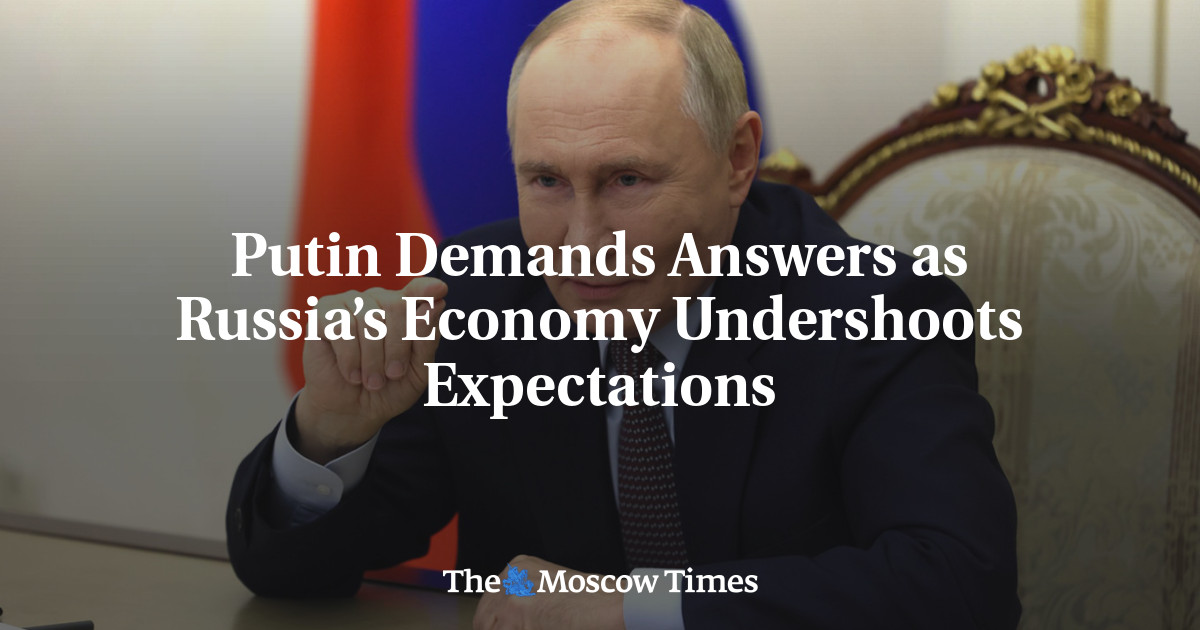
Russia’s economy is weakening more than expected, with GDP down 1.8% year-on-year in January-February and the first-quarter economy estimated to have contracted 1.5%, versus the Central Bank’s prior 1.6% growth forecast. Construction fell 16% in January and 14% in February, while first-quarter oil and gas revenue dropped 45% and the budget deficit reached 4.58 trillion rubles, above the full-year target. Putin pressed the government and Central Bank for urgent measures as high rates, war distortions and weak investment continue to pressure growth, profits and fiscal stability.
Russia is entering a classic late-cycle squeeze where nominal activity is being propped up by state spending while the private economy is being crowded out by policy. The important second-order effect is that defense-linked output can mask weakness in aggregate GDP, but it does so by diverting labor, steel, logistics, and credit from higher-multiplier civilian sectors, which makes the underlying slowdown harder to reverse even if headline growth stabilizes near 1%.
The fiscal backdrop is more fragile than the surface deficit suggests. With oil-and-gas receipts under pressure and spending still accelerating, the state is increasingly relying on non-energy taxes and domestic funding, which typically means higher local borrowing costs, more balance-sheet stress for corporates, and slower capex by quasi-state firms. That combination is especially toxic for construction and manufacturing, where working-capital needs are high and project paybacks are most sensitive to elevated rates.
The key market implication is not an imminent macro collapse, but a prolonged policy trap: easing too early risks currency and inflation pressure, while staying tight deepens the investment slump. Over the next 3-9 months, the most likely outcome is a slow grind lower in civilian activity and earnings quality, with any energy-price relief mostly offset by structural disinvestment. The consensus appears too willing to extrapolate modest GDP growth without properly discounting the cumulative damage from weak credit transmission and deteriorating corporate cash flow.
AI-powered research, real-time alerts, and portfolio analytics for institutional investors.
Overall Sentiment
strongly negative
Sentiment Score
-0.65
