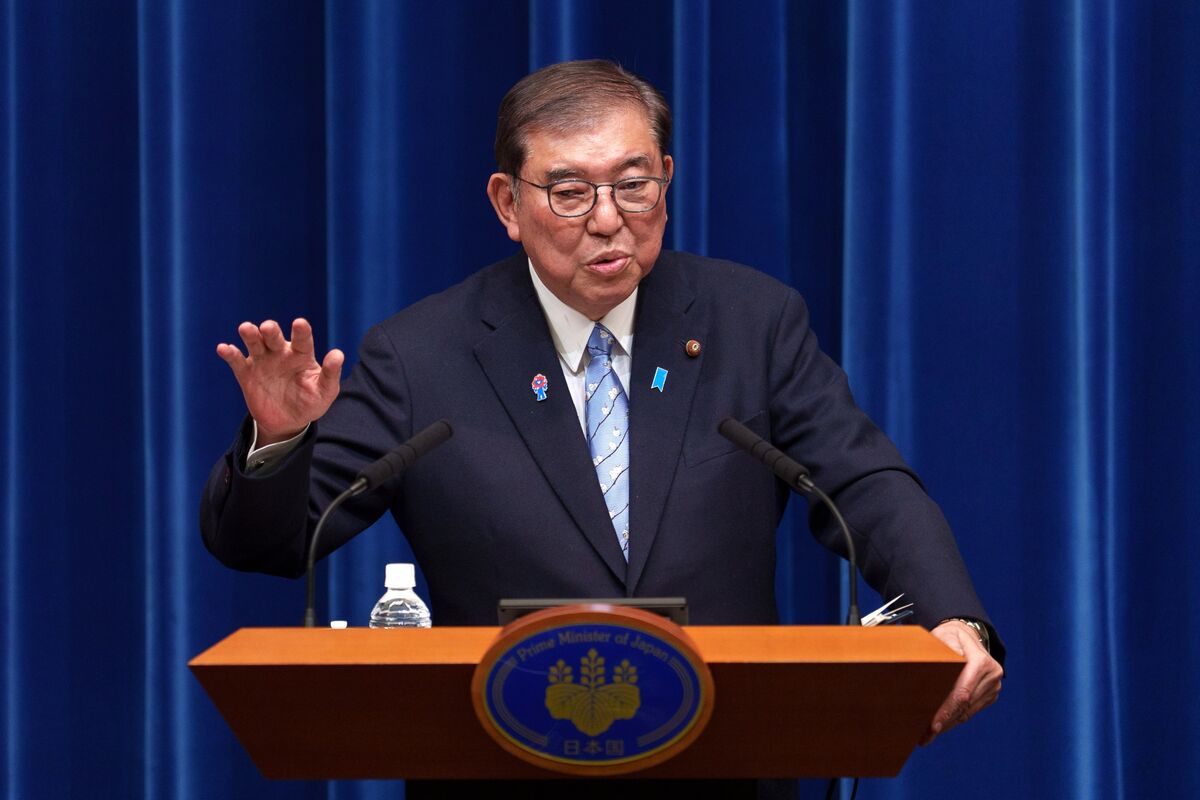
Japanese Prime Minister Shigeru Ishiba stated that Japan will not hasten trade negotiations with the U.S. at the expense of national interests, even as he acknowledged that any progress made before a potential summit with President Trump would be positive. Ishiba emphasized the importance of reaching a mutually beneficial agreement, indicating a willingness to prioritize substance over speed in the trade talks.
Japanese Prime Minister Shigeru Ishiba has adopted a measured approach towards trade negotiations with the U.S., explicitly stating that Japan will not expedite a deal at the expense of its national interests. While acknowledging that pre-summit progress before an expected meeting with U.S. President Donald Trump and the G-7 summit would be welcomed, Ishiba's primary objective is a mutually beneficial agreement for both nations. This stance reflects a "cautious" tone and contributes to a "mixed" overall sentiment (sentiment score: 0.0) surrounding the negotiations. The situation carries a moderate market impact score of 0.4, indicating that developments, though not immediately disruptive, are significant enough to warrant investor attention, particularly within the identified themes of "Trade Policy & Supply Chain" and "Geopolitics & War." The emphasis on achieving a substantively beneficial outcome over a quick one suggests that negotiations may be prolonged, focusing on detailed terms rather than political expediency.
AI-powered research, real-time alerts, and portfolio analytics for institutional investors.
Request DemoOverall Sentiment
mixed
Sentiment Score
0.00
