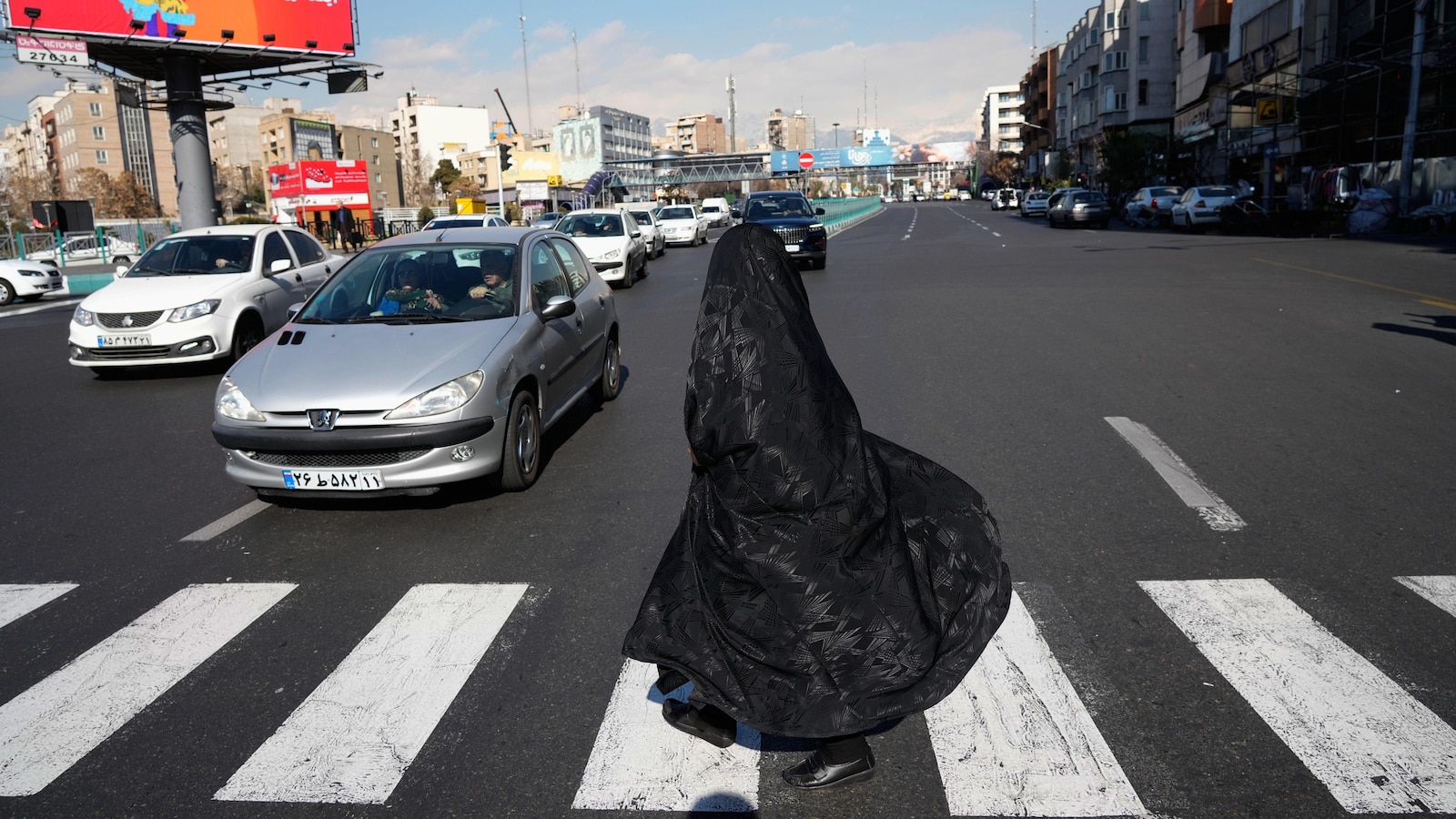
Hackers briefly hijacked Iranian state broadcaster IRIB satellite feeds to air footage of exiled Crown Prince Reza Pahlavi urging security forces to stand down, amid nationwide protests and an internet shutdown that activists say have coincided with a government crackdown leaving at least 3,919 dead. The disruption highlights acute cybersecurity vulnerabilities and intensifies geopolitical risk as the USS Abraham Lincoln carrier strike group transited past Singapore toward the Strait of Malacca, a move U.S. media say could presage redeployment to the Middle East — a development that could prompt risk-off flows and regional market volatility.
Market structure: Immediate winners are defense primes (LMT, RTX, NOC) and cybersecurity providers (CRWD, PANW, HACK ETF) as governments re‑price tail-risk and contingency spending; losers are regional EM assets (Iran-linked trade flow exposures), airlines (AAL, LUV) and Gulf shipping insurers. Oil and shipping risk premia reset upward—a 3–8% move in Brent within 1–2 weeks is plausible if carrier posturing escalates; energy majors (XOM, CVX) pick up margin optionality.
Risk assessment: Tail scenarios include a limited kinetic strike or wider Gulf closure pushing Brent to $100–120/bbl and global risk-off: sovereign CDS for GCC/EM could widen 50–200bps; cyber escalation could target regional infrastructure and satellite comms. Immediate volatility (days) will spike in FX/commodities, weeks–months see portfolio rotations, and quarters+ determine defense budget shifts and capex for cyber/satcom. Hidden dependencies: insurance/premiums for tankers, satellite uplink vulnerabilities, and coordination among Gulf states; these can amplify pricing without direct military action.
Trade implications: Near-term tactical: buy defined-risk exposure to defense and cyber (3-month call spreads) and hedge EM equity/bond risk with longs in USTs and gold (GLD). Medium-term (1–6 months): overweight XOM/CVX if Brent >$85 on a 2-week moving average; underweight EEM and regional airlines until freight/insurance normalizes. Options: use 1–3 month call spreads on RTX/LMT (defined risk) and buy puts on EEM or short EMB if Iran retaliates.
Contrarian angles: Consensus may overshoot full-war pricing — historical Gulf flares (2019–2020) saw 20–40% oil spikes that faded in 2–3 months; therefore allocate sized, time‑boxed positions (2–4% portfolio) not permanent shifts. Cyber equities may already price in increased budgets; prefer large-cap defense (LMT) for predictable backlog over small-cap cyber names that carry execution risk. Watch for de‑escalation signals (no direct strikes in 10–14 days) as trigger to take profits.
AI-powered research, real-time alerts, and portfolio analytics for institutional investors.
Request DemoOverall Sentiment
strongly negative
Sentiment Score
-0.60
