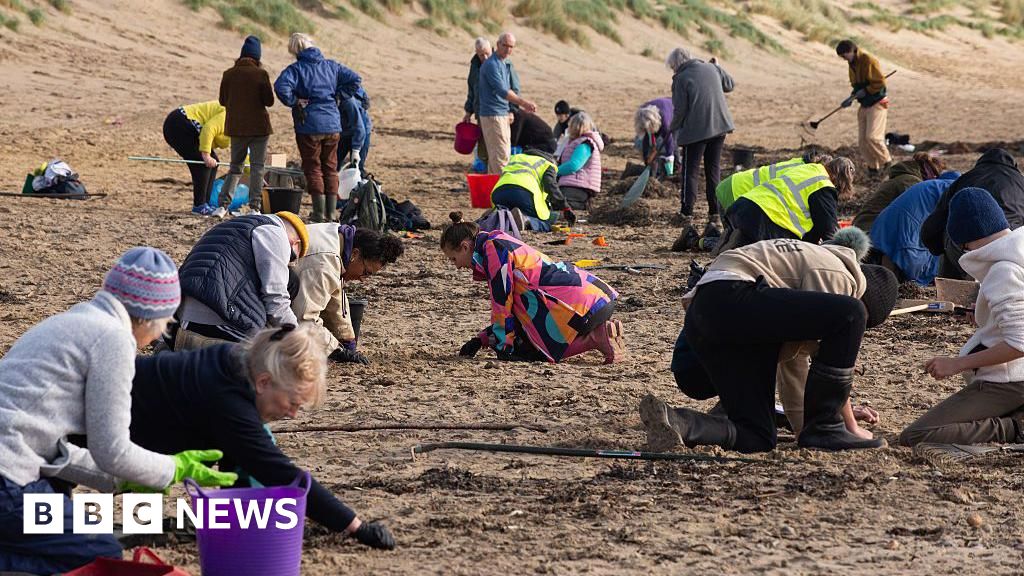
Southern Water has incurred £2m in cleanup costs so far after a screening filter failure allowed up to 10 tonnes of plastic biobeads to be discharged through a 3.4km outfall, washing up along a roughly 40-mile stretch of coastline; about 80% of beads have been removed to date and the company is deploying battery-operated sieves and high-powered 'Nurdle' vacuum machines. The Environment Agency has opened an active investigation and warned of potential enforcement action; Southern Water remains liable for ongoing repair and longer-term cleanup costs, posing operational, regulatory and reputational downside risk that could push total liabilities higher than the reported figure.
Market structure: The immediate winners are environmental remediation and specialist-cleaning contractors (US: CLH, Europe: VEOEY) and suppliers of high‑power vacuum/sieving equipment; losers are the operator (Southern Water, private) and publicly listed UK water utilities (SVT.L, UU.L, PNN.L) that face contagion to reputation and regulatory scrutiny. A 1–5% shift in OPEX/capex recovery assumptions (Ofwat re-assessment) could compress regulated equity valuations by 5–15% and widen credit spreads by 25–75bp for weaker issuers within 3–12 months. Commodity impact is minimal; FX/bond moves would be local (GBP weaker by 0.5–1% on large fines >£50m).
Risk assessment: Tail risks include enforcement fines or ring‑fencing orders from the Environment Agency/Ofwat totalling £50–300m per firm, criminal sanctions, or sector-wide capex mandates raising WACC; probability within 12 months ~10–25%. Immediate window (days–weeks) is information flow from investigations; short term (months) is fines/penalties and insurance claims; long term (years) is mandated infrastructure upgrades. Hidden dependencies: insurer coverage, legacy asset condition, and volunteer cleanup substitution; supply chain for specialized remediation kit could bottleneck. Catalysts: EA/Ofwat announcements (30–90 days), precedent cases, or a material spike in microplastic regulation at UK/EU level.
Trade implications: Favor long exposure to remediation/cleanup names (CLH, VEOEY) and select civil contractors that can capture utility capex (BBY.L) over 3–12 months; selectively short or hedge UK water utilities (SVT.L, UU.L) on any regulatory escalation. Use options to buy downside protection on utilities (90-day put spreads) and calls on remediation contractors for convex exposure to clean‑up demand. Rebalance if an enforcement outcome >£50m occurs (increase shorts).
Contrarian angles: Consensus likely underestimates the structural capex tailwind for contractors from tightened regulation — this favors a modest overweight in construction/remediation vs a knee‑jerk short of all utilities. Conversely, if Ofwat limits fines and instead allows cost recovery via price controls, listed utilities could snap back; therefore short durations and use options rather than large outright shorts. Historical parallel: prior UK sewage scandals produced short‑term stock pain but multi‑year contractor outperformance; expect a similar pattern if regulation mandates upgrades.
AI-powered research, real-time alerts, and portfolio analytics for institutional investors.
Request DemoOverall Sentiment
moderately negative
Sentiment Score
-0.35
