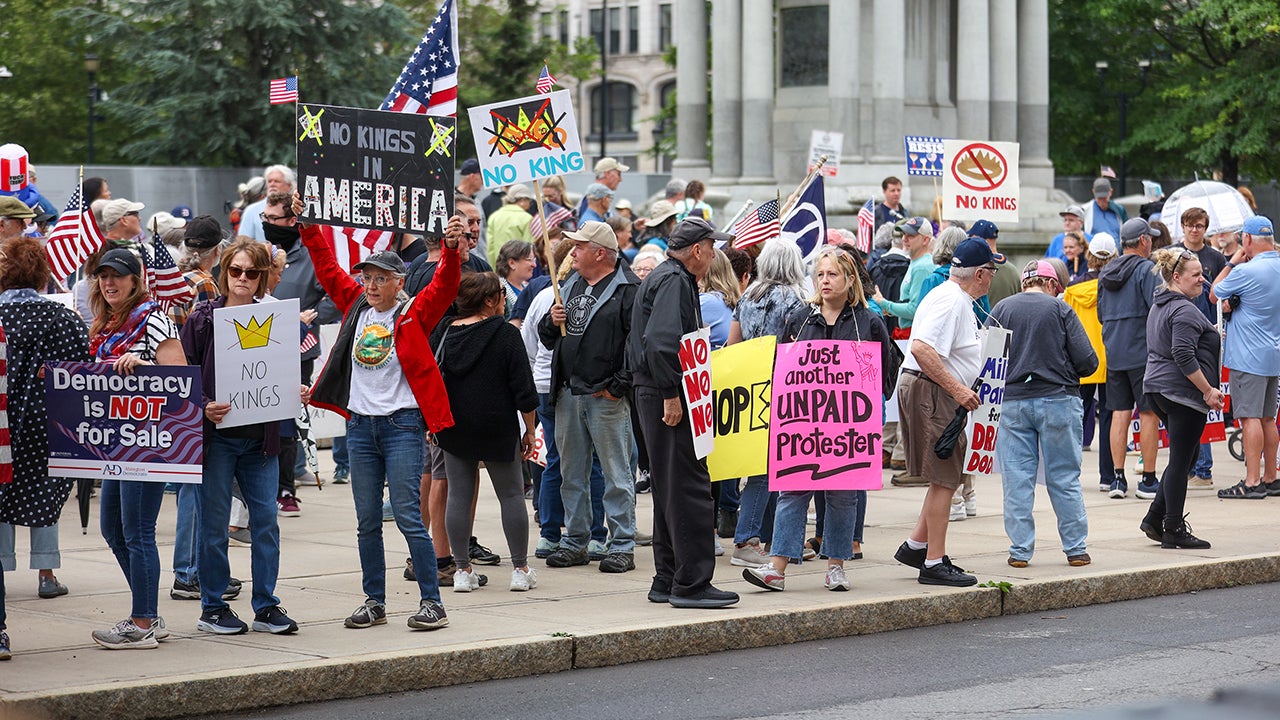
Organizers claim roughly 8 million participants across ~3,300 nationwide 'No Kings' events and a Fox investigation ties coordination to ~500 groups with an estimated $3B in combined annual revenues. Significant incidents include Portland (video of agitators assaulting DHS/ICE officers and multiple arrests), DHS reporting ~1,000 rioters around the Roybal Federal Building in Los Angeles with two officers injured, Denver reporting 9 arrests, and multiple cities issuing dispersal orders, tear gas/pepper-ball deployments and tactical alerts. For portfolios: expect localized operational, security and reputational risks for federal facilities, hotels and urban venues and potential short-term disruptions in affected cities; broadly this is unlikely to move national markets but raises elevated political and policy risk in specific jurisdictions.
Urban unrest concentrated around federal sites creates two layered market effects: a near-term, city-level economic shock to downtown hospitality/retail demand (measured in RevPAR and weekday occupancy) and a policy-driven reallocation of public safety spending into federal/state contracts. Expect the city-level shock to show up as measurable revenue weakness for properties with >50% downtown corporate bookings over the next 1–3 quarters, forcing short-term promotional pricing and insurer loss-ratio repricing in municipal cores.
Over a 6–18 month horizon, recurrent confrontations raise the probability of incremental DHS/DOJ appropriations and faster procurement cycles for non-lethal crowd-control, situational awareness, and analytics platforms. That supports outsized revenue capture for small-to-mid-cap government IT and security vendors (the ones with rapid task-order execution and existing contract vehicles) even if headline defense names already price in part of the upside.
Catalysts to watch: a high-casualty incident or federal litigation against organizers would spike funding and tactical spending within 30–90 days; conversely, bipartisan political pushback or successful legal actions shrinking ICE/DHS scope could reverse the flow over 6–24 months. The consensus trade—loading large-cap defense names—risks being early and crowded; a more attractive payoff is targeting firms with direct civilian law-enforcement contracts and optionality into expanded federal tasking.
AI-powered research, real-time alerts, and portfolio analytics for institutional investors.
Request DemoOverall Sentiment
mildly negative
Sentiment Score
-0.18
