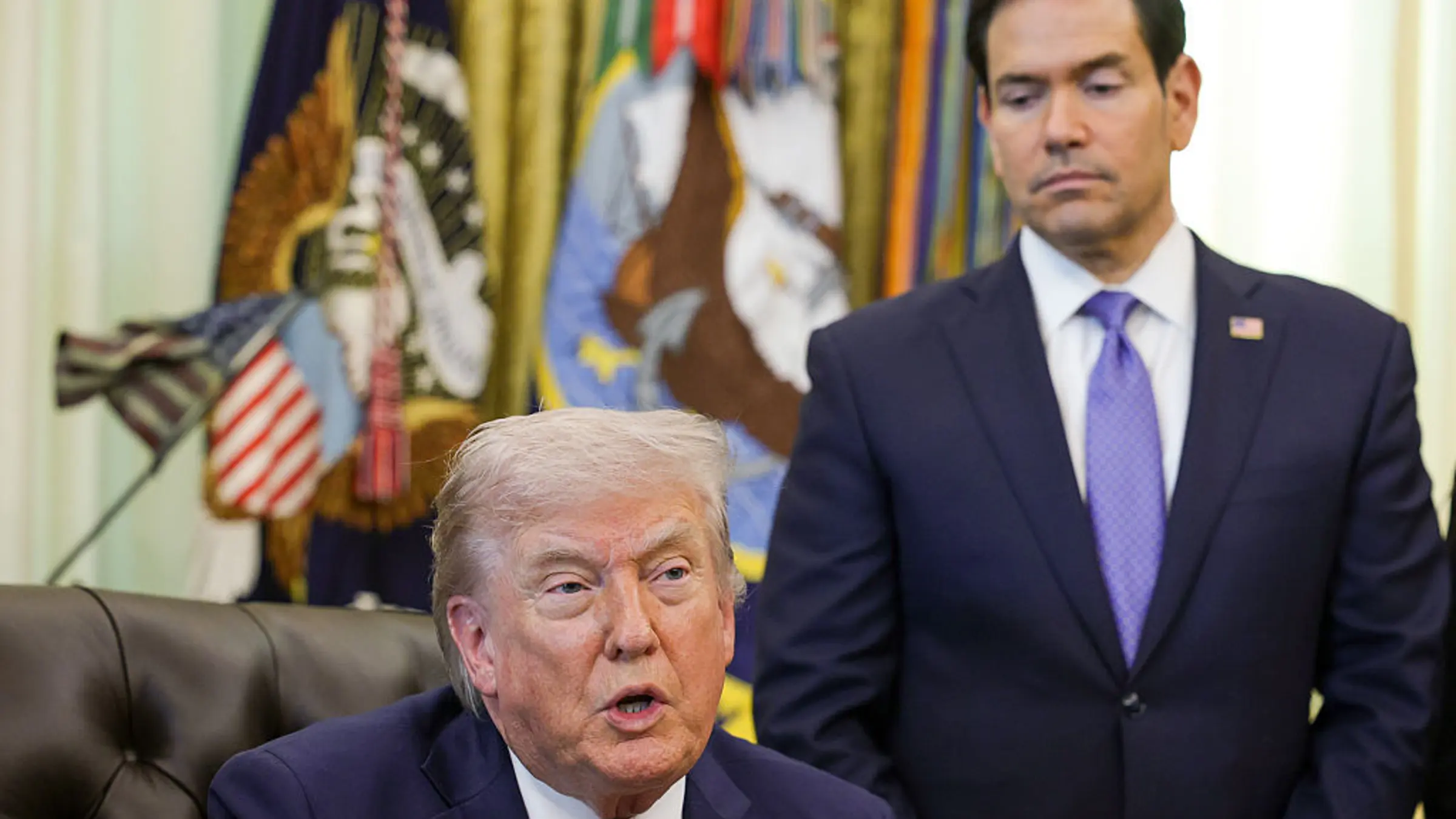
Trump intensified criticism of Pope Leo ahead of Secretary of State Marco Rubio’s May 7 meeting with the pontiff at the Vatican, with the dispute centered on Iran, war, and broader U.S. foreign policy. The Vatican says the talks will be frank, and the article highlights continued tensions among Trump, Leo, Rubio, and Italian Prime Minister Giorgia Meloni. The piece is primarily geopolitical and political in nature, with limited direct market implications.
This is less about theology and more about coordination failure at the top of the Western diplomatic stack. Public friction between the White House and the Vatican raises the odds that Italy becomes a harder venue for quiet de-escalation, which matters because Rome is one of the few capitals where transatlantic and Middle East messaging can be blended without the optics of a formal summit. The immediate market read is not on direct assets but on the durability of U.S.-Europe consensus around Iran, sanctions enforcement, and basing rights. The second-order risk is to European defense and diplomatic premium names that benefit when allied messaging is tight and geopolitics are orderly. If Trump continues to personalize the dispute, it marginally increases headline volatility around Italian equities, EUR crosses, and any defense/security basket that trades on NATO cohesion rather than actual contract flow. The bigger issue is that repeated public spats create optionality for policy surprises: troop posture comments, sanctions sequencing, or a sudden attempt to force allies into a binary choice on Iran-related operations. For the Vatican itself, the conflict is reputationally asymmetric: the institution can absorb political crossfire, but the administration cannot easily walk back attacks without looking reactive. That makes the downside skew more in the White House’s court if the Pope keeps a steady, moral framing; every new exchange expands the audience beyond Catholic voters into independents who dislike perceived bullying of religious figures. Over a 1-3 month horizon, this likely remains a noise trade unless it collides with a concrete policy event in Italy or the Middle East, but the tail risk is a broader fracture with Meloni that could complicate NATO and base-access negotiations.
AI-powered research, real-time alerts, and portfolio analytics for institutional investors.
Request DemoOverall Sentiment
neutral
Sentiment Score
-0.10
