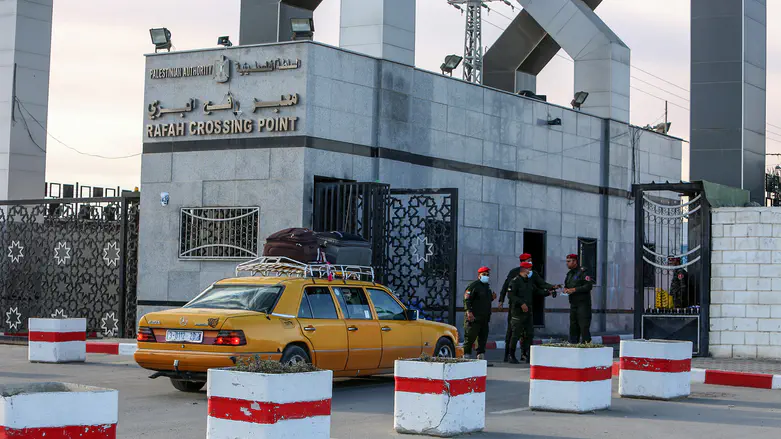
Israeli officials said the Cabinet will discuss reopening the Rafah Crossing with Egypt and the status of the last Israeli hostage, Ron Gvili, early next week, as efforts continue to gather information to secure his return. The announcement followed statements from Gaza's Palestinian technocratic government and reports that Egypt informed the Palestinian committee the crossing would soon open both directions, with the U.S. having pressed Israel to expedite access so committee members can enter Gaza to begin operations. Investors should view this as a geopolitical and humanitarian development with limited immediate market implications but potential regional risk-significance if it affects cross-border flows or broader conflict dynamics.
Market structure: Reopening Rafah shifts short-term winners toward regional logistics, humanitarian contractors and defense suppliers who benefit from renewed crossings and potential extended operations (Elbit Systems ESLT, Raytheon RTX, Lockheed LMT). Losers are local Gaza-facing commercial importers, short-horizon reconstruction contractors and any Israel-exposed consumer names if hostilities reignite; expect pricing power to tilt to defense/logistics for 1–6 months. Supply/demand: corridor reopening improves flow of goods/aid (reducing acute shortages) but can also enable protracted logistics that sustain demand for security and reconstruction services. Cross-asset: anticipate modest risk-on if hostage return occurs (Israeli equities +3–8% within days) versus a risk-off spike into USD, gold (GLD +2–5) and Treasuries (TLT rally) if opening triggers further escalation or wider regional involvement.
Risk assessment: Tail risks include rapid Egyptian-Israeli friction or cross-border incidents that push Brent +$5–$10 and create a >15% drawdown in Israel equity ETFs within days; probability low-moderate but impact high. Immediate (days): cabinet decision and hostage news will drive headline volatility; short-term (weeks): flows into defense and safe havens; long-term (quarters): reconstruction contracts and Israeli fiscal/bond impacts. Hidden dependencies: US diplomatic pressure and intelligence on hostage status are primary decision drivers — not market fundamentals; second-order effects include Israeli political stability and credit spread widening. Catalysts: cabinet vote early next week, US statements, Asharq/Egypt official confirmations and any release/return of the hostage.
Trade implications: Tactical defensive long positions in Israeli/defense names and short-term option hedges around the cabinet vote are warranted. Buy-side volatility trade around the week’s decision (30-day straddles on EIS or short-dated put spreads) to monetize expected headline-driven moves; keep position sizing limited to 1–3% notional. Sector rotation: overweight defense (ESLT, RTX, LMT) and regional logistics contractors; underweight Israel consumer cyclicals and regional tourism/airlines until 30-day volatility subsides. Entry/exit: use headline triggers — enter options 48–72 hours before the vote, trim/exit on resolution or 10–15% realized move.
Contrarian angles: Consensus assumes opening Rafah reduces near-term risk; market may underprice the possibility that civilian governance inside Gaza increases complexity and prolongs low-intensity conflict — a bullish impulse for defense recurring revenue over 3–12 months. Historical parallels (2014/2021 Gaza cycles) show defense contractors can rally 15–30% while broad indices lag; that dispersion can be exploited via pair trades. Reaction may be underdone in fixed income: Israeli credit spreads could widen 25–75bp if political fallout follows, creating tactical short corporate/long sovereign basis trades. Unintended consequence: humanitarian improvement could lower immediate headline risk but seed longer-term asymmetric operational requirements (surveillance, logistics) that favor recurring-contract vendors.
AI-powered research, real-time alerts, and portfolio analytics for institutional investors.
Request DemoOverall Sentiment
neutral
Sentiment Score
-0.10
