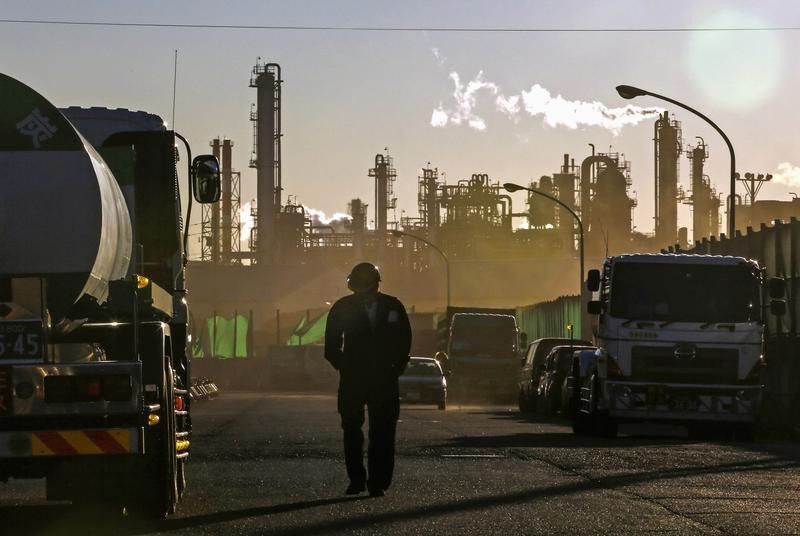
Japan said it will deepen cooperation with Asian neighbors to secure crude oil supplies as the collapse of the Islamabad talks leaves the Strait of Hormuz reopening unresolved. Economy Minister Ryosei Akazawa warned oil prices are unlikely to return to the $60-$70/bbl range soon and indicated gasoline subsidies will not be maintained indefinitely. The article points to a prolonged high-cost energy environment, with Japan using AI to identify supply-chain bottlenecks across its manufacturing networks.
The market is underpricing how quickly a geopolitical energy shock becomes an industrial margin shock in Asia. Japan is not just exposed through fuel costs; it is exposed through the sequencing of inputs, transport, and working capital, which means the first damage often shows up in exporters’ order books before headline inflation does. That makes the more interesting trade not “long oil” per se, but long volatility and relative winners inside the energy-intensity stack.
The highest-quality beneficiaries are the asset-light logistics, storage, and price-discovery names that monetize dislocation rather than direction. Refiners and shipping-linked franchises can gain on wider cracks and longer route times, while Japanese manufacturers with weak pricing power face a slow burn: a few quarters of compressed gross margins before capex is re-prioritized. The second-order loser is domestic consumption, because continued subsidies may delay the hit but also reduce policy flexibility right when fiscal discipline is trying to return.
The catalyst path is asymmetric: a diplomatic reset could crush the trade quickly, but absent that, the next 30-90 days likely feature repeated spikes in freight, bunker fuel, and crude optionality as inventories are managed defensively. The contrarian angle is that the headline risk may be greater than the realized supply loss; if physical flows remain intact but insured, rerouted, and subsidized, the bigger P&L may come from dispersion across sectors rather than a durable oil super-spike. In other words, the market may overpay for outright commodity beta and underpay for logistics friction and margin compression.
For equities, this is a relative-value regime, not a broad long-energy regime. The best expression is to own businesses that can pass through energy costs or profit from volatility, while fading downstream industrials and consumer-facing companies that cannot. Watch for policy fatigue: once subsidy costs rise and margins remain squeezed, Japan may be forced into more aggressive energy diplomacy, which would unwind the trade in days, not months.
AI-powered research, real-time alerts, and portfolio analytics for institutional investors.
Request DemoOverall Sentiment
mildly negative
Sentiment Score
-0.30
