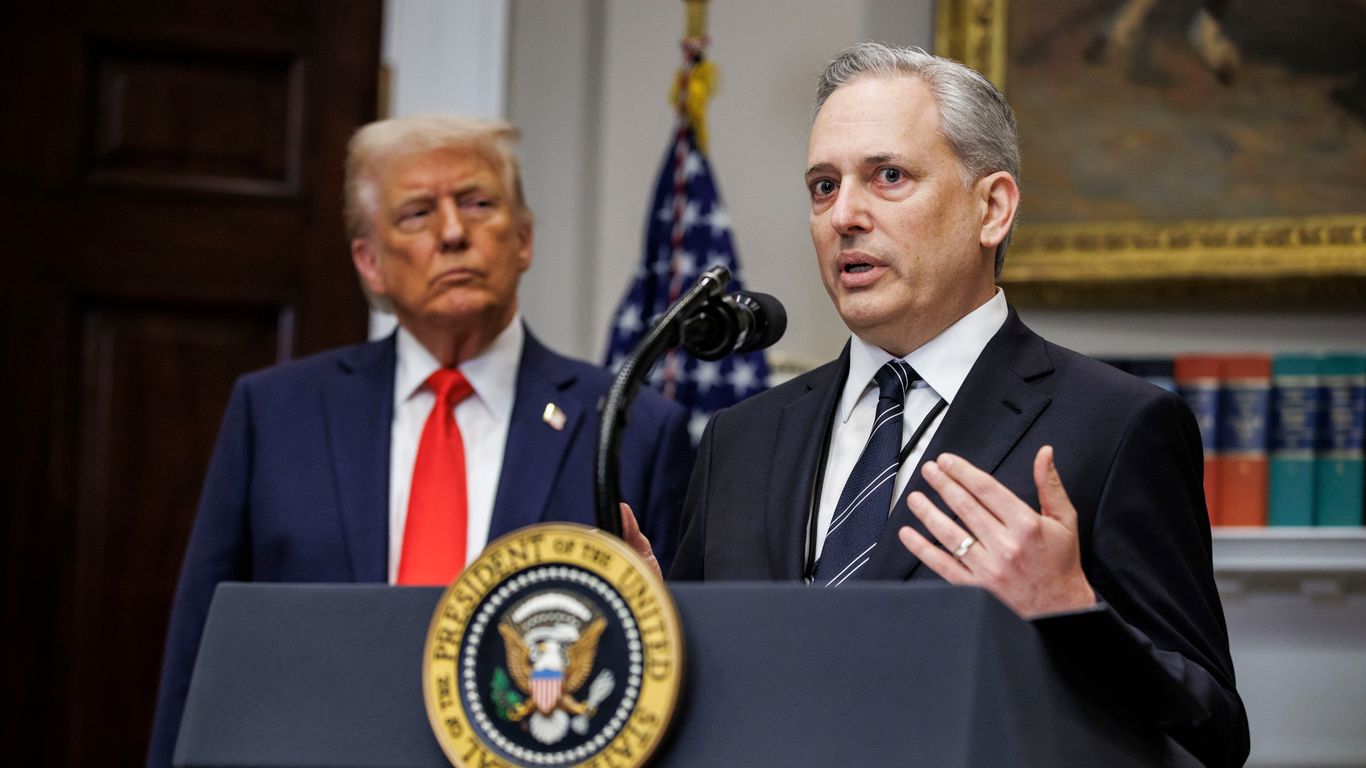
David Sacks has stepped away from a White House role but will retain significant influence as co-chair of the President's Council of Advisors on Science and Technology and via a newly formed $100 million group, Innovation Council Action. Exiting formal government status removes several conflict-of-interest constraints while preserving presidential access, signaling continuity of a pro-deregulatory AI agenda amid growing Republican and voter pushback. The administration also placed Sriram Krishnan in a new NEC AI-focused role, indicating policy continuity despite intra-party debate; expect heightened regulatory and political uncertainty for AI, Big Tech and crypto-exposed assets.
When influential technologists operate from outside formal government roles but retain proximity to policymakers, capital and lobbying actions shift from constrained, slow-moving channels to faster, private-market mechanisms. Expect a 3–9 month acceleration in syndication toward mid‑stage AI infrastructure and tooling companies that can demonstrate deployable compliance and integration paths; that reallocation can re-rate select private rounds and create a 20–40% increase in M&A probability for strategically aligned targets within 6–12 months.
Political friction and rising consumer anxiety about AI are likely to produce regulatory fragmentation rather than a single federal standard, creating a durable premium for vendors that sell turnkey, auditable stacks. Over a 6–24 month horizon, enterprise buyers and government procurement teams will favor incumbents with certifications and traceable model governance, widening margins for cloud and defense primes while raising onboarding costs for pure-play model vendors.
The hardware and supply-chain axis (GPUs, foundry capacity, EDA tools, power/thermal suppliers) remains the principal transmission mechanism for any acceleration in AI deployment. If enterprise procurement and defense budgets tilt toward vetted suppliers, expect a 12–24 month rerating of chip and foundry exposures of roughly 15–30%; conversely, a high‑visibility AI safety incident or coordinated bipartisan regulation could compress multiples by 20%+ in weeks.
Actionable monitoring: watch high-profile procurement awards, state-level AI bills, and court rulings as 3–18 month catalysts. Position asymmetric exposure to diversified cloud and certified suppliers while keeping tail hedges for regulatory or reputational shocks; size newcomers conservatively until they clear enterprise/government integration gates.
AI-powered research, real-time alerts, and portfolio analytics for institutional investors.
Request DemoOverall Sentiment
neutral
Sentiment Score
0.00
