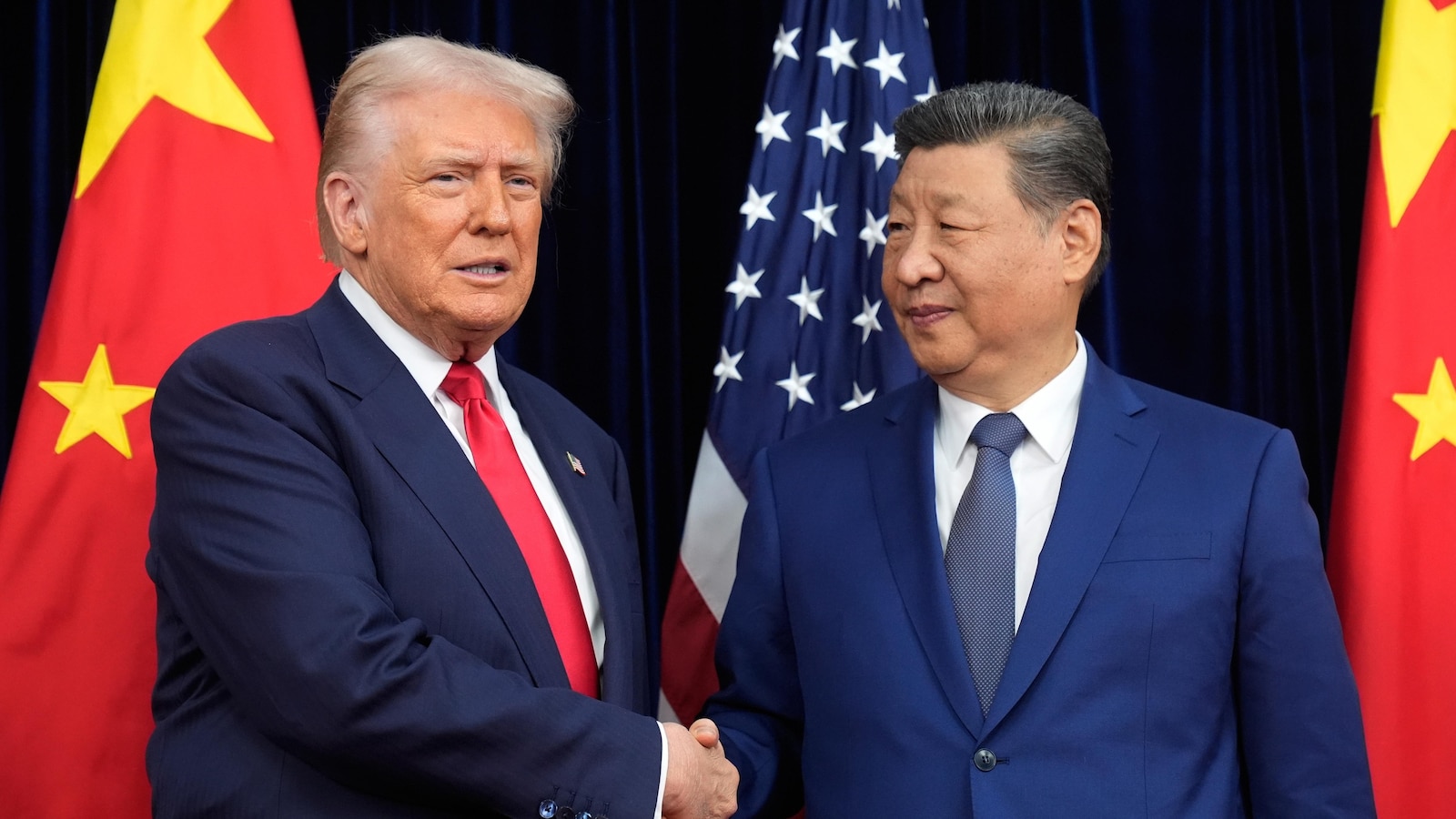
President Trump is traveling to China this week with a large delegation of U.S. executives from technology, aerospace, finance, and agriculture, signaling trade and AI will be central discussion topics with Xi Jinping. The list includes Elon Musk, Tim Cook, Boeing CEO Kelly Ortberg, and leaders from BlackRock, Blackstone, Cargill, Citi, Goldman Sachs, Qualcomm, Visa, and others. The article is primarily a roster of attendees and context around U.S.-China trade tensions, with limited direct new company-specific financial information.
The invitation list is less a ceremonial guest roster than a signal that trade policy is being negotiated through corporate balance sheets. In the near term, that tends to reward firms with bilateral dependence on China and the U.S. simultaneously: they have the most to gain from tariff carve-outs, licensing flexibility, and delayed enforcement, but also the most headline risk if talks sour. The market should treat this as a catalyst for dispersion within the mega-cap tech and industrial complex rather than a broad beta event.
Apple remains the cleanest asymmetric beneficiary because it has already demonstrated that supply-chain relocation can be used as a political hedge, not a full decoupling strategy. The second-order effect is that India, Vietnam, and other assembly nodes become more strategic as optionality value rises; that supports the broader “China+1” ecosystem even if handset final demand is unchanged. Conversely, the more Washington leans into visible exemptions, the more it reinforces a two-tier tariff regime that pressures smaller importers and hardware names without Apple-scale lobbying power.
Boeing is the most fragile setup: even a modest improvement in U.S.-China dialogue could unlock a backlog release and sentiment rerating, but the business remains hostage to political optics and certification timing. The risk/reward is skewed because any agreement on aircraft deliveries would likely arrive in chunks, yet negative headlines can reprice the stock instantly given its leverage to delivery cadence and cash flow normalization. For China-linked industrial exposure, the real issue is not demand size but whether negotiations reduce the probability of another tariff escalation cycle over the next 1-3 months.
The contrarian take is that this trip may disappoint traders expecting immediate macro relief. China will likely extract concessions on export controls, AI access, or investment limits in exchange for symbolic tariff moderation, which would make the outcome more selective than headline indices imply. That argues for owning the names with credible exemption power and avoiding the weakest balance sheets in hardware and transportation until there is evidence of actual policy implementation, not just diplomatic signaling.
AI-powered research, real-time alerts, and portfolio analytics for institutional investors.
Request DemoOverall Sentiment
neutral
Sentiment Score
0.05
Ticker Sentiment
