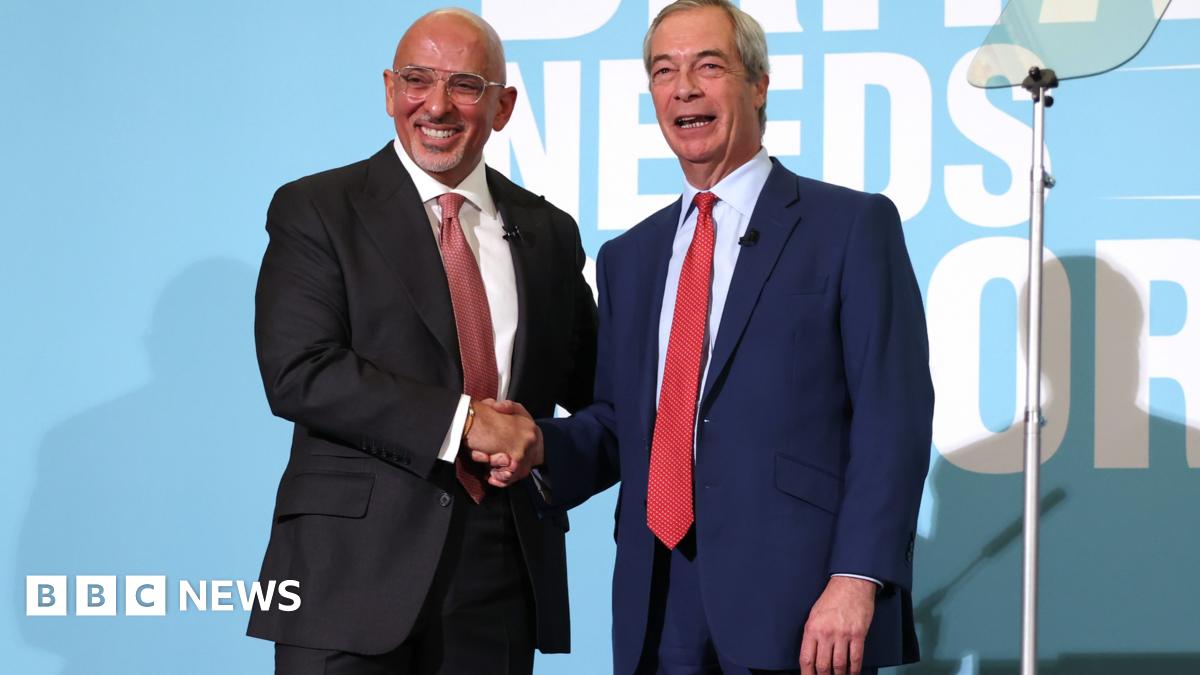
Former Conservative chancellor Nadhim Zahawi has defected to Nigel Farage's Reform UK, joining roughly 20 former Tory MPs and citing concerns over free speech, an 'over-powerful' civil service, mass migration and what he termed 'constitutional vandalism.' Zahawi — sacked in January 2023 after an ethics probe and who recently confirmed paying nearly £5m over a tax error — served briefly as chancellor and held multiple senior ministerial posts. Farage says the move signals a potential erosion of the Conservatives as a national party ahead of May elections, though the development is primarily political and likely to have limited immediate market impact.
Market-structure: Zahawi’s defection accelerates political fragmentation risk in the UK ahead of May elections, which favors exporters and global miners (FTSE 100) over domestically oriented FTSE 250/small caps. Expect a rotation into multinational, commodity and dollar-linked revenue profiles if sterling weakens 1–3% and inflation/BoE term premium rises 20–60bps over weeks. Domestic-focused sectors (retail, housebuilders, local services) are the most exposed to policy uncertainty and potential short-term demand compression.
Risk assessment: Tail risks include an early election or coalition that produces abrupt fiscal shifts (±0.5–1.0% of GDP change in net spending/tax policy) and a sterling/gilt repricing (10y gilt +25–75bps). Immediate (days): headline-driven FX/gilt vol spikes of 0.5–1.5%; short-term (weeks–months): polling moves ahead of May that trigger re-rating; long-term (quarters): structural realignment of UK party system impacting regulatory regime and investment sentiment. Hidden dependency: UK pension/gilt convexity amplifies moves if long-dated gilts are sold.
Trade implications: Tactical plays include short GBP via 1–3 month put spreads, buying protection on UK 10y gilt futures (put spreads), and a relative pair long FTSE 100 vs short FTSE 250 sized 1–2% NAV. Options are preferred to control downside: buy 3-month GBP puts (cost-limited) and gilt put spreads targeting a 20–60bps yield move. Act within 2–6 weeks and scale on polling thresholds (10%, 15%).
Contrarian angles: The market may overstate Reform’s policy efficacy—vote-splitting could actually accelerate a Labour majority, which would stabilize sterling and benefit domestics. If combined Conservative+Labour polling stays >50%, political risk normalizes; that creates a window to buy oversold domestic names on 10–15% declines. Historical parallel: short-lived third-party surges (UK 1990s) that compressed then reversed within election cycles.
AI-powered research, real-time alerts, and portfolio analytics for institutional investors.
Request DemoOverall Sentiment
neutral
Sentiment Score
0.00
