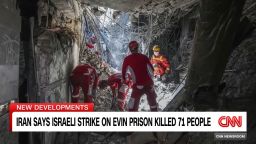
Unprecedented Israeli and US strikes have significantly challenged Iranian Supreme Leader Ayatollah Ali Khamenei, inflicting severe damage on nuclear facilities, leading to the assassination of key scientists and loss of Revolutionary Guard commanders, and weakening regional proxies with billions in program losses. This marks a critical juncture for the 86-year-old leader, whose external leverages are now paralyzed, compelling him to navigate succession uncertainty and an 'eroding and rigid state.' The attacks, which saw Khamenei in hiding, underscore a failed regional power projection doctrine and raise concerns about potential nuclear escalation as Iran's parliament signals intent to halt cooperation with the UN nuclear watchdog, forcing a strategic reckoning for the regime's survival.
The Iranian regime faces its most significant crisis in four decades following unprecedented direct strikes by Israel and the United States, creating a high-impact geopolitical event with a strongly negative sentiment profile. The attacks have paralyzed Iran's primary external leverage points: its nuclear program suffered severe damage to facilities enriching near-weapons-grade uranium, and its network of regional proxy groups was already weakened. The material and human costs were substantial, with the loss of seasoned Revolutionary Guard commanders, key nuclear scientists, and billions in program investment, exacerbating existing economic pressures from sanctions and soaring inflation. This strategic setback is compounded by acute internal political risk centered on the 86-year-old Supreme Leader, who is in declining health with no designated successor and was notably absent from public view during the conflict. According to expert analysis within the report, Iran's core doctrines of regional power projection and deterrence have failed, leading to a 'comprehensive' intelligence failure. The regime's options are now severely limited, caught between maintaining a rigid, repressive state or pursuing reforms that could destabilize its power. A critical forward-looking risk is Tehran's potential pivot to overtly weaponizing its nuclear program as a final deterrent, a move signaled by its parliament's intent to halt cooperation with the UN's nuclear watchdog, which would represent a major escalation.
AI-powered research, real-time alerts, and portfolio analytics for institutional investors.
Request DemoOverall Sentiment
strongly negative
Sentiment Score
-0.70
