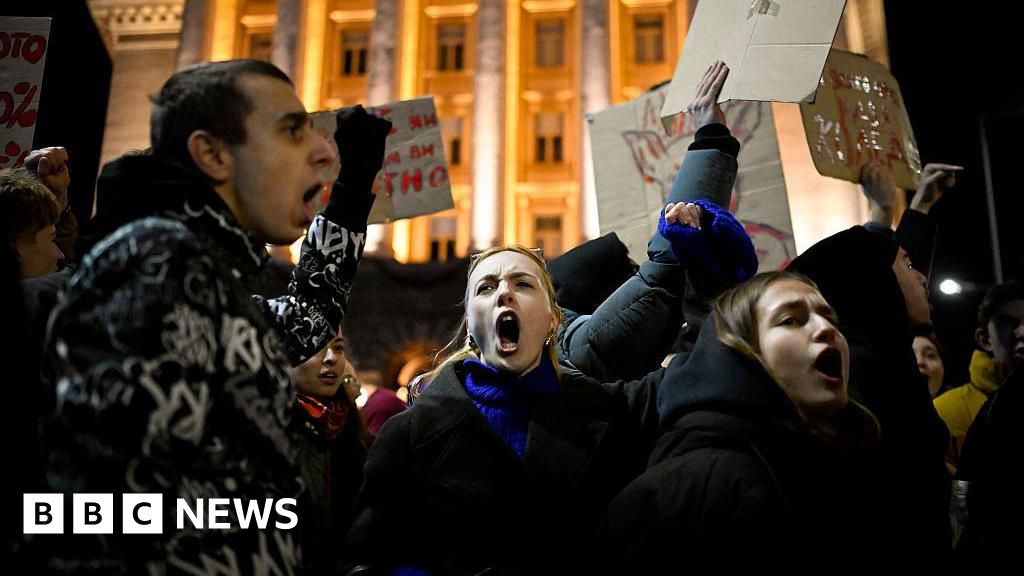
Bulgaria's government has withdrawn its contested 2026 budget after tens of thousands of protesters rallied across Sofia and other cities opposing planned tax rises, higher social security contributions and a dividend tax that critics said masked corruption. The U-turn comes ahead of Bulgaria's planned euro adoption on 1 January and raises near-term political risk — the president has called for resignation and early elections — threatening delays to fiscal consolidation and adding uncertainty to inflation and FX expectations in one of the EU's poorer economies.
Market structure: Political shock from mass protests and the government withdrawing a 2026 draft budget (ahead of Bulgaria joining the eurozone on 1 Jan 2026) creates immediate winners — safe-haven assets (gold, core Bunds) and large EU counterparties funding Bulgaria — and losers — Bulgarian sovereign paper, domestic banks, and local corporates reliant on fiscal transfers. Expect domestic yields to gap wider vs. German Bunds by 50–200bps if protests escalate or the government falls; local equity market and BG-listed banks should underperform regional peers by 10–30% in a stress episode.
Risk assessment: Tail risks include a government collapse/early elections that delay euro conversion or EU transfers, a 200–400bps sovereign spread shock, and conditionality delays on EU cohesion funds. Immediate (days) = liquidity and volatility spike; short-term (weeks–months) = fiscal slippage and credit-rating pressure; long-term (quarters–years) = euro adoption benefits offset by structural governance questions. Hidden dependencies: EU budget approvals, IMF/EU technical signoff for euro entry, and energy-price pass-through to inflation.
Trade implications: Direct plays should target sovereign credit and FX volatility — buy 1y sovereign CDS protection on Bulgaria (if available) or long EMB downside protection via put structures as a proxy; buy 3-month EURUSD straddle to monetize near-term volatility into Jan 2026, and allocate 1–2% to GLD as tail-hedge. Rotate portfolio away from CEE banking exposure into larger Western European banks and defensive sectors; trim Bulgaria/CEE country exposure by 30–50% in the next 5–30 trading days if spreads breach +100bps vs region.
Contrarian angles: Consensus treats this as narrowly domestic, but a protracted stalemate could delay EU transfers and set a negative precedent for other small euro entrants — an underpriced channel into EU peripheral risk. If protests force fiscal restraint without government collapse, political risk could be short-lived and create a buying opportunity: look to add risk after 150–250bps of sovereign spread widening and 20–40% drawdown in local bank equities.
AI-powered research, real-time alerts, and portfolio analytics for institutional investors.
Request DemoOverall Sentiment
moderately negative
Sentiment Score
-0.50
