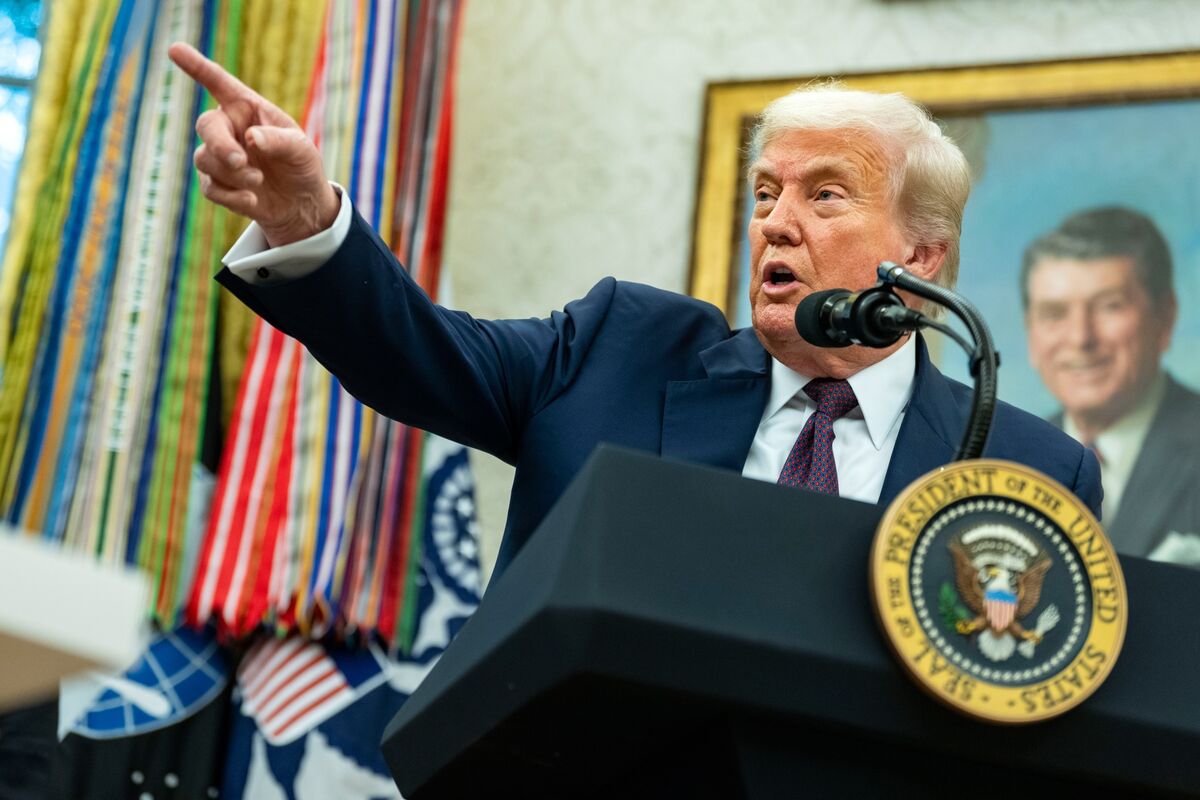
President Donald Trump has signaled a significant policy shift, indicating a willingness to use the full force of the US government for direct intervention in corporate matters. This move, aimed at achieving economic and foreign policy goals, marks a departure from his previous approach and introduces new political risk considerations for corporate operations and investment decisions.
A significant policy shift is emerging from President Donald Trump, indicating a new willingness to leverage the full force of the US government for direct intervention in corporate matters to achieve economic and foreign policy goals. This represents a notable departure from his first-term approach and introduces a material, previously unpriced political risk for corporations. The moderately negative sentiment and significant market impact score reflect investor concerns over this increased uncertainty. The policy's potential scope, touching upon regulation, sanctions, and trade, suggests that companies across various sectors, particularly those with complex international supply chains or operating in geopolitically sensitive areas, now face a heightened risk of targeted government action that could disrupt operations and strategic planning.
AI-powered research, real-time alerts, and portfolio analytics for institutional investors.
Request DemoOverall Sentiment
moderately negative
Sentiment Score
-0.40
