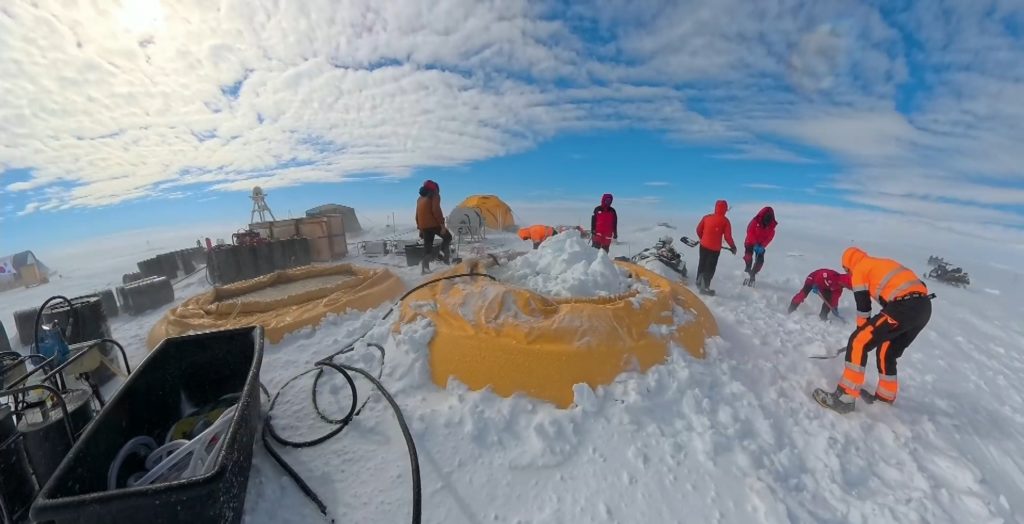
An international team (KOPRI and the British Antarctic Survey) conducted hot‑water drilling and deployed moorings at Thwaites Glacier’s grounding line but lost long‑duration instruments to freezing after collecting five water profiles; the snapshot shows water temperatures nearly 34° (about 5.5° warmer than the local seawater freezing point). Thwaites—a river of ice moving ~30 ft/day with the potential to raise global sea levels ~2.5 ft—continues to melt tens of times faster than neighboring glaciers, underscoring persistent physical tail risks to coastal assets and long‑term implications for insurers, real‑asset holders and climate‑sensitive portfolios, even though the operational setback limits near‑term forecast precision.
Market structure: The Thwaites findings crystallize a structural demand shock for coastal adaptation and risk-transfer solutions — think multi-year reinsurance repricing and headline-driven infrastructure budgets. Winners: engineering/consulting (Jacobs J, AECOM ACM), water-tech (Xylem XYL), and diversified insurers/reinsurers with pricing power (Berkshire BRK.B, Swiss Re SSREY, Munich Re MURGY) that can raise rates; losers: coastal real‑estate equities and long-duration coastal muni debt which face rising expected losses and higher yields. Cross-asset: expect upward pressure on construction commodities (steel, cement), higher yields on coastal muni bonds, widening spreads in mortgage-backed securities, and higher implied volatility in property/insurer options over 6–18 months.
Risk assessment: Tail risks include a faster-than-expected grounding-line collapse triggering multi-decadal projected sea-level contributions (2+ ft regionally) that could cause sovereign and municipal stress in low-lying jurisdictions — a low-probability, high-impact event over 5–20 years. Near-term (days–months): limited market shock; short-term (3–12 months): reinsurance renewals and Q2–Q4 insurer commentary could repricing risk by +10–40% in premiums; long-term (1–5+ years): sustained capex for coastal defenses. Hidden dependencies: political funding cycles, FEMA/reinsurance backstops, and catastrophe-model updates; catalysts: IPCC/NOAA reports, major coastal hurricane/compound flood events, or large insurer loss announcements.
Trade implications: Favor allocation to high-quality engineering and water-infrastructure names (J, ACM, XYL) with 12–24 month horizons to capture backlog-driven revenue (+20–40% upside vs current comps). Play the risk-transfer trade: 1–2% long in well-capitalized reinsurers/insurance brokers (BRK.B, MMC, AON) to capture premium expansion; hedge with 12-month puts on coastal REITs (EQR) or buy 20% OTM puts expiring 9–12 months to protect property exposure. Rotate 3–5% of muni exposure out of long-duration coastal munis into short-duration muni ETFs (reduce duration by ≥2 years) to insulate against higher coastal yield premia.
AI-powered research, real-time alerts, and portfolio analytics for institutional investors.
Request DemoOverall Sentiment
moderately negative
Sentiment Score
-0.45
Contrarian angles: Consensus will underprice adaptation capex and overprice immediate catastrophe losses — meaning engineering and materials firms could see multi-year order books and margin expansion that markets underappreciate. Historical parallel: post‑Katrina surge in levee/engineering spend (2006–2010) produced 30–60% outperformance for contractors; expect a similar multi-year cycle if policy funding follows science. Unintended consequences: accelerated regulatory disclosure and litigation against large emitters could create asymmetrical short-term political risk but longer-term investment demand into resilience/tech sectors; overweight thematic names early (J, ACM, XYL) before consensus re-rates.
