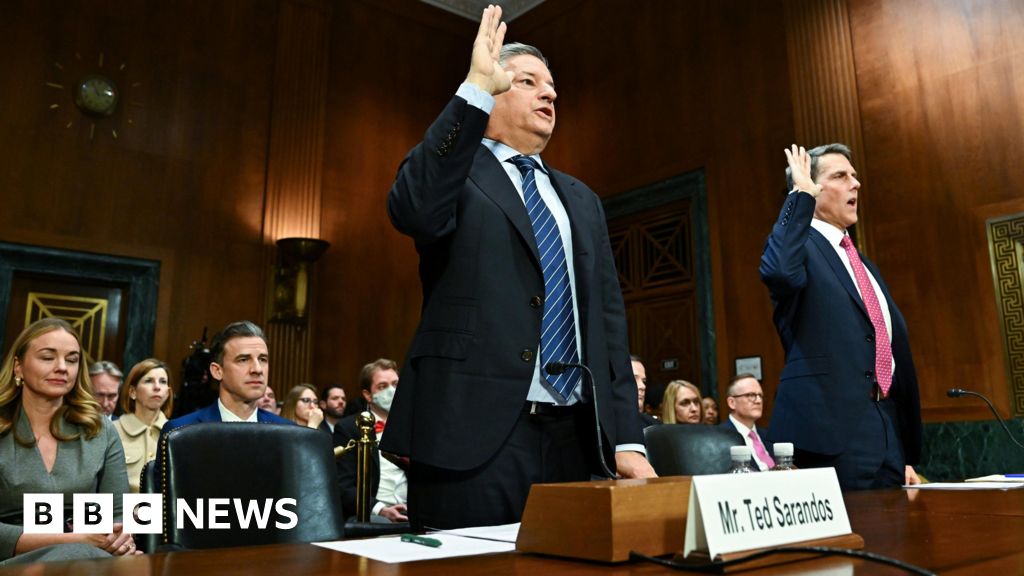
Netflix faces bipartisan skepticism at a US Senate antitrust subcommittee hearing over its proposed $82bn takeover of Warner Bros Discovery, which is under Department of Justice review and challenged by a rival $108bn Paramount Skydance bid. Senators probed competition, potential price increases, the theatrical release window and labor market effects despite Netflix pledging a 45‑day theatrical window and arguing high subscriber overlap (80% of HBO Max subscribers also pay for Netflix); the proceedings increase the risk the deal could be blocked or materially altered, with clear implications for valuations and strategy across the media sector.
Market structure: A successful Netflix (NFLX) acquisition of Warner Bros Discovery (WBD) would collapse two major content suppliers ($82bn vs Paramount's $108bn rival bid) into a single vertically integrated player, concentrating premium IP and improving nominal bargaining power vs. advertisers and distributors. Short term this likely tightens content supply (fewer independent studio bidders) and increases pricing optionality for the combined streaming bundle; expect incremental pricing power of ~5-15% over 12–24 months if antitrust concessions are light. Credit markets will price higher leverage for NFLX and WBD debt—anticipate corporate spread widening of 50–150bp on deal financing headlines.
Risk assessment: Key tail risks include a DOJ suit to block/force divestiture (50–70% chance per hearing tone) or prolonged litigation that derails integration, which could trigger a 25–40% drawdown in NFLX and volatile repricing in WBD. Timeline: immediate (days) — heightened IV and news-driven moves; short-term (weeks–months) — DOJ decision and competing bids; long-term (12–24 months) — integration and labor/price outcomes. Hidden risks: labor-market consolidation, ad-revenue reallocation (YouTube/GOOGL), and potential forced asset sales that reduce synergies.
Trade implications: Direct: favor event-driven long WBD exposure into a potential bidding auction and short NFLX equity or buy puts to hedge deal risk; implied vol trading is attractive (3–6 month options). Pair trades (long WBD/short NFLX) neutralize macro beta while capturing M&A spread; size to 1–3% portfolio risk and rebalance on DOJ milestones. Rotate 1–2% into ad beneficiaries (GOOGL) as a convex defensive play if streaming consolidation hurts content plurality.
Contrarian angles: Consensus assumes deal either closes or is blocked; miss is a negotiated settlement (asset carve‑outs, mandated licensing windows) that still leaves content scarcity and creates licensing arbitrage—this would lift WBD and limit NFLX downside. Market may be overpricing NFLX downside if Netflix secures debt financing or behavioral concessions (45‑day theatrical window) — IV spikes present asymmetric option payoffs. Historical parallel: AT&T/TimeWarner faced long review but closed with conditions; similar pathways could materialize here, favoring event-driven long exposure to WBD.
AI-powered research, real-time alerts, and portfolio analytics for institutional investors.
Request DemoOverall Sentiment
moderately negative
Sentiment Score
-0.45
Ticker Sentiment
