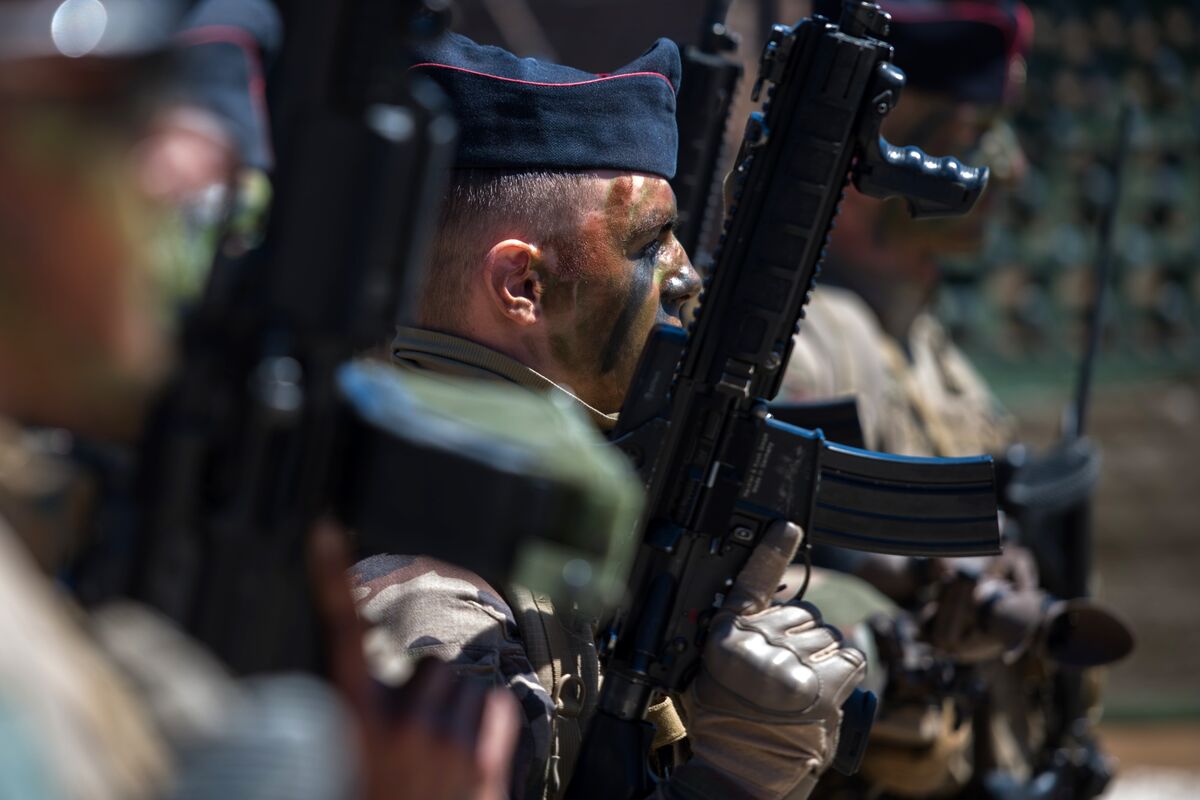
French President Emmanuel Macron announced a new voluntary paid military service scheme aimed at bolstering France’s armed forces, while the government reiterated that conscription is not being reintroduced. The announcement follows controversy over a remark by the army chief suggesting the country may have to “accept losing our children,” and highlights Europe’s reluctance to deploy troops to Ukraine despite personnel shortfalls among the region’s largest militaries. For investors, the development modestly raises geopolitical uncertainty and could inform defense personnel planning and future defense-budget discussions, but is unlikely to trigger immediate market moves.
Market structure: The political decision against conscription but for a paid voluntary scheme signals incremental, not seismic, demand for personnel and equipment. Winners are modular defense contractors and training/logistics vendors (Rheinmetall, Thales, Leonardo) that can scale with smaller procurement uplifts; losers are short-cycle civilian services and low-margin staffing outfits if governments reallocate ~€2–10bn/year to defense across the EU over 1–3 years. Pricing power will be modestly improved for niche NATO-capable suppliers (potential 5–15% revenue tailwind over 12–24 months) while large civil-aerospace OEMs face mixed effects due to split civil/defense exposure.
Risk assessment: Tail risks include rapid escalation that forces NATO deployment (low probability, high impact — bond and FX shocks), or domestic political backlash triggering early elections and defense budget cuts (medium probability). Near-term (days–weeks) volatility is likely to be muted; key catalysts in the 30–180 day window are France’s upcoming budget, an EU procurement package, and NATO summit decisions. Hidden dependency: manpower-focused schemes can crowd out procurement funding in year 1, delaying larger systems orders by 12–36 months.
Trade implications: Tactical implementation favors industry-specific longs and defined-risk options — buy selective defense equity exposure over 6–12 months rather than broad cyclicals. Pair trades that long European defense names vs short continental consumer cyclicals will capture fiscal reallocation risk; consider 0.5–2% position sizes per trade with 10–15% stop-loss. Volatility trades: buy 6–9 month call spreads on RHM.DE or HO.PA to express upside while capping premium spend.
Contrarian angles: The market may underprice the multi-year procurement pipeline if EU-level co-financing packages >€5bn are approved — that would produce outsized rerating for Tier-1 defense suppliers. Conversely, consensus may overestimate short-term manpower translation into hardware orders; avoid one-way exposure to civil aerospace (AIR.PA, SAF.PA) as mixed signals could pressure multiples. Historical parallel: post-2014 incremental NATO spending took ~2–3 years to convert into orders; expect similar lag and front-load positions only where orderbook visibility exists.
AI-powered research, real-time alerts, and portfolio analytics for institutional investors.
Request DemoOverall Sentiment
neutral
Sentiment Score
-0.10
