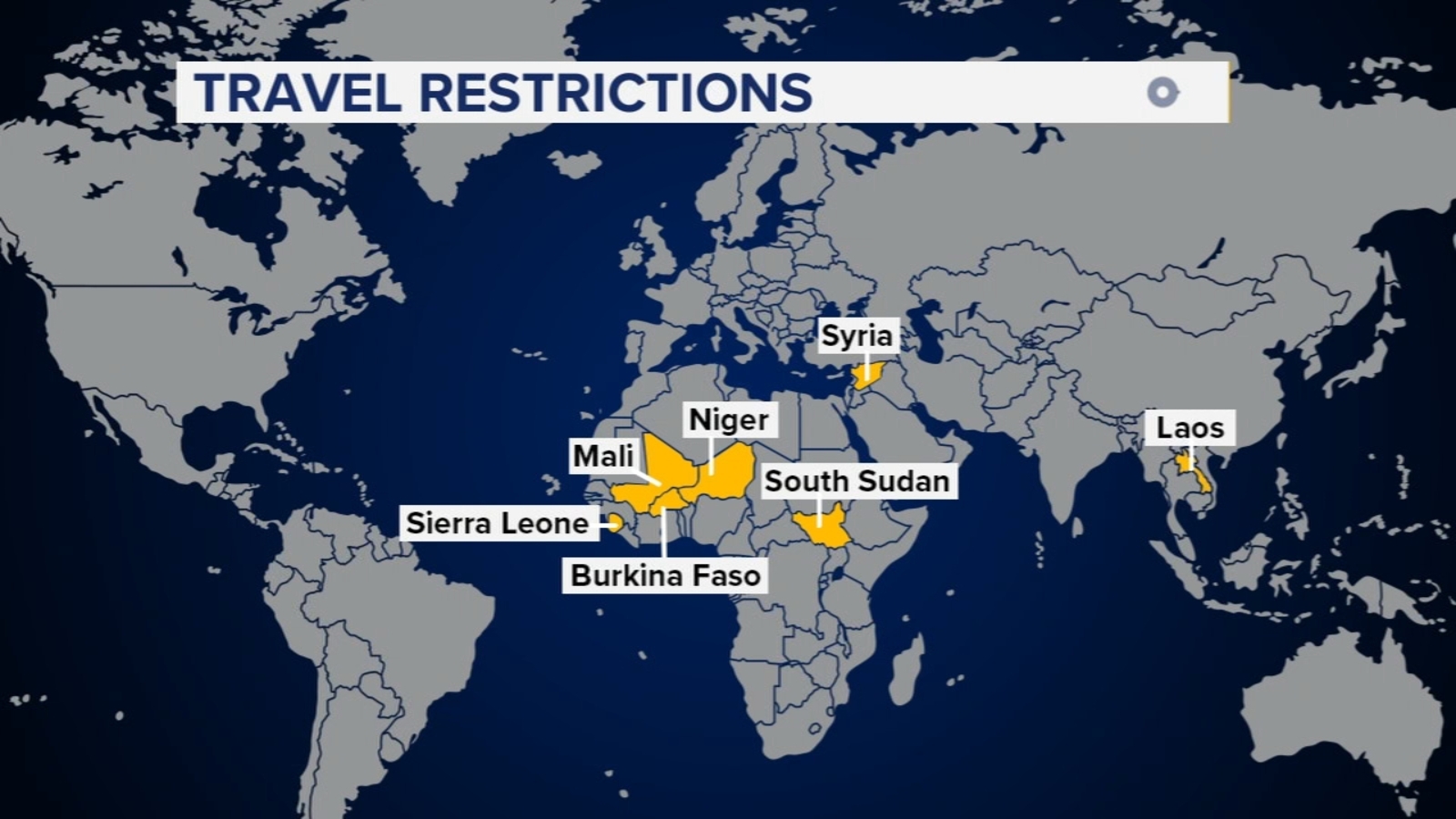
The administration's updated CBP guidance implements executive orders restricting travel from Burkina Faso, Laos, Mali, Niger, Sierra Leone, South Sudan and Syria effective Jan. 1, extending existing bans on multiple other countries and instituting partial restrictions for Venezuela and Cuba. Concurrently, USCIS has replaced the H-1B random lottery with a weighted selection favoring higher-wage petitions under the 85,000 cap, a change that tightens access for lower-paid foreign workers and could constrain hiring flexibility for U.S. employers—notably in tech and sectors reliant on skilled international labor.
Market structure: The immediate winners are large tech incumbents (MSFT, GOOGL, AMZN) that already pay top-market wages and will be advantaged by a wage-weighted H‑1B selection; mid‑tier IT services and startups that rely on lower‑wage foreign talent (e.g., CTSH, INFY, small SaaS/IT consulting) are losers as hiring bottlenecks and wage inflation compress margins. Travel bans on seven countries are unlikely to move airline or tourism revenues materially but raise geopolitical risk premia for EM assets tied to West Africa/Asia, nudging risk‑off flows toward USTs and USD in the short run.
Risk assessment: Tail risks include escalation to broader immigration/visa restrictions or retaliatory trade measures that could hit supply chains or multinational hiring practices — a low‑probability but high‑impact event that would meaningfully slow tech capex and hiring over 6–18 months. Time horizons: immediate (days) for volatility and option premium spikes in mid‑cap tech, short‑term (weeks–3 months) for corporate guidance/hiring freezes, long‑term (6–24 months) for structural talent reallocation and possible migration to Canada/Europe.
Trade implications: Favor large-cap tech/cloud and automation plays that substitute labor (MSFT, AMZN/AWS, NOW) and underweight/short IT services and staffing firms (CTSH, INFY, RHI, MAN) that compete on lower wages; expect 5–10% margin pressure on vulnerable services firms within 4–8 quarters. Options: buy 3‑month call spreads on MSFT/GOOGL (5–10% OTM) to capture re-rating while buying 3–6 month put spreads on CTSH/INFY to hedge execution risk; allocate small sizes (2–3% portfolio each) and reassess after 60 days of USCIS issuance data.
Contrarian angles: Markets may overindex to headline geopolitical risk and underprice the structural benefit to large cap cloud/AI players that can internalize automation — the transfer of $5–15bn in labor cost from services to automation is plausible over 1–2 years. Historical parallel: past H‑1B restrictions (2017–19) produced outsized relative outperformance of mega‑caps vs. mid‑caps; unintended consequence is an acceleration of offshore hiring by non‑US jurisdictions (Canada, India) — monitor immigration filings and Canadian tech hiring metrics as a signal of capital reallocation.
AI-powered research, real-time alerts, and portfolio analytics for institutional investors.
Request DemoOverall Sentiment
mildly negative
Sentiment Score
-0.25
