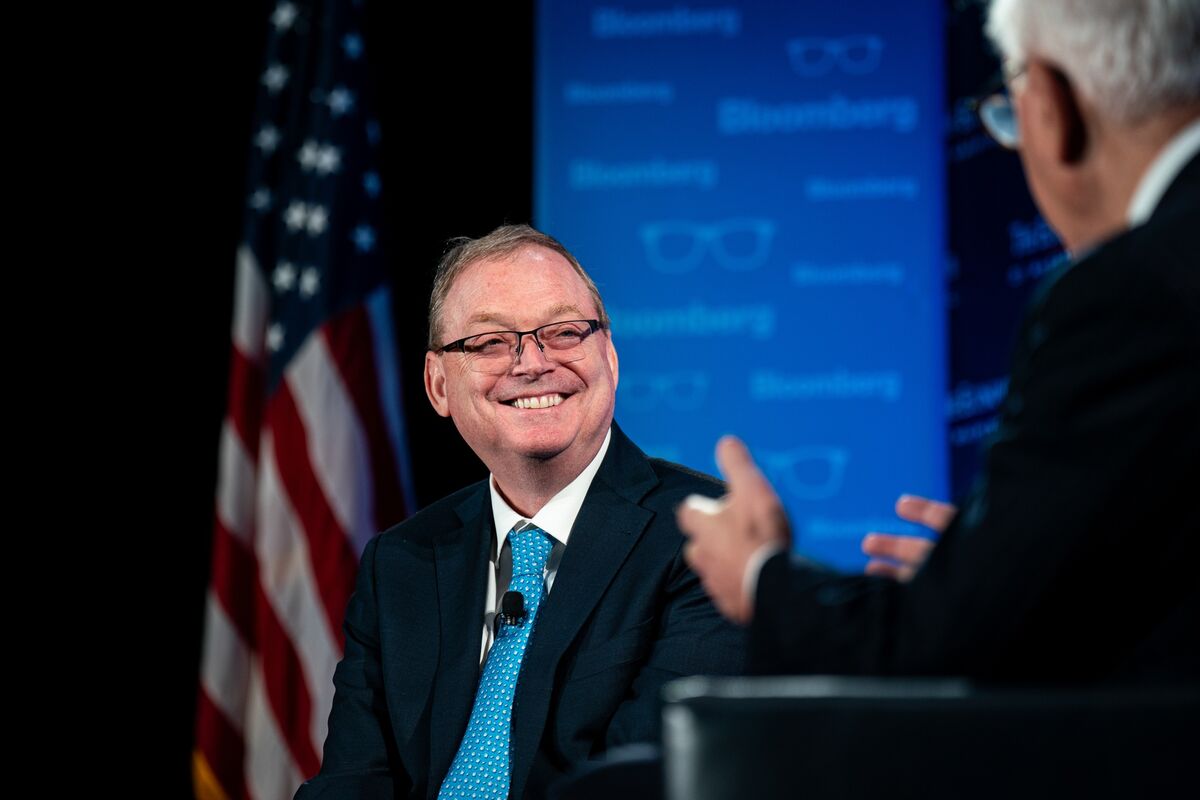
President Donald Trump told reporters he has chosen a new Federal Reserve chair who will be more amenable to his calls for rate cuts, but he did not identify the nominee and said the selection will be announced soon. The comment highlights the administration's desire for a dovish Fed stance and creates policy uncertainty until a formal nomination is made, a development that could influence interest-rate expectations and risk asset positioning once details are revealed.
Market structure: A Trump-picked Fed chair perceived as dovish is a clear win for long-duration and growth assets (Nasdaq/QQQ, AAPL, MSFT, NVDA) and a headwind for bank NIM-exposed names (regional banks/KRE) and money-market yields. Expect demand-driven compression in nominal yields (10y down 20–60bp possible on dovish surprise) and a weaker USD, supporting gold (GLD) and commodity reflation trades; corporate borrowers gain pricing power via lower funding costs and higher refinancing activity over 3–12 months.
Risk assessment: Key tail risks include a politically motivated pick that damages Fed credibility, spiking term premium and inflation expectations (10y +50–100bp shock), or a hawkish surprise that reverses risk-on moves. Immediately (days) volatility around the announcement/hearings; short-term (weeks–months) repricing of yields and credit; long-term (quarters–years) depends on actual policy action and fiscal mix. Hidden dependencies: CPI/PPI prints, fiscal stimulus, election heat and Senate confirmation timing (0–90 days) will amplify moves.
Trade implications: Act after the nomination signal but be event-driven: consider establishing 2–3% long QQQ within 3 trading days if the pick signals clear dovishness (target +6–12% in 3–6 months, stop -5%). Hedge rate exposure with 1.5–3% short KRE (or buy KRE put spreads) to capture NIM compression; add 2% long TLT via call or ETF if 10y drops >10bp (target TLT +8–15% in 3 months). Pair trade: long GLD 1–2% and short UUP 1–2% if USD falls ≥1% post-announcement; use 3-month call spreads on QQQ and put spreads on KRE to control risk.
Contrarian angles: Consensus assumes dovish = unequivocal equity upside; markets underprice the risk of Fed independence erosion and higher inflation/term premium, which would favor cyclical value and real assets, not growth. Historical parallel: 2019 Powell dovish pivot boosted growth but didn’t sustain if inflation accelerated; set stop-loss triggers (reverse if 10y > +25bp intraday) and keep a 1–2% allocation to TIPs (TIP) as insurance against a credibility-led inflation shock.
AI-powered research, real-time alerts, and portfolio analytics for institutional investors.
Request DemoOverall Sentiment
mildly positive
Sentiment Score
0.12
