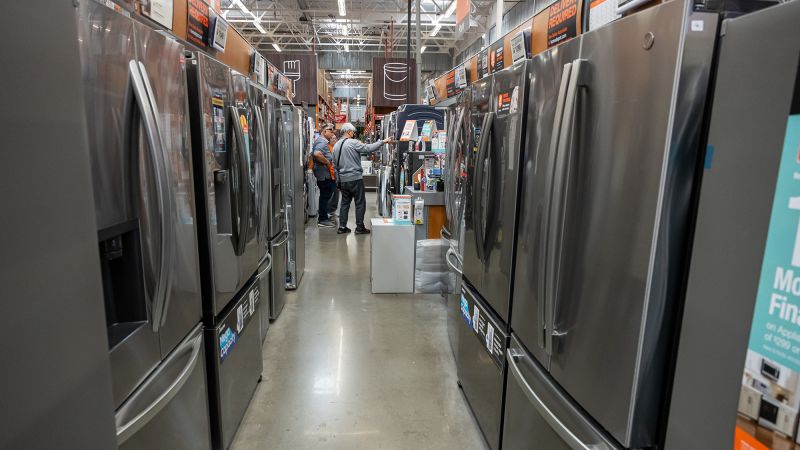
President Trump's impending August 1 tariff increases, potentially imposing the highest average rate in over a century, are poised to significantly escalate U.S. consumer prices. While the administration asserts foreign exporters will bear the cost, experts warn that businesses' temporary strategies of absorbing tariffs and stockpiling are ending, signaling imminent price hikes across various goods including appliances, electronics, and apparel. This challenges the current tame inflation narrative and implies a broader economic impact as costs are passed to consumers.
The impending August 1 tariff implementation threatens to impose the highest average U.S. tariff rate in over a century, creating significant headwinds for multiple sectors. While the administration posits that foreign exporters will absorb these costs, expert analysis suggests this view is overly optimistic. Businesses have been mitigating the impact through short-term strategies like inventory stockpiling and utilizing foreign trade zones, but these measures are reaching their limits. Consequently, the pass-through of costs to consumers appears imminent. The tariff structure is broad, affecting not just finished goods but also key industrial inputs. For instance, appliance prices have already risen 0.8% monthly in April and May, and face further pressure from tariffs on imports from China (30%) and South Korea (25%), as well as 50% tariffs on raw materials like steel and aluminum. Similarly, the electronics sector is exposed through a potential 50% tariff on copper, and apparel faces a projected tariff hike to 48% for women's and 39% for men's clothing. The policy also impacts crucial commodity imports, including oil from Canada ($97 billion last year) and coffee from Brazil, signaling a high probability of widespread, persistent consumer price inflation that contradicts the administration's current narrative.
AI-powered research, real-time alerts, and portfolio analytics for institutional investors.
Overall Sentiment
strongly negative
Sentiment Score
-0.75
