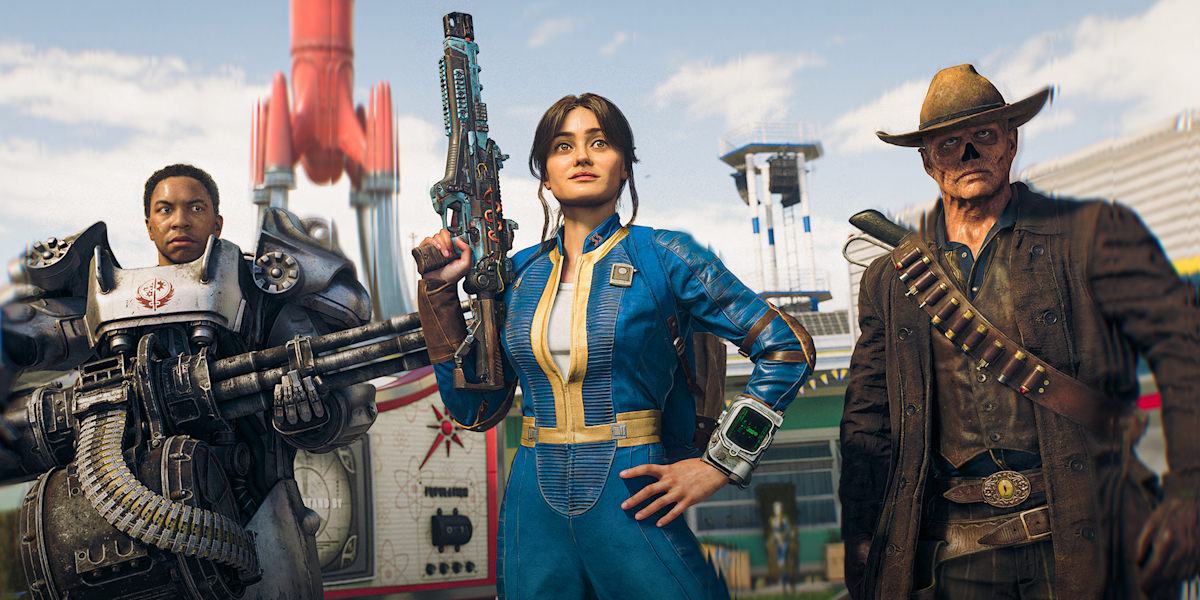
The headline indicates that Fallout-related content is returning to the Call of Duty franchise, implying a crossover or content update, though the article text provided contains no details on scope, timing, or commercial terms. No revenue, earnings, user metrics, or release dates are given; the development could modestly affect player engagement and monetization for the Call of Duty/Activision ecosystem if confirmed, but lacks specifics to assess financial impact.
Market structure: A Fallout-themed return to Call of Duty (COD) implies incremental live-ops content that disproportionately benefits the publisher/platform owner (Microsoft/Activision ecosystem — ticker MSFT) via microtransactions and engagement uplift. Expect short-term DAU/MAU uplifts of 3–8% around the drop and a 2–4% revenue lift in the quarter if conversion mirrors past large crossovers; console makers (MSFT, SONY) win via hardware/online spend, while mid-tier publishers (TTWO, EA) face incremental wallet-share pressure.
Risk assessment: Tail risks include IP disputes, poor technical launch (server outages) that depress monetization, or regulator scrutiny on in-game monetization — each could cut the expected revenue lift by >50%. Immediate risks (days) are install/patch stability; short-term (weeks/months) are player churn and sentiment; long-term (quarters) depend on sustained live-op retention and cross-sell into season passes. Hidden dependency: success hinges on conversion rates and streamer amplification — if top 1% of creators don’t push content, engagement falls below modeled uplift.
Trade implications: Favor asymmetric exposure to MSFT via limited-duration options and small-cap platform beneficiaries (e.g., game-services vendors) while hedging with selective put protection on peers. Relative-value: long MSFT vs short TTWO/EA captures wallet-share rotation. Cross-asset: modest positive on cyclical credit spreads for high-yield gaming suppliers if cashflows from DLC materially improve; options IV on mid-cap game stocks may compress post-announcement.
Contrarian angles: Consensus likely underestimates friction — conversion from themed drops often front-loaded and reversion to mean within 2–3 months; a trade that buys the initial pop but sells into 4–8 week mean reversion could capture alpha. Historical parallels: past crossovers (e.g., Warzone x franchise events) lifted short-term revenue by ~3–6% but rarely changed FY guidance. Unintended consequence: aggressive monetization could trigger negative PR and longer-term ARPU erosion if players pull back.
AI-powered research, real-time alerts, and portfolio analytics for institutional investors.
Request DemoOverall Sentiment
neutral
Sentiment Score
0.00
