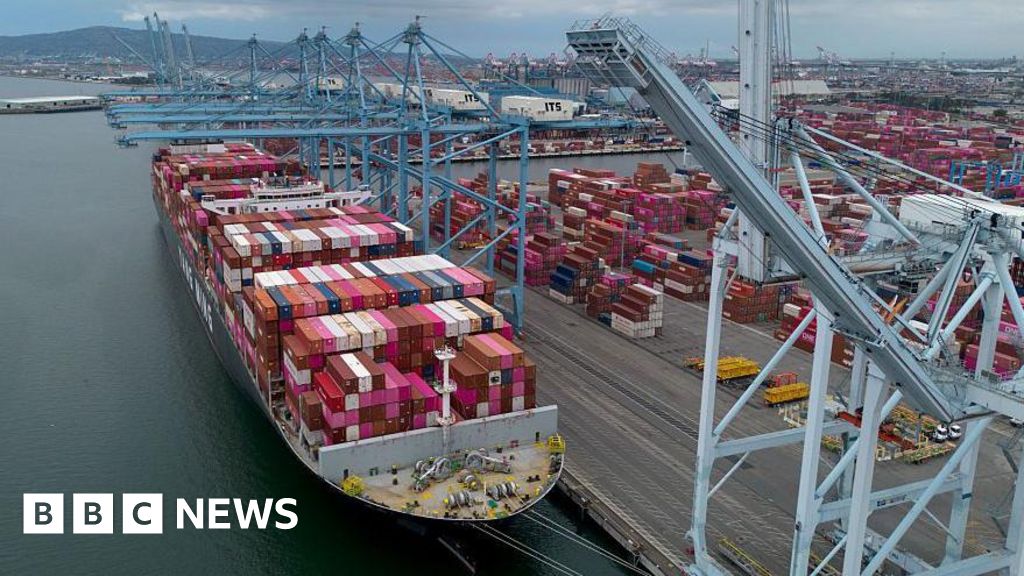
The US and China are set to resume trade negotiations in London, with a US delegation led by Treasury Secretary Scott Bessent, Commerce Secretary Howard Lutnick, and Trade Representative Jamieson Greer meeting with Chinese Vice Premier He Lifeng. This follows a phone conversation between President Trump and President Xi Jinping, aimed at resolving trade disputes and addressing concerns over China's compliance with a prior agreement to increase critical mineral exports. Despite a temporary truce reached in May, both countries have accused each other of breaching the deal, raising uncertainty about the prospects for a comprehensive resolution.
A new round of US-China trade negotiations is scheduled to commence in London, involving a senior US delegation including Treasury Secretary Scott Bessent, Commerce Secretary Howard Lutnick, and Trade Representative Jamieson Greer, who will meet with Chinese Vice Premier He Lifeng. This initiative follows a phone conversation between US President Trump and Chinese leader Xi Jinping, described by President Trump as a 'very good talk,' aimed at resolving the ongoing trade war. These discussions occur after a temporary truce was established in May, which saw US tariffs on Chinese products reduced to 30% and Chinese levies on US imports cut to 10%, alongside a Chinese commitment to lift barriers on critical mineral exports within a 90-day framework to reach a deal. However, this truce has been undermined by subsequent accusations from both nations of breaching the agreement. The US specifically cites China's failure to adequately restart shipments of critical minerals and rare earth magnets, essential for the automotive and computer industries. Conversely, China alleges the US 'severely violated' the agreement and has called for the withdrawal of 'negative measures.' While China's Ministry of Commerce recently approved some rare earth export licenses, White House National Economic Council Director Kevin Hassett indicated that current export rates are not meeting US expectations based on the Geneva agreement. The 'mildly positive' sentiment (sentiment score: 0.25) surrounding these renewed talks reflects cautious optimism, yet the 'moderate' market impact score (0.6) underscores significant underlying uncertainty, especially given the history of tit-for-tat tariff escalations that previously peaked at 145%.
AI-powered research, real-time alerts, and portfolio analytics for institutional investors.
Request DemoOverall Sentiment
mildly positive
Sentiment Score
0.25
