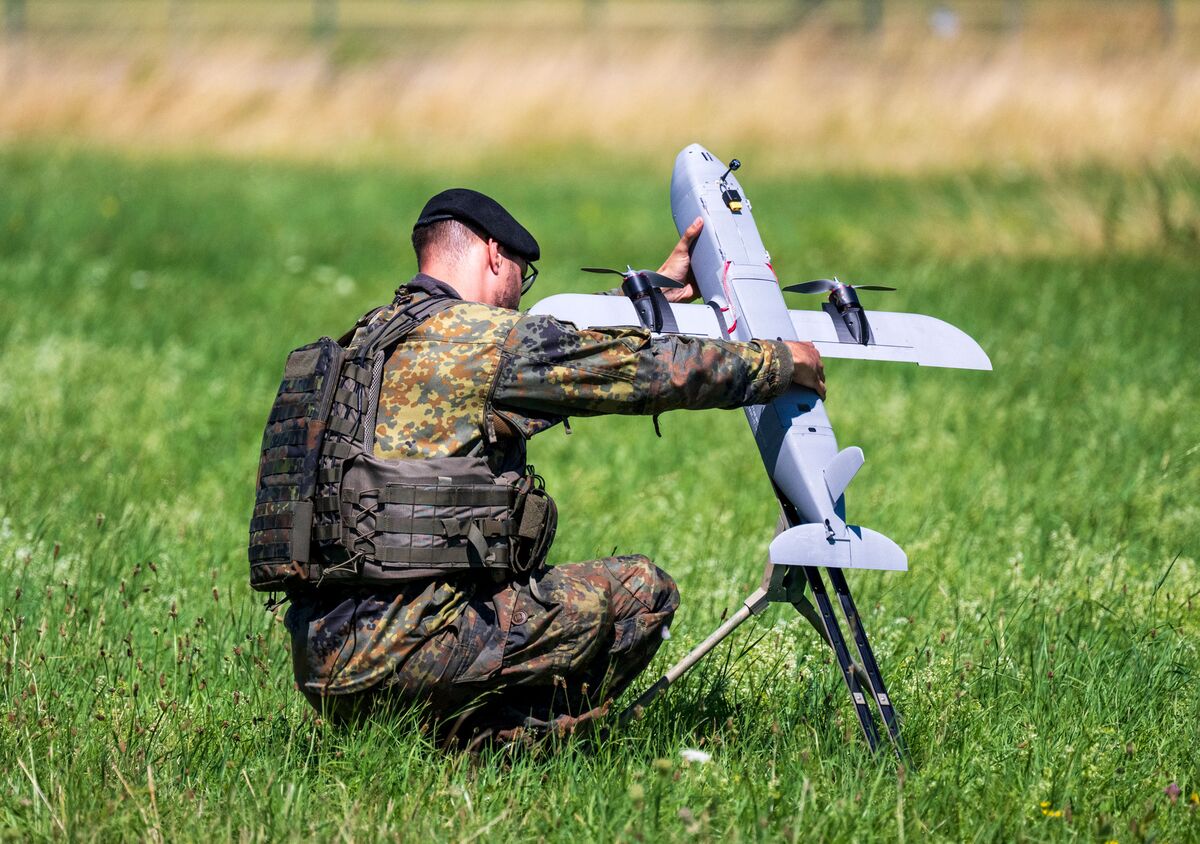
The German military plans to acquire 8,300 drone systems by 2029, a target significantly lower than some NATO allies, despite a global surge in unmanned defense system spending. This relatively modest procurement plan, contrasting with the US and UK's drone-centric modernization and the extensive use of drones in the Ukraine conflict, indicates Germany's slower adoption of critical modern warfare technology and a potential divergence in strategic priorities within the alliance.
Germany's plan to acquire 8,300 drone systems by 2029 highlights a significant lag in its adoption of unmanned aerial systems compared to its key NATO allies. This procurement target appears modest, particularly when contrasted with the drone-centric modernization strategies of the US and UK and the extensive use of millions of drones in the Russia-Ukraine conflict. The discrepancy suggests a potential divergence in strategic defense priorities within the alliance and a slower pace of investment in critical modern warfare technology by Berlin. While the plan represents a procurement pipeline, its limited scale, reflected in the moderately negative sentiment, points to a smaller-than-expected market opportunity for defense contractors focused on Germany, even as global spending on autonomous systems is reported to be soaring.
AI-powered research, real-time alerts, and portfolio analytics for institutional investors.
Request DemoOverall Sentiment
moderately negative
Sentiment Score
-0.35
