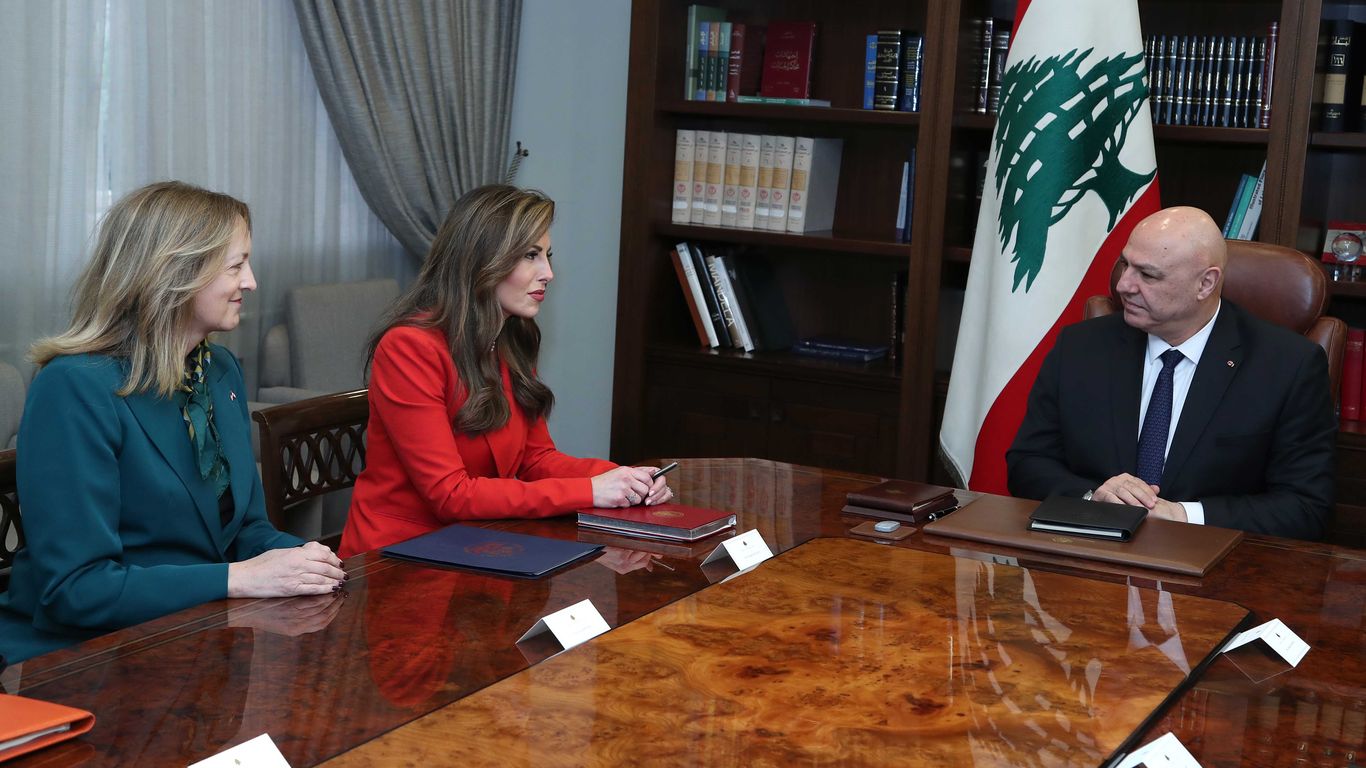
U.S.-facilitated talks between Israeli and Lebanese diplomats met in Naqoura — the first direct public engagement since 1993 — to discuss economic cooperation and reconstruction projects in southern Lebanon aimed at stabilizing the border and building confidence. The meeting, convened amid recent Israeli strikes including the assassination of a top Hezbollah commander, is intended to de-escalate tensions and explore small joint projects and a longer-term U.S. vision for an economic zone; parties agreed to reconvene before the new year to present concrete proposals. Investors should view this as a cautious diplomatic development that reduces near-term tail risk of a wider Israeli-Lebanese war but leaves significant political and security upside/downside contingent on Hezbollah disarmament and follow-through on proposed projects.
Market structure: A limited, state-level de-escalation effort reduces immediate shock but preserves a higher baseline risk premium for defense, insurance and energy sectors. Expect a 5–15% short-term lift in defense-sector order probability; pricing power shifts toward prime contractors (LMT, RTX, GD) for 3–12 months if Israel pressures Lebanon/Hezbollah to be degraded. Civilian reconstruction demand in southern Lebanon creates multi-year opportunities for engineering/construction contractors, but execution risk and sanctions complexity cap near-term revenue recognition.
Risk assessment: Base case — diplomatic engagement keeps full-scale war probability low (15–25% next 3 months) but tail-risk of a larger regional conflagration remains (5–10%) that would spike oil +15–40% and safe-haven FX/bonds. Hidden dependencies include U.S. political calculus (administration support conditionality), Hezbollah rearmament cadence, and Israeli domestic politics; a high-profile strike or hostage event is the fastest catalyst. Key near-term windows: 0–30 days (tactical strikes), 30–90 days (diplomatic follow-through), 6–18 months (reconstruction programs).
Trade implications: Tilt portfolios tactically toward defense equities and commodity convexity while hedging geopolitical-cliff risk with options and sovereign bond duration. Prefer concentrated, size-limited positions (1–2% of AUM each) with defined stop-losses; employ call spreads on Brent/WTI for asymmetric exposure and pair long-defense/short-airline trades for relative-value protection.
Contrarian angles: Consensus treats the meeting as de‑escalatory; that understates sustained asymmetric warfare risk and the long-tail reconstruction spend. If ceasefire endures >90 days, defense equities could mean-revert (-8% from tactical highs) and energy calls will decay — therefore scale out on 30–90 day strength. Historical parallels (2014–2015 Israel–Lebanon skirmishes) show rapid volatility spikes then mean reversion over 3–6 months, favoring short-duration option plays over outright long commodity exposure.
AI-powered research, real-time alerts, and portfolio analytics for institutional investors.
Request DemoOverall Sentiment
neutral
Sentiment Score
0.08
