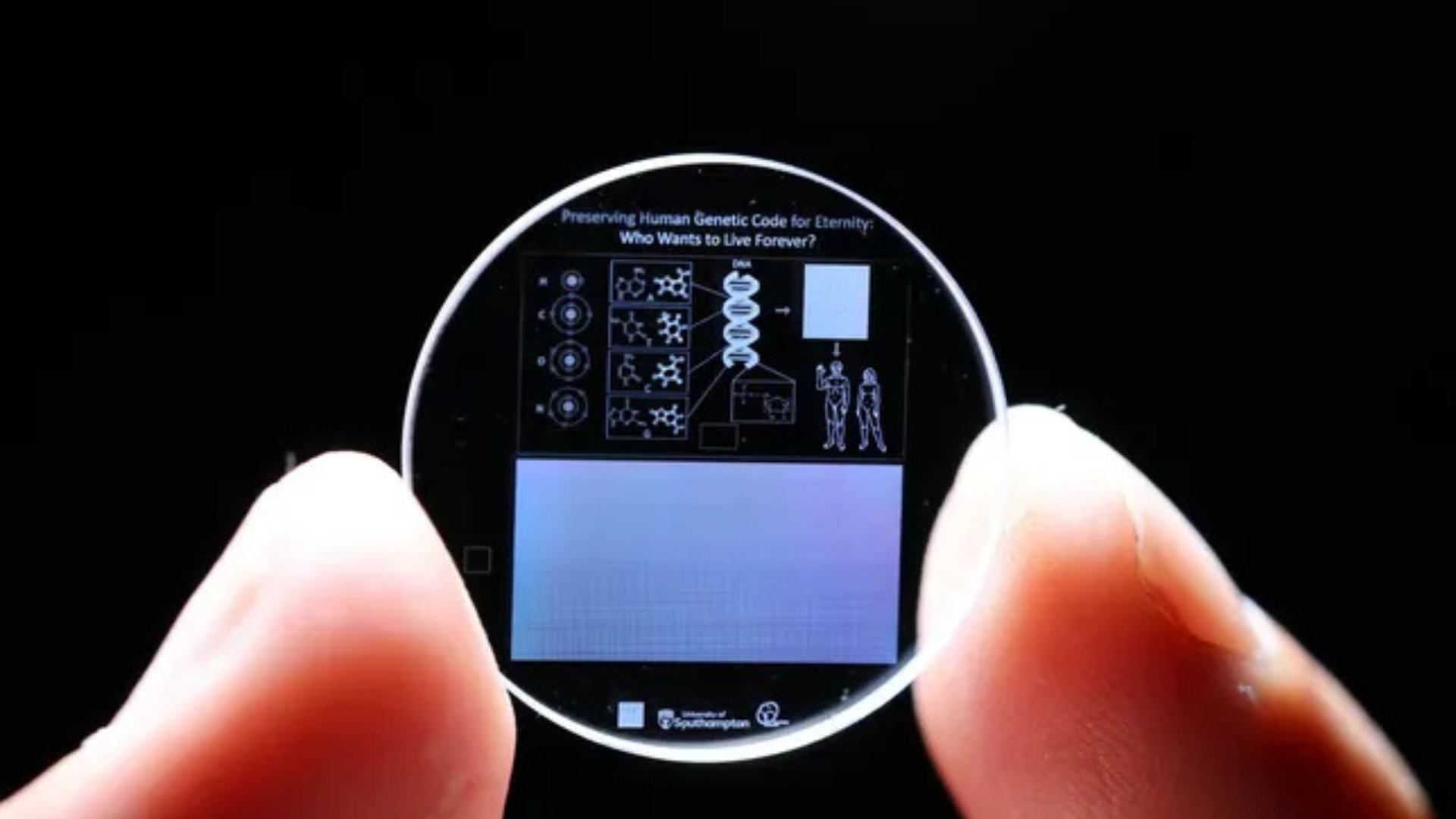
UK start-up SPhotonix, spun out of University of Southampton research in 2024, says its 5D Memory Crystal fused-silica glass storage has moved from lab toward deployment with pilot plans over the next two years and $4.5m raised as it seeks to move from TRL‑5 to TRL‑6. The medium encodes data with a femtosecond laser across five parameters (x,y,z, orientation, intensity) and the company claims a 5‑inch disc can hold up to 360TB and remain stable for ~13.8 billion years while requiring no power—positioning it for cold, air‑gapped archives where >10s latency is acceptable. Current prototypes write at ~4 MB/s and read at ~30 MB/s (well below incumbent archival systems), with a roadmap to 500 MB/s sustained read/write in 3–4 years; early system costs are cited at ~$30k for a writer and $6k for a reader, with a field reader due in ~18 months. Competing efforts include Microsoft’s Project Silica and ceramic alternatives; adoption will hinge on whether SPhotonix can materially improve speed, cost and system integration to move beyond niche archival use.
SPhotonix, a 2024 University of Southampton spinout, announced it has advanced its fused‑silica 5D Memory Crystal from lab work toward deployment with plans for data‑center pilots over the next two years, $4.5 million raised to date, and an objective to move from TRL‑5 to TRL‑6. The medium encodes data with a femtosecond laser across five parameters (x, y, z, orientation, intensity), and the company claims a 5‑inch disc can hold up to 360 TB with media stability quoted at ~13.8 billion years and no power required, positioning it for cold, air‑gapped archival uses where >10 second access latency is acceptable.
Current prototypes write at ~4 MB/s and read at ~30 MB/s—well below incumbent archival systems—and SPhotonix targets sustained 500 MB/s read/write within three to four years; early system pricing is quoted at ~$30,000 for a writer and ~$6,000 for a reader with a field reader expected in ~18 months. Those performance and cost gaps imply long ingest times and significant engineering and commercial milestones before the technology is operationally competitive.
Competition from Microsoft’s Project Silica and ceramic rivals like Cerabyte increases the bar for adoption; SPhotonix’s licensing‑into‑data‑center strategy reduces capital expenditure burden but makes integration and ecosystem support critical. Near‑term value will be determined by TRL‑6 validation, demonstrable throughput improvements, reader availability and unit cost declines, with execution and cash runway highlighted as primary risks.
AI-powered research, real-time alerts, and portfolio analytics for institutional investors.
Request DemoOverall Sentiment
mixed
Sentiment Score
0.05
Ticker Sentiment
