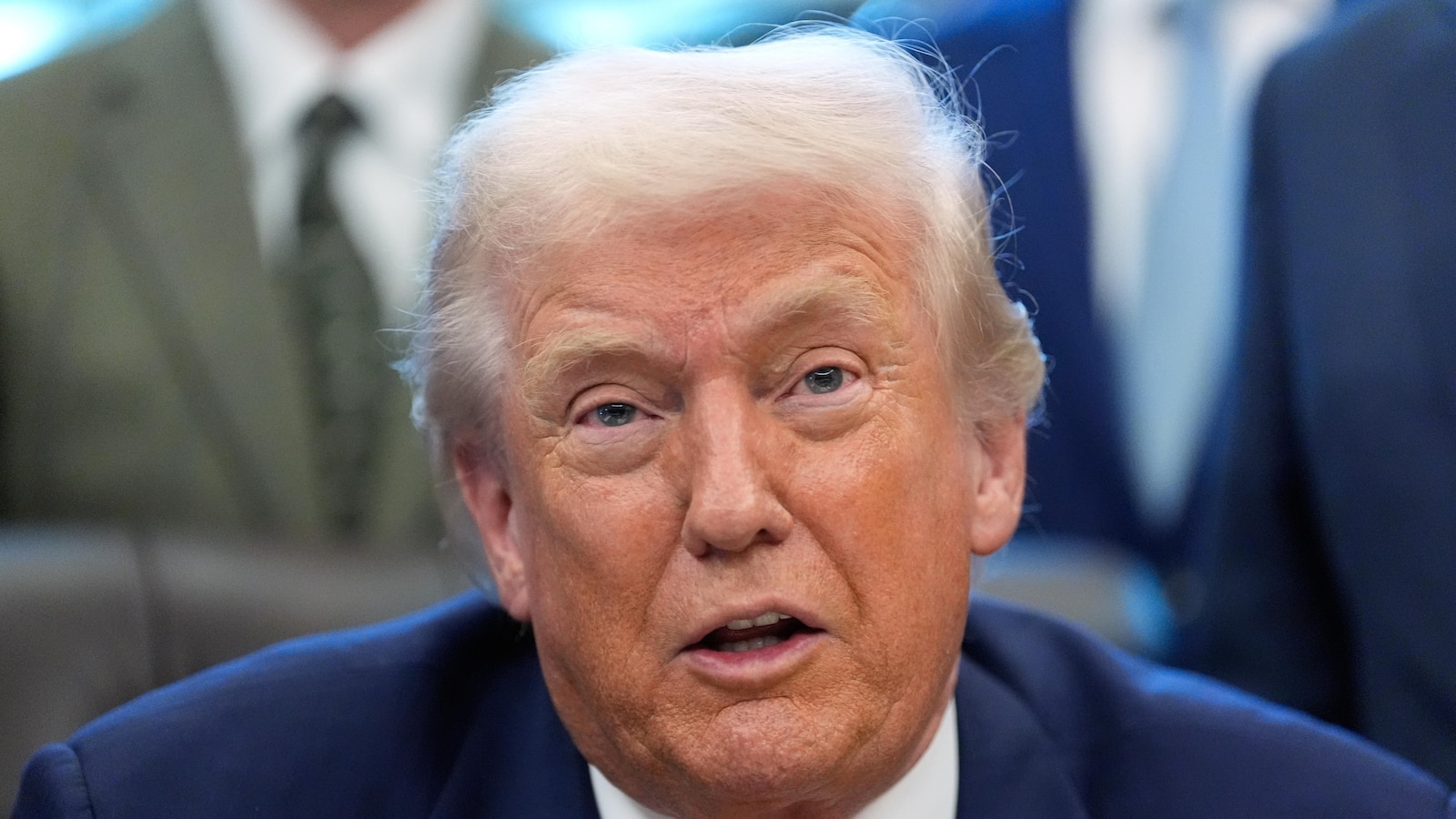
President Trump told the public he discussed Iran with Chinese President Xi Jinping amid U.S. efforts to pressure Beijing and others to isolate Tehran, and reiterated plans to visit Beijing in April. Trump also announced an intended 25% tax on imports to the U.S. from countries that do business with Iran; WTO data cited shows Iran did nearly $125 billion in international trade in 2024, including $32 billion with China, $28 billion with the UAE and $17 billion with Turkey. The developments raise geopolitical and trade-policy risk—potentially disruptive to China-linked supply chains and regional trade flows—warranting monitoring by macro and long/short traders for shifts in risk premia, sanctions exposure and commodity sensitivity.
Market structure: Immediate winners are US defense primes (LMT, RTX, GD) and liquid energy exporters; losers are EM exporters, shipping/insurance intermediaries and banks with Iran/Turkey/UAE corridors. A credible 25% import tax and tighter secondary sanctions would shift pricing power to alternative suppliers (Russia, Gulf producers) and raise marginal cost of oil/shipping by a potential 5–15% if routes or insurers re-price risk. Cross-asset: expect near-term USD strength, higher Treasury demand (TLT up), rising equity volatility (VIX), and commodity upside (oil + gold) on conflict risk.
Risk assessment: Tail scenarios include limited strikes or blockade that spike Brent >$20 and freight rates +50–100% or a wider regional war that knocks global growth -0.5–1% YoY; probability low but impact systemic. Timeline: immediate (days) — volatility and FX moves; short-term (weeks–months) — sanctions enforcement, trade reroutes; long-term (quarters–years) — supply-chain realignments and onshoring. Hidden dependencies: China’s political willingness to enforce cuts, UAE/Turkey as gray-trade hubs, and insurance/SLB (shipping) market capacity constraints.
Trade implications: Tactical buys: short-duration bullish exposure to defense via 3-month call spreads on LMT/RTX; commodity option exposure to oil (3–6 month Brent call spreads) and a 1–3% allocation to GLD/TLT as risk-off. Hedging: short EEM or buy 3-month EEM puts and consider USDTRY calls if Turkish/TKD corridors tighten. Monitor enforcement language and China trade data for 30–90 day inflection points.
Contrarian angles: Consensus expects full Chinese compliance; probability of partial compliance and re-routing via UAE/Turkey is high — this mutes long-term oil shocks but prolongs EM stress. Historical parallels (2019 tanker attacks) show sharp initial spikes then mean reversion in 2–3 months, implying option structures (call spreads) are superior to outright buys. Unintended consequence: aggressive secondary sanctions could accelerate China-Russia transactional currencies, a multi-year structural risk for USD dominance.
AI-powered research, real-time alerts, and portfolio analytics for institutional investors.
Request DemoOverall Sentiment
mildly negative
Sentiment Score
-0.25
