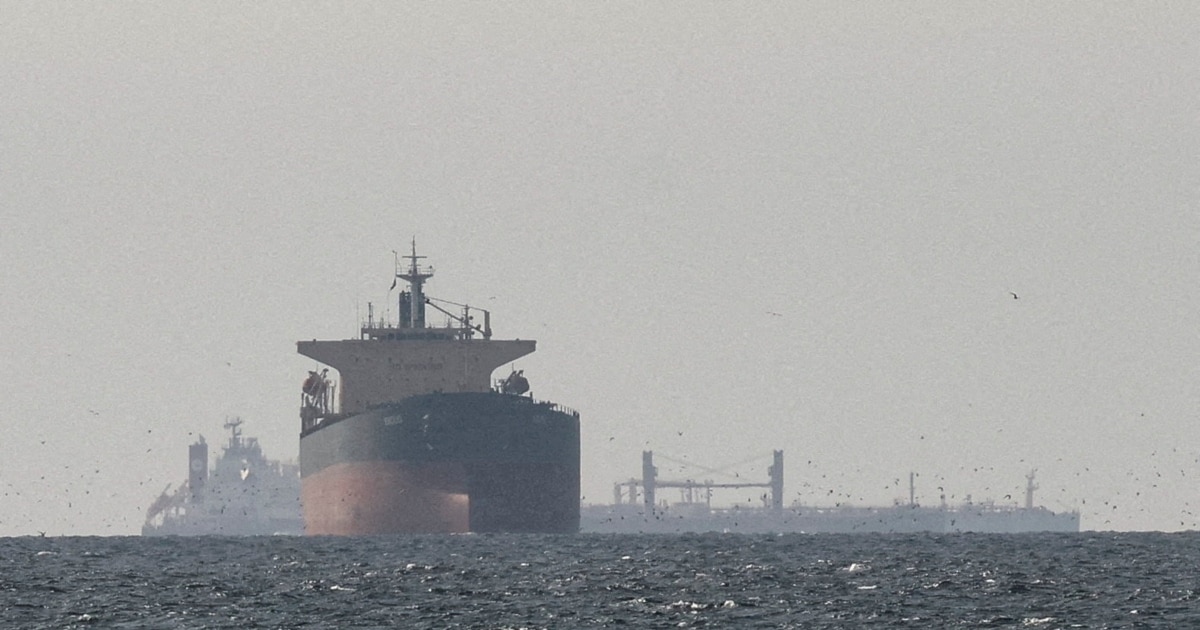
Roughly 20% of global oil and gas typically transits the Strait of Hormuz, which Iran has largely shut down, causing a near-halt in traffic and elevated energy market risk. The UN Security Council is due to vote April 4 on a Bahrain-drafted resolution that was scaled back to authorize only 'defensive measures' (vs. earlier 'all necessary means') to avoid vetoes from China, Russia and France. The disruption is straining Asian economies, threatening European supply chains and fertilizer shipments, and is likely to drive increased volatility and risk-off flows across energy and shipping sectors.
Winners will be asset owners that monetize longer voyages, elevated war-risk premiums, and one-off transshipment demand — spot tanker owners and selective ports in the Arabian Sea/Indian Ocean trade lanes can see EBITDA jump 20–40% if average voyage lengths increase 10–20% for a sustained period. Insurers and brokers capture structural upside from repricing marine war-risk cover (we estimate a 2–3x increase in premiums for transits through affected corridors within 30–90 days), while defense contractors benefit from any coordinated naval escorts or partner-state capacity builds that translate into follow-on sustainment contracts.
Losers are logistics-intensive operators and fertilizer supply chains where delayed shipments translate to immediate stockouts and margin squeezes; manufacturers reliant on timely bulk chemical and ammonia inputs face inventory-driven production cuts within 1–3 months. Second-order effects include accelerated regional bilateral energy deals (Asia reflagging and long-term offtakes), which could lock in shifted trade flows and blunt a full return to prior routing over 6–24 months.
Near-term catalysts: the April 4 vote (days) and any immediate naval incidents (hours–weeks) will drive the largest price and insurance shocks; diplomatic stepping-stones (Oman-mediated permit systems or a watered-down multinational escort mandate) would reduce premiums but leave structural rerouting intact for months. Tail risks include rapid escalation to attacks on onshore infrastructure, producing a multi-month supply shock that current inventories and SPR release capacity would struggle to fully offset.
Consensus is likely overpricing permanence. Historical chokepoint shocks typically normalize within 3–6 months once diplomatic and commercial mitigants (alternate routing, insurance pools, charter reflagging) scale. Trade sizing should therefore favor tactical 1–6 month convex positions rather than multiyear directional exposure unless escalation crosses a well-defined threshold.
AI-powered research, real-time alerts, and portfolio analytics for institutional investors.
Request DemoOverall Sentiment
strongly negative
Sentiment Score
-0.70
