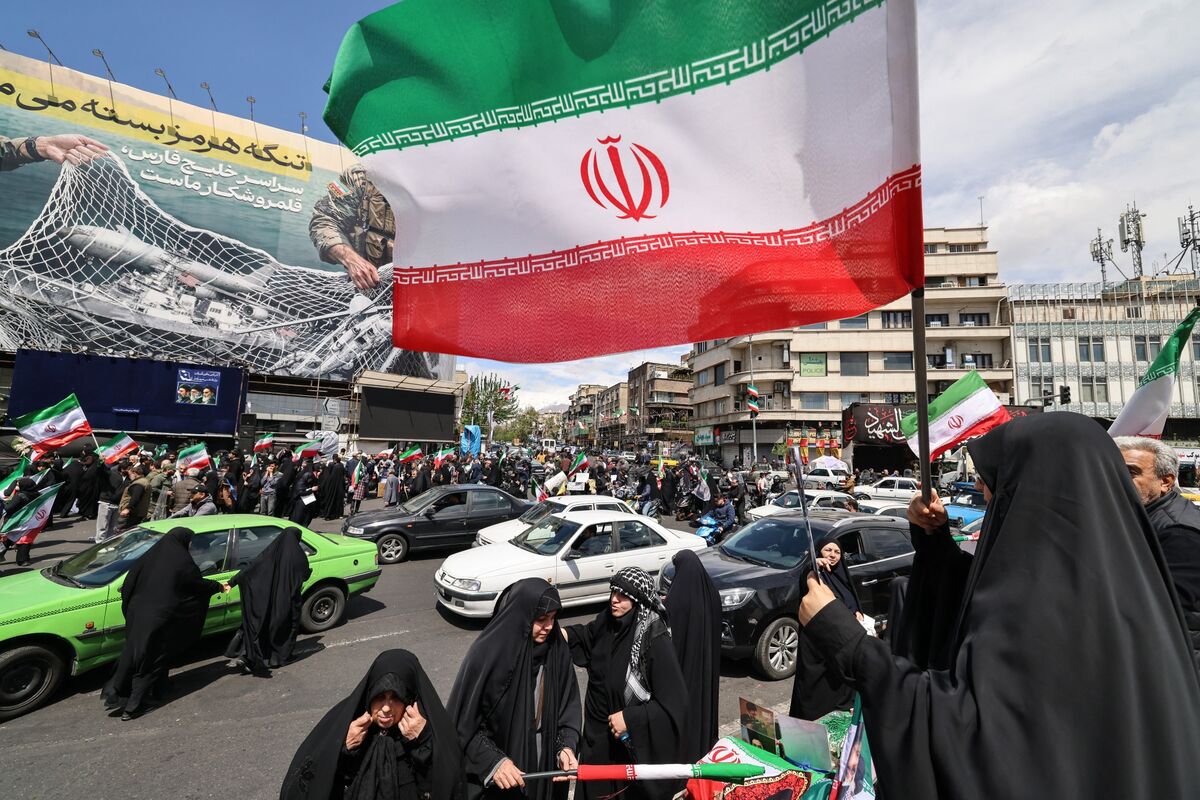
Iran confirmed it will participate in peace talks with the US in Islamabad later this week, according to Pakistan after a call between PM Shehbaz Sharif and Iran President Masoud Pezeshkian. The US has not yet confirmed participation; talks follow a two-week ceasefire and could affect regional risk premia if they advance toward a permanent agreement.
This development increases the probability of a temporary decline in regional risk premia over the coming days-to-weeks if the talks proceed visibly — that should mechanically compress insurance/war-risk markups on tanker and bulk rates (BDTI/TC indices) by an estimated 5–15% within 1–3 months, improving refinery and refining-exporter margins in India/China. Pakistan, as mediator, gains outsized political capital it can monetize quickly via expedited bilateral financing or faster IMF engagement; that implies a material short-term rerating opportunity for Pakistan-focused assets relative to broader EM, not a full de-risking of the region.
Second-order supply-chain effects matter: lower war-risk insurance reduces time-charter and spot freight costs, which flows through to refined product arbitrage windows and increases seaborne crude throughput — expect 0.2–0.6 mb/d of marginal crude availability to re-enter floating storage/refinery supply chains within 4–12 weeks if volatility remains subdued. Conversely, the single biggest immediate market hinge is US participation: a US no-show or public distancing would re-price tail risk almost instantly, likely spiking oil and gold within days and forcing a sharp EM outflow.
Tail risks and timing are asymmetric. Best-case (talks advance and sanctions dialogue begins) plays out over months — sanctions relief phases take 6–12+ months to translate into trade flows — while failure or perceived bad-faith negotiation can create a >$8–12/bbl oil shock and 5–10% EM FX selloff in days. Watch three binary catalysts in the next 48–72 hours: formal US confirmation, language on sanctions/timelines in any joint communique, and concrete mechanisms for humanitarian corridors or phased asset releases.
The consensus will likely oscillate between knee-jerk optimism and risk-aversion; the market is underpricing Pakistan’s tactical leverage to extract finance and underweighting the slow-calendar nature of sanctions relief. That creates a tactical window to take risk-on EM/PK exposure with tight downside protection, while keeping small hedges that pay off if talks fail.
AI-powered research, real-time alerts, and portfolio analytics for institutional investors.
Request DemoOverall Sentiment
neutral
Sentiment Score
0.00
