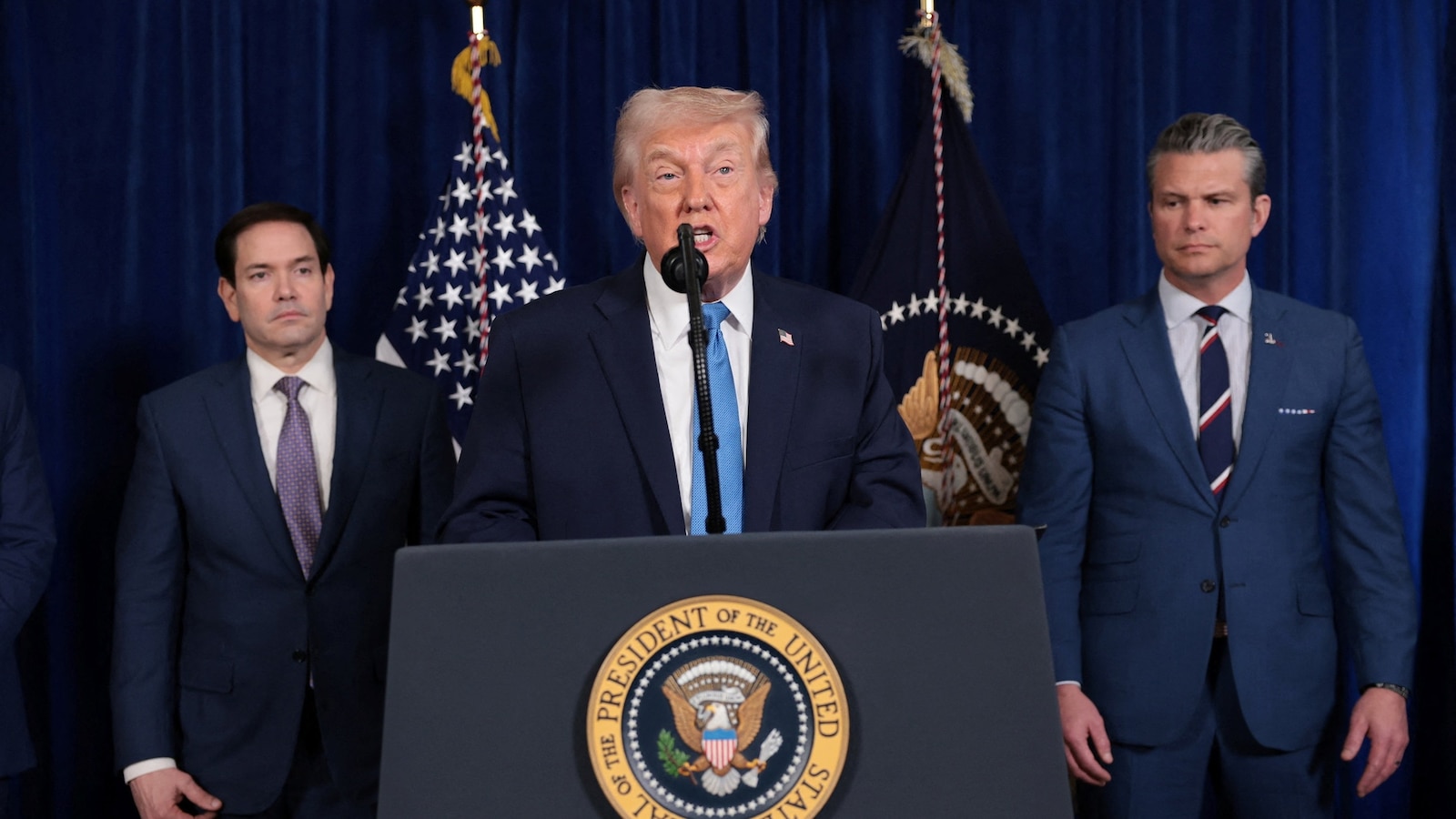
President Trump has articulated a so-called 'Donroe Doctrine'—an assertive revival and extension of the Monroe Doctrine—after the U.S. capture of Venezuelan President Nicolás Maduro, signaling willingness to use military power to limit extra-hemispheric influence in the Americas and explicitly raising the prospect of actions involving Greenland, Colombia, Mexico and Cuba. Markets should price greater geopolitical risk to Western Hemisphere stability and potential disruptions to energy and emerging-market exposure (Venezuela's oil reserves cited), while defense, sanctions policy and diplomatic relations with NATO allies, China and Russia face heightened uncertainty that could influence asset allocation across defense stocks, EM sovereign risk and commodity markets.
Market structure: A harder-line ‘Donroe’ policy structurally benefits U.S. defense primes (LMT, NOC, RTX) and energy majors (XOM, CVX) via higher defense spending and potential access/claims to Venezuelan hydrocarbons; expect a 10–25% rerate in defense over 3–12 months if policy is enacted. Losers: Latin American sovereign bonds, tourism/travel names, and EM FX (MXN, COP, BRL) face immediate risk; a supply disruption could push WTI/Brent +5–15% in weeks. Cross-asset flows will favor USD and gold (GLD) as safe-havens; UST yields likely compress in the first 48–72 hours as risk-off trades hit.
Risk assessment: Tail risks include a NATO breach (e.g., conflict involving Greenland/Denmark) or China/Russia asymmetric retaliation — low probability but high impact, potentially causing a multi-quarter commodity shock and 10–20% drawdown in global equities. Immediate (days) impacts: volatility spike and USD strength; short-term (weeks–months): oil and defense bid; long-term (years): geopolitical realignment that could raise defense budgets by an incremental 5–10% CAGR. Hidden dependencies: election calendars, OPEC spare capacity (threshold: Brent >$90 triggers US shale response), and insurance/shipping re-routing that can amplify commodity moves.
Trade implications: Direct plays: bias overweight defense via 6–12 month call spreads on LMT/NOC (target +20% in 6–12 months, stop -10%), and tactical long XOM/CVX if Brent sustains >$80 for two consecutive weeks. Pair trades: long LMT vs short airline/travel (UAL or IATA-heavy ETF) to isolate defense upside; hedge EM exposure with 3-month puts on EEM (7% OTM) sized 0.5–1% of portfolio. Options: buy 3–6 month WTI call spreads (strike ladder with $85 cap) for asymmetric upside; trim positions after 15–25% realized gain.
Contrarian angles: Consensus overprices immediate operational control of Venezuelan oil — logistical, political and legal barriers make rapid production gains unlikely, so oil upside is probable but capped; defense rerate may be front-loaded and mean-revert if no sustained policy follow-through. Historical parallels (Cold War-era interventions) show short-term risk-off then long-term local backlash and increased non-US partnerships — a 90-day no-escalation window should trigger reallocation back to EM cyclicals. Watch triggers: NATO Article 5 invocation or Brent >$95 for 30 days (bull case); absence of NATO rupture and Brent < $80 after 90 days (mean-reversion).
AI-powered research, real-time alerts, and portfolio analytics for institutional investors.
Request DemoOverall Sentiment
moderately negative
Sentiment Score
-0.50
